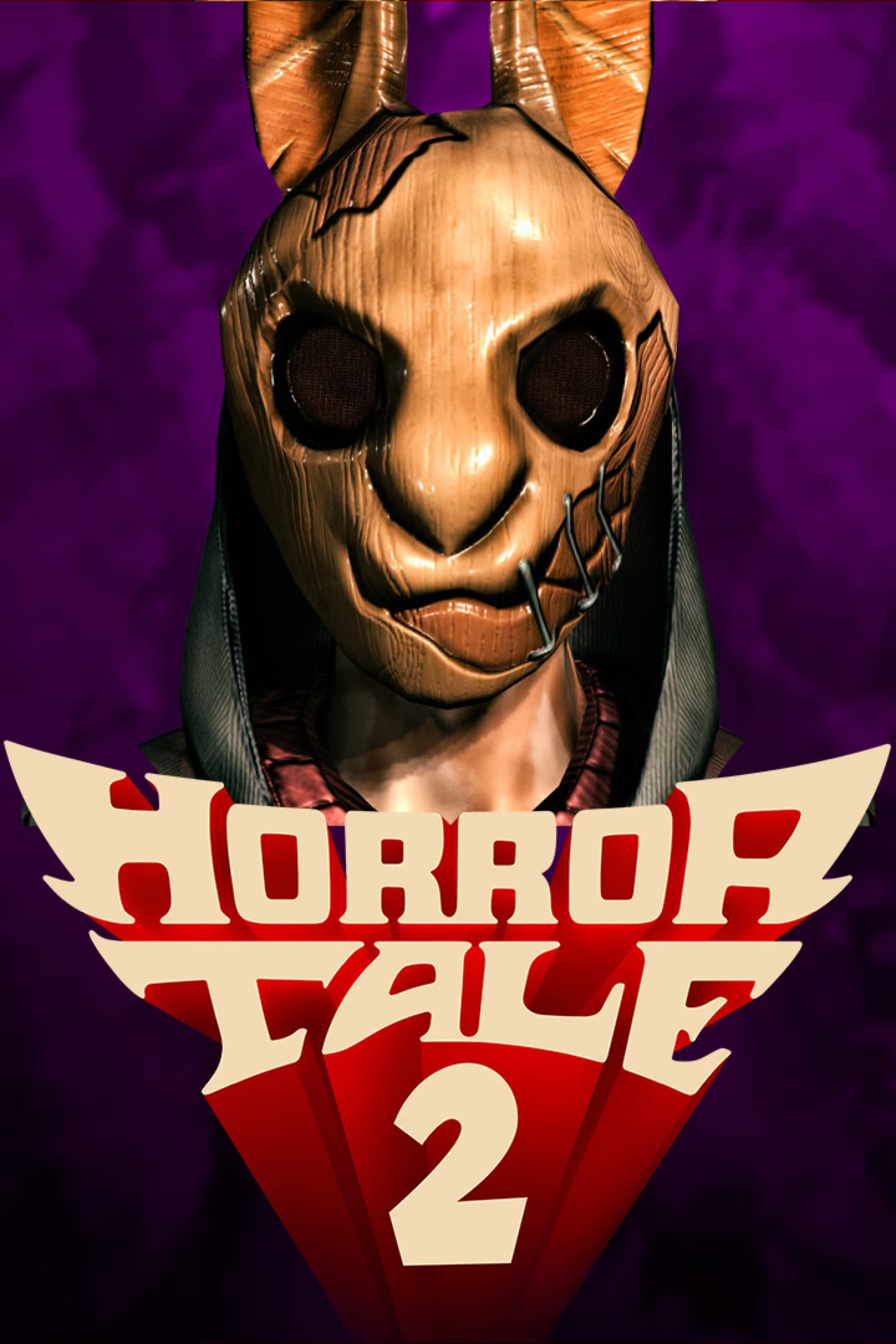


Horror Tale 2 Overview
Horror Tale 2 is a first-person horror escape game that deepens the nightmare established in its predecessor. This sequel expands on every element that made the original tense — smarter enemies, more intricate puzzles, and traps that punish careless movement. The game casts you inside a dark, claustrophobic world where an intelligent pursuer actively hunts you, detecting not just your position but the sounds you make. Every footstep matters, every item you pick up could be the difference between escape and capture, and every decision shapes how the chase unfolds.
What sets Horror Tale 2 apart from simpler horror games is its layered difficulty system. Four distinct modes range from accessible entry-level play to a punishing experience where the enemy is faster, sharper, and you have fewer lives to spend. The pursuer in higher difficulties doesn't simply patrol — it listens, adapts, and corners you with unsettling precision. The game also removes fixed endings: your choices during play determine the outcome, giving every run its own arc and making replays genuinely different from the last. With jump scares deployed at unexpected moments and a puzzle design that demands focus rather than just speed, Horror Tale 2 is built for players who want their horror games to feel earned rather than cheap.
Key Details
- Genre: Horror / Escape / Stealth Puzzle
- Difficulty Level: Variable (4 modes, Easy to Hard)
- Average Play Time: 20–40 minutes per run
- Best For: Fans of stealth horror, escape room game fans, players who enjoyed the first Horror Tale
How to Play Horror Tale 2
Getting Started
- Select a difficulty mode — start with the easiest setting or use Ghost Mode to memorize the layout before your first real run.
- Move cautiously through the environment; unnecessary noise alerts the pursuer to your location.
- Observe every room carefully for items, clues, and puzzle pieces you'll need to progress.
- Crouch (C) when moving through dangerous areas to reduce the sound you generate.
- Use hints (H) when stuck, but use them sparingly — resource management matters at higher difficulties.
Basic Controls
Move: WASD
Action / Interact: F
Crouch: C
Hint Menu: H
Leave Item: X
Throw Item: G
Objective: Navigate through the dark environment, solve puzzles, collect essential items, and reach the escape point before the pursuer catches you. Survive the full gauntlet across all segments without being captured.
Horror Tale 2 Features & Highlights
- Four difficulty modes — scale the challenge from introductory horror to a brutal high-stakes run with fewer lives and a more dangerous pursuer
- Adaptive enemy AI — the pursuer detects sound, tracks movement, and grows more intelligent on higher difficulties, creating genuine unpredictability
- Dynamic outcomes — no fixed ending; player decisions throughout the run shape the final result, encouraging multiple playthroughs
- Ghost Mode for map learning — explore the environment freely without threat to memorize layouts before committing to a real run
- Atmospheric puzzle design — clues, items, and traps are woven into the environment rather than served up as obvious objectives
Horror Tale 2 Tips & Strategies
Beginner Tips
- Always start with Ghost Mode to map out key item locations and safe hiding spots before attempting a real run.
- Crouch whenever you're moving near the pursuer's patrol zone — the noise reduction is significant and can mean the difference between detection and safety.
- Pick up every item you encounter; even items that seem useless early on often unlock later puzzle solutions.
Advanced Strategies
- Learn the pursuer's audio cues — the sound design telegraphs its proximity and direction, letting you anticipate its path rather than reacting to it.
- Use throwable items (G key) to create diversionary sounds in one area while you move through another — particularly effective in tight corridor segments.
- On higher difficulties, plan your route to the exit before moving rather than exploring reactively; inefficient movement costs lives.
What to Watch Out For
- Traps placed throughout the environment deal damage on contact — slow down in new areas and scan the floor before moving through doorways.
- Jump scares are used deliberately at decision points; don't let them rush you into making a poor movement or item choice.
Horror Tale 2 Elements Explained
Difficulty & Lives System: Horror Tale 2 structures its challenge through four modes that alter two core variables: pursuer intelligence and player lives. On the lowest setting, the enemy patrols predictably and players have a generous number of lives to spend. As difficulty increases, the pursuer's detection radius widens, its speed increases, and it begins tracking sound more aggressively rather than following a set path. Lives decrease at higher tiers, meaning individual mistakes carry significantly more weight. This system ensures the game serves both casual horror fans who want atmosphere without punishment and experienced players seeking a genuinely threatening survival experience. Choosing the right difficulty for your skill level is the first strategic decision you'll make in every session.
Enemy Detection & Sound Mechanics: The pursuer in Horror Tale 2 is built around sound detection rather than pure line-of-sight. Standing upright while walking generates more noise than crouching, making the C key one of the most important controls in the game. Throwing items (G) produces localized noise that can redirect the pursuer's attention, functioning as the game's core evasion tool. Environmental sounds — flickering lights, distant footsteps — also carry narrative information about the pursuer's location. Players who learn to read these audio cues rather than relying on visual confirmation will consistently outperform those who rely on sight alone. The sound system rewards patience: slower, quieter movement is almost always more effective than rushing.
Puzzle & Item System: Each area in Horror Tale 2 contains puzzle elements that block progression until solved. Items are scattered across the environment and serve specific functions — some unlock doors, others disable traps, and a subset can be used as diversions or tools. The game deliberately avoids labeling item purposes, requiring players to experiment and observe. Clues are embedded in the environment itself: notes, visual details, and object placements hint at solutions without spelling them out. The lack of a fixed progression path means two players can solve the same segment using different item combinations, adding replay value and rewarding lateral thinking over memorizing a single correct approach.
Horror Tale 2 Frequently Asked Questions
Q: How do I reduce noise while moving?
A: Hold the C key to crouch. Crouching significantly reduces the sound your character generates, making it much harder for the pursuer to detect your movement, especially in close proximity.
Q: What should I do if the pursuer finds me?
A: Run to the nearest hiding spot — wardrobes, lockers, or any enclosed space the environment provides. Stay still and wait until the pursuer's audio cues indicate it has moved away before exiting.
Q: Is Horror Tale 2 compatible with mobile devices?
A: Yes. The game is built in HTML5 and supports browser play on desktop, tablet, and mobile platforms.
Q: Can I save my progress?
A: Horror Tale 2 is a browser-based game. Progress is maintained within a single session, but there is no persistent cross-session save system.
Q: How do I unlock the harder difficulty modes?
A: All four difficulty modes are available from the start. Select your preferred difficulty from the mode selection screen at the beginning of each run.
Games Like Horror Tale 2 You Might Enjoy
If you like Horror Tale 2, you might also enjoy:
- Nightmare Kart - it shares the same browser horror tension, quick decision-making, and replay-friendly pressure.
- Sprunki Pyramixed - it shares the same browser horror tension, quick decision-making, and replay-friendly pressure.
- Granny - it shares the same browser horror tension, quick decision-making, and replay-friendly pressure.