





FNAF 8 Overview
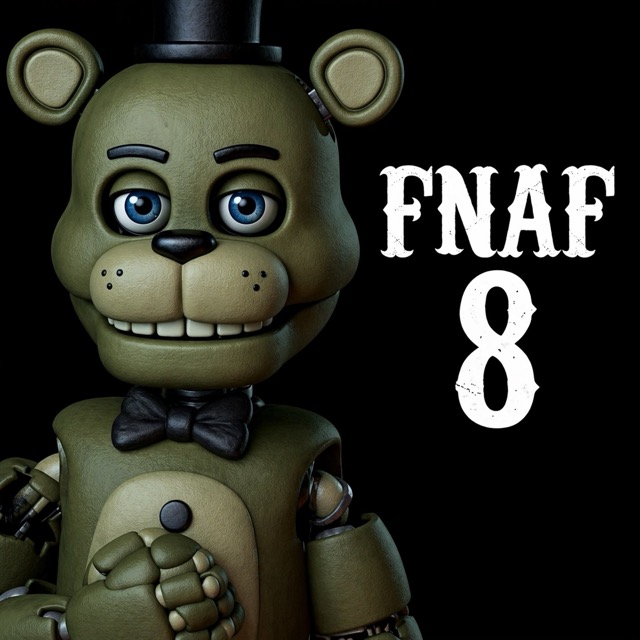
FNAF 8 is a fan-made entry that takes the classic Five Nights at Freddy's formula and rebuilds it with fresh ambition — new animatronic characters, upgraded visuals, expanded areas to monitor, and a defensive mechanic that adds a layer of interactive engagement the series hasn't previously offered. The result is a game that feels familiar enough to welcome veterans and distinctive enough to justify its own identity within the fan-made FNAF landscape.
The setting is a mysterious location that maintains the franchise's tradition of withholding context — you're a night guard, the building goes active after dark, and what exactly is happening here is revealed gradually through the atmosphere and the behavior of the animatronics themselves. That slow revelation of danger is something FNAF has always done well, and FNAF 8 carries it forward effectively.
What makes this entry worth paying attention to are the new elements layered on top of the familiar foundation. A roster of original animatronic characters each moves through the environment according to distinct behavioral patterns that require specific observational and response strategies. Multiple areas to monitor simultaneously introduce a spatial management challenge that scales meaningfully across five nights. And the new defensive mechanic gives players an active option for handling unexpected situations rather than relying solely on passive door management and camera vigilance.
Five nights of escalating pressure ensure that each session demands genuine adaptation rather than simple repetition of a strategy that worked the night before. Players who approach each night as a new problem to solve — rather than a harder version of the previous one — will find FNAF 8 consistently engaging across the full run.
Key Details
| | | |---|---| | Genre | Survival Horror / Strategy (Fan-Made) | | Difficulty Level | Medium — escalates meaningfully across five nights | | Average Play Time | 10–20 minutes per night | | Best For | FNAF fans, survival horror players, players who enjoy multi-area monitoring and behavior-based strategy |
How to Play FNAF 8
Getting Started
1. Begin Night 1 by familiarizing yourself with the areas you'll be monitoring — understand which camera feeds correspond to which zones before activity begins. 2. Switch between available monitoring tools to track animatronic movement across the building's distinct areas. 3. React to unusual activity quickly — animatronics that go unmonitored for too long advance toward the office without warning. 4. Use the new defensive mechanic when animatronics reach critical proximity, timing your deployment to handle unexpected approaches effectively. 5. Adapt your strategy each night — behavior patterns escalate in complexity and speed as the nights progress, requiring refined responses rather than repeated ones.
Basic Controls
- Monitoring Tools — Switch between available feeds and systems to track animatronic positions across multiple areas
- Defensive Mechanic — Deploy at the right moment to handle close-proximity animatronic threats
- Attention Management — Distribute focus across multiple zones and timing-sensitive decisions throughout each shift
Objective
Survive five consecutive nights by monitoring multiple areas, tracking new animatronic characters through their distinct movement patterns, and deploying available defensive options before threats reach the office. Each night escalates in complexity — adapt your strategy and response timing accordingly to reach morning on Night 5.
FNAF 8 Features & Highlights
- Original animatronic roster — New characters with distinct movement patterns and behavioral signatures that require individual strategic responses
- Multi-area monitoring — Several distinct zones to track simultaneously, expanding the spatial management challenge beyond single-point camera coverage
- New defensive mechanic — An interactive option for handling close-proximity threats that adds active engagement beyond passive door and camera management
- Upgraded visual presentation — Enhanced graphics and environmental detail that give the familiar night guard setting a refreshed aesthetic
- Five-night escalation — Each night introduces more complex behavior patterns and tighter timing requirements, demanding continuous adaptation
FNAF 8 Tips & Strategies
Beginner Tips
- In Night 1, prioritize learning each animatronic's starting position and general movement direction before focusing on defensive responses. Understanding where threats come from is foundational to responding to them effectively.
- Establish a monitoring rotation across all areas early and stick to it — the impulse to focus on whichever zone feels most active leads to blind spots in others that animatronics exploit.
- Use the defensive mechanic sparingly until you understand the timing it requires. Deploying it too early or in the wrong situation wastes an option you may need moments later.
Advanced Strategies
- Study each animatronic's behavioral pattern across Night 1 and 2 at lower intensity levels, then apply that pattern knowledge to respond proactively on Nights 3–5 when their pace accelerates.
- On later nights, shift from reactive monitoring (checking a camera after you suspect movement) to anticipatory monitoring (checking the zone where a specific animatronic is due to move next based on its known pattern).
- Calibrate your attention distribution based on which animatronics are currently closest to the office rather than splitting focus evenly — prioritize the nearest threat while maintaining enough peripheral awareness of others to catch unexpected advances.
What to Watch Out For
- Late defensive mechanic deployment — The new mechanic's effectiveness depends on timing. Waiting until an animatronic is at the office threshold before deploying it is harder to execute correctly than using it earlier in the approach sequence. Learn the right deployment window across multiple runs.
- Neglecting less active zones on early nights — Night 1 and 2 feel manageable enough that players often establish monitoring habits that skip low-activity zones. Those habits carry into Nights 4 and 5, where the same zones become primary threat vectors.
FNAF 8 Elements Explained
New Animatronic Roster & Behavioral Patterns
FNAF 8 introduces original animatronic characters that don't share behavioral patterns with familiar franchise entries, which means prior FNAF knowledge won't automatically inform how to respond to them. Each new character moves through the building according to a distinct logic — some advance steadily along predictable paths, others move in response to player actions, and others behave in ways that require learning through observation across multiple runs. The multi-character roster creates compound monitoring demands: understanding any single animatronic's pattern is achievable quickly, but tracking several simultaneously while their patterns interact is the game's primary skill challenge. Treat the first two nights as a learning phase rather than a survival test — use them to catalog behavioral signatures before the pace increases.
Multi-Area Monitoring System
Where classic FNAF entries often centered monitoring around a small number of key camera positions, FNAF 8 expands the monitored space to several distinct areas that each require genuine attention. No single camera or zone can be ignored safely for extended periods — different animatronics use different areas as their primary approach corridors, and understanding which character uses which route is the insight that makes monitoring efficient rather than frantic. Experienced players develop zone-priority frameworks based on which characters are most advanced in their approach at any given moment, enabling rapid camera switching that covers the highest-urgency threats without losing track of slower-moving ones.
New Defensive Mechanic
The defensive mechanic introduced in FNAF 8 represents the most significant mechanical departure from the classic office-management formula. Rather than relying solely on passive barriers, you have an active option for handling animatronics that reach critical proximity — one that requires correct timing to deploy effectively. This mechanic creates moments of genuine interactivity that break the purely observational rhythm of camera monitoring and introduce a skill element that rewards practice. The timing window for effective deployment narrows on higher-difficulty nights, which means the mechanic that feels manageable on Night 2 demands noticeably more precision by Night 4. Players who learn the correct deployment window early will find it becomes increasingly natural; those who leave it as an afterthought will struggle when night difficulty compresses the reaction time available.
FNAF 8 Frequently Asked Questions
Q: How do I track multiple animatronics across different areas?
A: Establish a consistent monitoring rotation that cycles through all relevant camera zones on a regular interval, rather than focusing on whichever area feels most active. As you learn each animatronic's specific approach route, you can tighten your rotation to prioritize the zones they use most while maintaining enough coverage of others to catch unexpected movement.
Q: What should I do if an animatronic reaches the office?
A: Deploy the defensive mechanic at the correct timing window to handle the approach. If the mechanic is unavailable or already used, rely on whatever passive defensive options remain. After the run, identify at which monitoring stage the animatronic advanced without being caught — this will show you where your rotation or response timing broke down and what to correct next session.
Q: Is FNAF 8 compatible with standard browsers?
A: FNAF 8 is designed for modern desktop browser play. Use an updated browser with hardware acceleration enabled for the most stable frame rates. The enhanced visual environment is more resource-intensive than simpler FNAF titles, so closing background applications before starting is recommended.
Q: Can I save progress between nights?
A: Progress across the five nights is saved between sessions, allowing you to resume from your most recently completed night rather than starting over from Night 1. Individual night sessions must be completed in a single sitting — exiting mid-night will require replaying that night from its beginning.
Q: How do I learn the new animatronic behaviors efficiently?
A: Treat Night 1 as a dedicated observation session rather than a survival test. Note each animatronic's starting location, the direction it moves, and the camera sequence it follows. Night 2 will confirm whether those patterns hold at slightly higher intensity. By Night 3, you should have enough behavioral data on each character to respond proactively rather than reactively.
Games Like FNAF 8 You Might Enjoy
If you like FNAF 8, you might also enjoy:
- FNAF Shooter - it shares the same animatronic pressure, survival timing, and quick browser play rhythm.
- FNAF Strike - it shares the same animatronic pressure, survival timing, and quick browser play rhythm.
- FNAF Shooter 2 - it shares the same animatronic pressure, survival timing, and quick browser play rhythm.