








Among Us Overview
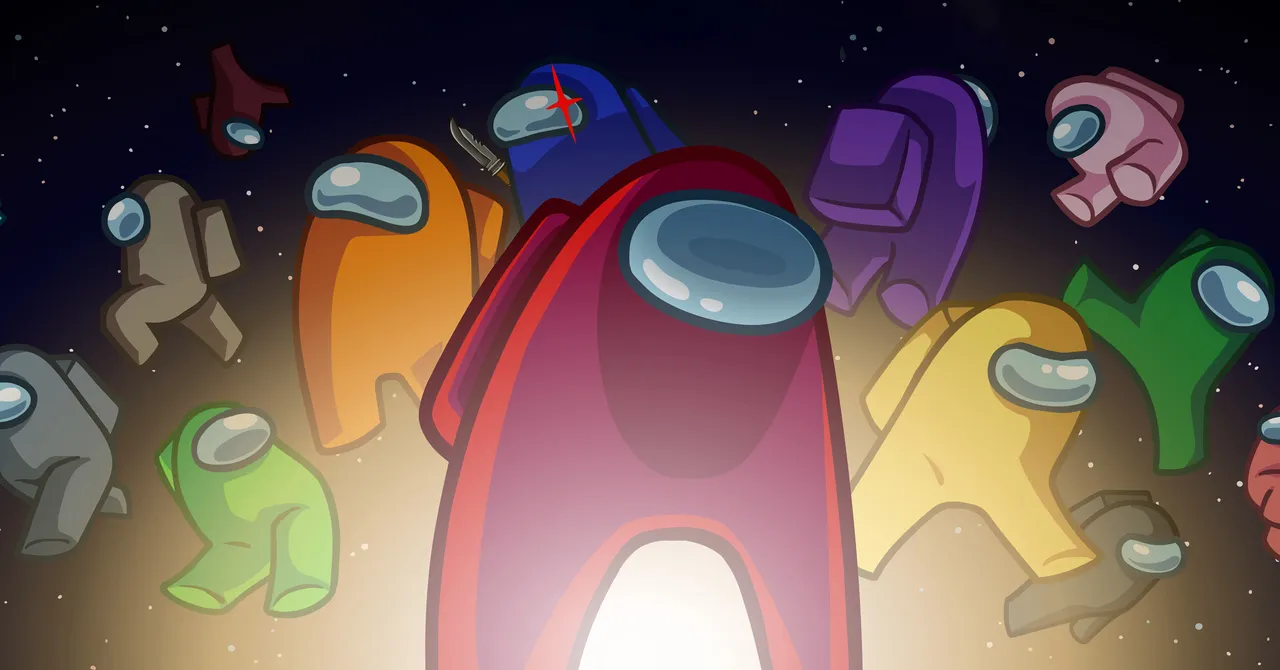
Among Us is a multiplayer social deduction game developed by InnerSloth where players are secretly assigned as either Crewmates or Impostors aboard a space station. Crewmates work through a list of tasks to maintain the ship while watching for suspicious behavior. Impostors work to sabotage systems and eliminate Crewmates without being identified. The game ends when Crewmates complete all tasks, successfully vote out all Impostors, or the Impostor team reduces the Crewmate count to a critical level.
What makes Among Us enduringly compelling is its psychological layer. The facts of any given situation are often genuinely ambiguous — you saw someone vent, but did you? You have an alibi, but can you prove it? Discussion phases turn into negotiation, persuasion, and lie detection exercises where social skill matters as much as what you actually witnessed. A skilled Impostor who can argue confidently and frame others effectively can survive rounds that should have exposed them. A skilled Crewmate who pays attention to player behavior, task completion patterns, and movement routes can catch Impostors that no one else noticed.
The game's accessibility — simple controls, short match structure, cross-platform multiplayer — has made it one of the most widely played social games available. Among Us rewards different skills from different players, which is part of why it has remained popular across age groups and play styles since its release.
Note: This browser version is a third-party port hosted at a fan site. For the official Among Us experience with full maps, updates, and cross-platform multiplayer, visit innersloth.com.
Key Details
Genre: Social Deduction / Multiplayer Party
Difficulty Level: Variable (role-dependent; Impostor is harder)
Average Play Time: 10–20 minutes per match
Best For: Group play, social game fans, party game enthusiasts, deduction puzzle players
How to Play Among Us
Getting Started
- Join a lobby or create a private room and invite friends.
- When the match starts, you'll be assigned either Crewmate or Impostor — keep your role private.
- As a Crewmate: complete your task list and report or vote on suspicious behavior.
- As an Impostor: sabotage systems, eliminate Crewmates when unobserved, and avoid being voted out.
- When a body is discovered or an emergency meeting is called, discuss, argue your case, and vote on who to eject.
Basic Controls
Move: WASD or Arrow Keys
Interact / use: E or F
Report body: R (near a body)
Call emergency meeting: Use Emergency Meeting button
Kill (Impostor only): Q (when in range)
Vent (Impostor only): E (near a vent)
Objective: Crewmates win by completing all tasks or voting out all Impostors. Impostors win by eliminating enough Crewmates to equal the Impostor count, or by sabotaging a critical system without a Crewmate fix. Both sides win through different combinations of task performance, observation, and social manipulation.
Among Us Features & Highlights
- Dual role system — Crewmate and Impostor roles create fundamentally different gameplay experiences within the same match structure
- Discussion and voting phases — social deduction elements reward communication, observation, and persuasion skills
- Multiple maps — distinct layouts with unique task placements and strategic opportunities change the game's dynamic per match
- Customizable match settings — adjust Impostor count, vision range, task difficulty, and discussion time for casual or competitive configurations
- Character customization — colors, hats, outfits, and pets add personality to each session
Among Us Tips & Strategies
Beginner Tips (Crewmate)
- Learn where tasks are located on the map early. Crewmates with clear task routes are harder to frame as suspicious because their movement is purposeful and traceable.
- Note which players you've seen doing visible tasks — tasks with visible animations (like a scan or wires) confirm a player is a Crewmate at that moment, since Impostors can't complete real tasks.
- Always report bodies rather than walking past them. A body you don't report can be blamed on you later if someone else discovers it.
Beginner Tips (Impostor)
- Fake tasks convincingly — stand at task locations for an appropriate duration rather than walking up and immediately leaving.
- Use sabotage to create chaos and separate Crewmates from groups before attempting eliminations.
- Build a credible alibi early. Establishing yourself as trustworthy before a kill is harder to undo than recovering from early suspicion.
Advanced Strategies
- Track player routes between discussions. Inconsistencies between where someone claims to have been and their actual movement pattern are some of the most reliable tells in the game.
- In discussions, ask specific questions rather than making accusations. "Where were you when the body was found?" is more useful than "I think it's you." Specific questions expose inconsistent answers.
What to Watch Out For
- Voting on thin evidence. Ejecting an innocent Crewmate on weak suspicion removes a task-completing resource and hands the Impostor team an advantage.
- Moving alone as a Crewmate in the late game when Impostor count is unknown. Isolation is when eliminations happen — pair up or stay near groups when the player count is low.
Among Us Elements Explained
Role Mechanics: Crewmate vs. Impostor: Among Us assigns roles at match start without player choice. Crewmates receive a task list — mini-games distributed across the map that must be completed to fill the task completion bar. Completing the bar wins the round regardless of remaining Crewmates. Impostors receive no real tasks but can fake them visually; their actual objectives are sabotage (creating system failures Crewmates must respond to) and elimination (killing Crewmates when unobserved). Impostors can also use vents to travel between distant map areas instantly, which is both their primary movement advantage and one of the most reliable tells if witnessed by a Crewmate. The role asymmetry means the two sides are playing fundamentally different games within the same match — Crewmates are cooperating to complete objectives while identifying hidden enemies; Impostors are performing deception while strategically removing opponents.
Discussion and Voting System: When a body is reported or an emergency meeting is called, all surviving players enter a discussion phase. Players can communicate what they observed, establish alibis, make accusations, and respond to questions before a timed vote. After the discussion timer, players vote to eject a suspected Impostor or skip the vote. The ejected player's role is revealed after ejection — confirming or denying the vote's accuracy. This system is the social core of Among Us and where the majority of the game's skill expression lives. Evidence quality ranges from hard (directly witnessed a kill or vent use) to soft (behavioral suspicion, inconsistent location claims). Learning to evaluate evidence quality, argue effectively for your position, and read other players' claims for inconsistencies is what separates experienced players from beginners in discussion phases.
Map Layouts and Task Distribution: Among Us features multiple maps, each with distinct geometry, vent networks, task locations, and strategic properties. The Skeld is the original map — a spaceship layout with a central cafeteria and branching corridors that create consistent traffic patterns. Mira HQ introduces a compact top-down layout with a hallway system and different sight line dynamics. Polus features an outdoor station layout that spreads players across more open terrain. Each map's vent network is different, which affects where Impostors can travel quickly and which routes are covered by that mobility. Learning which tasks are on which map and which vents connect to which areas is the geographic knowledge that experienced players build across sessions.
Among Us Frequently Asked Questions
Q: How do I know if someone is an Impostor?
A: Direct confirmation comes from witnessing a kill, witnessing a vent use, or seeing an Impostor use sabotage abilities. Indirect evidence includes movement inconsistencies with claimed alibis, presence in an area where a kill occurred, and behavioral patterns (rushing away from kill zones, hesitating during task discussions). No single indirect indicator is conclusive — cross-reference multiple observations before voting.
Q: What should I do as an Impostor if I'm accused in a meeting?
A: Provide a specific, plausible alternative location and, if possible, name a Crewmate who can verify it. Deflect with a counter-accusation only if you have a credible alternative suspect — empty deflection is one of the most recognizable Impostor tells. Stay calm; defensive overreaction draws as much suspicion as silence.
Q: Is this the official Among Us game?
A: No. This browser version is a third-party fan port. The official Among Us, developed by InnerSloth, is available on PC (Steam), iOS, and Android at innersloth.com. The official version includes all maps, full updates, and cross-platform multiplayer.
Q: Can I play with friends in a private match?
A: In the official version, yes — private lobbies are available with a shareable room code. In this browser port, private match availability depends on the features included in the fan version.
Q: What is the best number of Impostors for a match?
A: One Impostor works best for smaller lobbies (4–7 players); two Impostors suits mid-size groups (8–12 players); three is designed for large full lobbies (10+ players). More Impostors create faster, more chaotic matches while fewer create more investigative, methodical ones — adjust based on group preference.
Games Like Among Us You Might Enjoy
If you like Among Us, you might also enjoy:
- Dashmetry - it shares the same browser horror tension, quick decision-making, and replay-friendly pressure.
- Block Blast - it shares the same browser horror tension, quick decision-making, and replay-friendly pressure.
- Geometry Dash Lite - it shares the same browser horror tension, quick decision-making, and replay-friendly pressure.