









Block Blast Overview
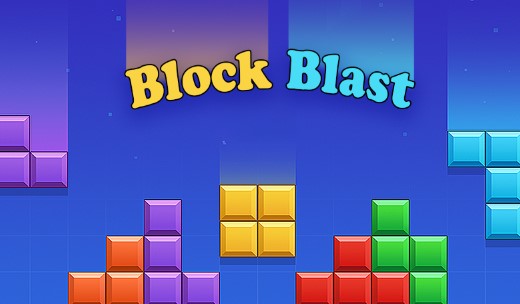
Block Blast is a drag-and-drop block puzzle game where you place differently shaped pieces onto a grid, clearing lines to score points and keep the board playable. Inspired by classic block-stacking mechanics, it strips the format down to its most satisfying core: a clean grid, an evolving set of pieces, and the quiet pressure of a board that keeps filling up.
The appeal is in its pace. There's no timer in standard play, so every decision belongs entirely to you. You can deliberate over a placement, scan the board for upcoming problems, and work through spatial challenges at your own speed. That accessibility makes Block Blast easy to pick up, but efficient line-clearing requires genuine planning — knowing which gaps will strand a future L-piece three moves from now, or recognizing when to sacrifice a clean section of the board to keep space available for a larger shape.
Block Blast works well as a focused puzzle session or a casual background game. Its endless scoring mode means there's always a personal best to chase, and each game plays out differently depending on which piece combinations appear. Players who enjoy Tetris-style logic, spatial reasoning, or simply the satisfaction of a perfectly placed block will find Block Blast hits the same reward center — without the time pressure that makes classic block games intimidating for newer players.
Key Details
Genre: Block Puzzle / Casual Strategy
Difficulty Level: Easy to Medium
Average Play Time: 10–20 minutes per session
Best For: Casual players, puzzle fans, anyone who enjoys spatial reasoning without time pressure
How to Play Block Blast
Getting Started
- You'll see a grid and a set of block shapes available to place.
- Drag a block shape from the selection area onto the grid where you want it.
- Fill complete horizontal rows or vertical columns to clear them and earn points.
- Clearing lines creates space for future pieces — keeping the board from filling up is the ongoing challenge.
- The game ends when no available piece can fit anywhere on the remaining grid.
Basic Controls
Select a block: Click or tap the piece
Place a block: Drag to desired position and release
Preview placement: Hover over the grid to see where the piece lands
Objective: Place pieces efficiently to clear as many lines as possible and achieve the highest score. There is no finish line — the game continues until the board fills and no valid placement remains.
Block Blast Features & Highlights
- No time limit — place pieces at your own pace, making it accessible for all skill levels
- Drag-and-drop controls — simple and intuitive on both desktop and mobile
- Endless scoring mode — always a personal best to chase with no fixed endpoint
- Varied piece shapes — combinations of L, T, square, and other block forms keep each game tactically different
- Clean, distraction-free design — straightforward interface keeps focus on the puzzle itself
Block Blast Tips & Strategies
Beginner Tips
- Keep the center of the board open. Pieces are harder to place efficiently when the grid gets cluttered around the middle.
- Clear columns as well as rows — vertical clears are just as valuable and easy to overlook.
- Don't rush. The game has no timer, and hasty placements create isolated gaps that strand future pieces.
Advanced Strategies
- Think two to three pieces ahead. The current available pieces are all visible — plan placements around all of them, not just the one you're dragging.
- Prioritize clearing multiple lines simultaneously. A double or triple clear scores significantly more points than the same number of lines cleared individually.
- Recognize which piece shapes are hardest to place (large L-blocks, zigzags) and reserve space for them proactively rather than reacting after they appear.
What to Watch Out For
- Isolated single-square gaps. A gap that can only be filled by a 1×1 piece will become a permanent problem if no such piece appears — avoid creating them.
- Filling one side of the board while neglecting the other. Lopsided boards reduce your placement options and accelerate game-ending lock-out scenarios.
Block Blast Elements Explained
Grid and Line Clearing: The playing field is a fixed grid, typically 8×8 or 10×10 depending on the version. When every cell in a complete row or complete column is filled, that line clears and all blocks in it disappear, creating space and awarding points. Clearing multiple lines at once (for example, filling both a row and a column simultaneously with one piece placement) yields bonus points and is the primary scoring optimization. The grid doesn't shift downward like in Tetris — cleared cells simply open up wherever they were, which means spatial management across the entire board is equally important at every position, not just at the bottom.
Piece Selection System: At any given moment, you have a set of block shapes available to place (usually two or three). You can place them in any order. Once you place all available pieces, a new set appears. You cannot skip a piece or hold it for later — every piece in the current set must be placed before the next set arrives. This creates medium-term planning pressure: even if the current piece is awkward, you need to find a placement that doesn't compromise your ability to fit the remaining pieces in the set. Recognizing which pieces in your current set are most placement-sensitive and handling those last is a core intermediate skill.
Scoring System: Points are awarded for each piece placed and bonus points for each line cleared, with multipliers for clearing multiple lines simultaneously. The cumulative high score persists across sessions, giving players a target to beat on return visits. There are no level thresholds or speed increases — difficulty increases naturally as the board fills and piece combinations become harder to accommodate. The score serves as the primary measure of session quality, rewarding both longevity (keeping the board alive longer) and efficiency (clearing lines rather than just placing pieces).
Block Blast Frequently Asked Questions
Q: How do I clear a line in Block Blast?
A: Fill every cell in a complete horizontal row or vertical column with block pieces. The moment the last cell in a line is filled, the entire line clears automatically and points are awarded.
Q: What should I do if I can't find a valid placement for a piece?
A: If no valid placement exists for any available piece, the game ends. To avoid this, prioritize keeping open columns and rows on multiple sections of the board rather than concentrating blocks in one area.
Q: Is Block Blast compatible with mobile devices?
A: Yes. The drag-and-drop controls work on touchscreen devices. The game runs in browser via HTML5 and is playable on desktop, tablet, and most mobile browsers.
Q: Can I save my progress mid-game?
A: Block Blast is a session-based game — each game runs until the board fills. Your high score saves automatically in your browser between sessions, but mid-game state does not persist if you close the tab.
Q: How do I score more points?
A: Clear multiple lines simultaneously with a single piece placement whenever possible. A piece that completes both a row and a column at once earns significantly more than two separate single-line clears. Planning placements to set up multi-line clears is the primary route to high scores.
Games Like Block Blast You Might Enjoy
If you like Block Blast, you might also enjoy:
- Dashmetry - it shares the same browser horror tension, quick decision-making, and replay-friendly pressure.
- FrontWars.io - it shares a story-driven horror structure where atmosphere and choices matter as much as reflexes.
- Geometry Dash Lite - it shares the same browser horror tension, quick decision-making, and replay-friendly pressure.