


Night of the Consumers Overview
Stock the shelves. Satisfy the customers. Don't let the manager catch you. The horror is in the job itself.
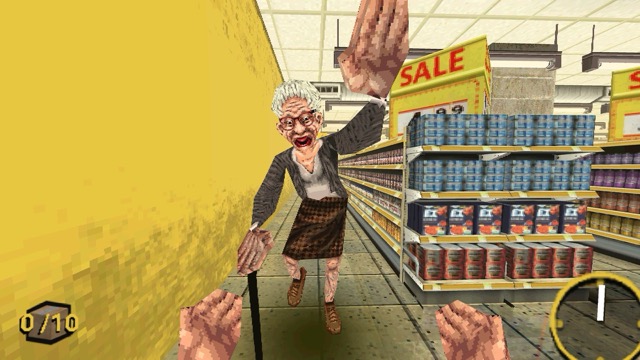
Night of the Consumers is an indie horror game developed by Germfood that turns the mundane misery of retail work into something genuinely terrifying. You play as a convenience store employee with a simple enough objective: stock all the shelves before the store closes. What makes this harder than it sounds is the store is full of customers — and these are not ordinary customers. They are relentless, demanding, and wrong in ways that are difficult to articulate until one of them turns and looks directly at you.
Rendered in a deliberately unsettling PlayStation-era aesthetic, the game's lo-fi visual style amplifies rather than diminishes its horror. Chunky polygons and a muted color palette give the store an oppressive, dream-logic quality — familiar enough to recognize as a place you've been, distorted enough to make every aisle feel like a threat. The sound design piles on: footsteps from the manager echo through the store with the specific anxiety of someone you're not supposed to let catch you slacking, while customer screams spike the tension at the worst possible moments.
The horror in Night of the Consumers is recognizable horror — the dread of not finishing in time, of being caught, of a demanding customer pinning you in place while everything else falls behind. It is the nightmare version of a job everyone has either worked or witnessed, played straight with just enough surrealism to make the mundane feel monstrous.
For players who want their horror with a satirical edge and a genuinely stressful gameplay loop, this is essential.
Key Details
| Genre | Indie Horror / Survival |
| Difficulty Level | Medium / Hard |
| Average Play Time | 15–30 minutes per run |
| Best For | Indie horror fans, players drawn to retail-horror satire, and anyone who enjoys tense time-pressure games with a darkly comedic sensibility |
How to Play Night of the Consumers
Getting Started
- Understand your primary objective — your job is to stock all the shelves before the time limit expires. This is always the main task. Every other challenge in the game exists to prevent you from completing it.
- Learn the store layout immediately — before customers begin demanding your attention, take a moment to orient yourself. Knowing where each section is located lets you navigate customer escort requests and shelf-stocking routes efficiently.
- Prioritize shelves strategically — don't stock from the nearest shelf outward. Start with sections furthest from the manager's patrol path and work toward the more exposed areas, giving yourself maximum uninterrupted stocking time in the early shift.
- Handle customers quickly but not at the expense of everything else — when a customer demands to be taken to a section of the store, escort them promptly to avoid escalating their behavior. But do not let customer management consume so much time that the primary stocking objective falls behind.
- Use purchasable items to your advantage — food, cameras, and flashlights are available to buy in the store. Identify which items provide the most value for your current situation and spend accordingly rather than stockpiling everything available.
Basic Controls
| Input | Action |
|---|---|
| WASD / Arrow Keys | Move through the store |
| Mouse | Look around / control camera direction |
| E | Interact with objects and customers |
| Stock shelves | Carry and place items on designated shelf locations |
| Escort customers | Lead demanding customers to their requested store section |
| Purchase items (in-store) | Buy food, cameras, or flashlights from available store stock |
Objective
Stock all the store's shelves before the closing time limit expires while managing the demands of increasingly difficult customers and avoiding detection by the roaming manager. Being caught by the manager costs valuable time through forced reprimands. Letting customers escalate without attention has its own consequences. Balance both threats while keeping steady progress on the shelving task that determines whether you make it through the shift.
Night of the Consumers Features & Highlights
- Retail horror satire — the game weaponizes the specific anxieties of service work — demanding customers, overbearing management, impossible time pressure — and plays them completely straight within a horror framework
- PlayStation-era visual aesthetic — the lo-fi, chunky polygon art style from developer Germfood creates a distinctive, dreamlike store environment that amplifies the horror rather than softening it
- Reactive sound design — manager footsteps and customer screams are active threat signals rather than ambient atmosphere, making the audio layer a genuine survival tool for awareness and positioning
- Dual threat management — customers and the manager operate as simultaneous but distinct pressures, each requiring different responses and neither allowing you to ignore the other
- Purchasable in-store items — food, cameras, and flashlights available within the store provide tactical options for managing the shift's escalating challenges
Night of the Consumers Tips & Strategies
Beginner Tips
- Listen for the manager's footsteps constantly. The manager's approach is audio-telegraphed before it becomes visual. When you hear footsteps that sound managerial, stop what you're doing and reposition away from the sound source. Being caught mid-task and yelled at costs more time than the brief detour to avoid detection.
- Escort customers to their sections immediately but directly. When a customer demands a store tour, walk them to the requested area without detours. The longer you delay or take indirect routes, the more time the escort consumes and the more behind the stocking objective falls. Efficient escort routing is as important as speed.
- Check the time remaining frequently. New players become absorbed in customer management and forget to track how the time limit is progressing. The closing time waits for no one — regular clock checks let you recalibrate your pace before the final minutes arrive as a surprise.
Advanced Strategies
- Map the manager's patrol pattern across early runs. The manager follows a route through the store that, once learned, becomes predictable. Stocking in sections the manager has recently vacated — and retreating ahead of the return — creates significantly longer uninterrupted work windows than reactive avoidance alone.
- Use cameras to extend your awareness of the store. Purchasable cameras placed in key positions extend your ability to monitor both the manager's location and approaching customers without requiring physical presence in those areas. Strategic camera placement effectively gives you a surveillance network that substitutes for the in-person monitoring that costs movement time.
What to Watch Out For
- Customers as time sinks rather than threats. The horror game framing of customers can lead players to treat them as enemies to be defeated. In practice, the primary danger of difficult customers is time — every minute spent managing their demands is a minute not spent stocking shelves. Satisfy them efficiently rather than avoidantly, and treat the time cost of each interaction as the actual stakes.
- Over-purchasing items without a clear use in mind. Food, cameras, and flashlights are each useful in specific situations, but spending store budget on items you don't immediately need drains resources that might be critical later. Buy with purpose rather than as a precaution against every possible scenario.
Night of the Consumers Elements Explained
Customer Management System
The customers in Night of the Consumers are the game's primary active obstacle and the most direct expression of its retail horror concept. Unlike passive environmental threats, customers seek you out, halt your movement, and make specific demands that must be satisfied before they release you back to your actual job. Their requests center primarily on store navigation — they want to be escorted to particular sections of the store, and they expect immediate attention.
The management challenge customers present is fundamentally about time. A customer's demands are not difficult to fulfill in isolation; the difficulty lies in the compounding effect of multiple customer interactions eating into the closing time limit while shelves remain unstocked. Every escort walk is productive time not spent on the primary objective, and the customers do not account for each other — a queue of demanding customers can consume the entirety of a shift's remaining time if not handled efficiently.
Efficiency in customer management means directness. The fastest route to the requested section, immediate execution of the escort without task-switching mid-walk, and a return to stocking the moment the customer is satisfied — these habits reduce per-customer time cost enough to make simultaneous management of customer demands and shelf-stocking genuinely feasible rather than an impossible juggling act.
Manager Avoidance System
The manager is the game's secondary threat and the one whose presence is most directly tied to time loss rather than immediate danger. Being caught by the manager — failing to avoid detection while behind on work or engaging in anything other than stocking — triggers a reprimand sequence that pauses your productive activity and consumes a portion of the remaining shift time. Multiple catches compound meaningfully across a shift.
The manager's footsteps are the primary detection tool available to you. Their sound precedes visual contact, giving you a window to reposition before direct detection occurs. Learning to distinguish manager footsteps from ambient store audio is the first audio skill the game requires, and players who develop it early avoid the majority of caught-and-reprimanded situations that derail runs.
Over extended play, the manager's patrol pattern becomes legible. A manager who has just passed through an aisle will not return immediately, and working in recently cleared zones maximizes uninterrupted stocking time. This predictability is not obvious in early runs — it emerges through observation and costs some failed attempts to internalize. Once understood, however, it transforms manager avoidance from reactive scrambling into proactive route planning.
Purchasable Items System
Three categories of purchasable items are available within the store itself — food, cameras, and flashlights — each serving distinct functions that address different aspects of the shift's challenges. Unlike equipment that is provided to you at the start of a run, these items must be actively sought out and purchased, making them optional investments that reward players who identify the right moments to spend.
Food restores stamina and keeps the player character functional through a physically demanding shift. Running low without food available creates degraded movement and interaction speed that compounds against both the time limit and customer management.
Cameras are positional awareness tools. Placed in the store, they extend your sight lines into areas you cannot physically monitor, giving passive information about manager location and customer approach that replaces the active attention those areas would otherwise require.
Flashlights address visibility in the store's darker sections, enabling effective operation in areas that would otherwise require slower, more cautious movement. In sections where the lighting is insufficient for efficient stocking, a flashlight converts a slow zone into a standard one.
Night of the Consumers Frequently Asked Questions
Q: How do I stock the shelves efficiently?
A: Pick up stocking items and carry them to the designated shelf locations marked in the store. Press E to interact with both the items you're carrying and the shelf positions you're filling. Work systematically through sections rather than jumping between them — completing one shelf cluster fully before moving to the next prevents the partial-progress situation where no section is complete as time runs short.
Q: What should I do when the manager is nearby?
A: Stop moving toward any shelf or customer and reposition away from the manager's direction as quietly and directly as possible. Avoid the manager's sightline rather than simply moving away from the sound source — visual detection matters as much as proximity. Once you've created sufficient distance and confirmed the manager has moved on through the audio fade, resume your stocking route from the nearest uncompleted shelf section.
Q: Is this game compatible with all browsers and devices?
A: Night of the Consumers is an indie PC game developed by Germfood, available for Windows through platforms including itch.io and Steam. It is not a browser-based game and requires a PC installation to play. The game has modest system requirements suited to its PS1-era visual aesthetic — most current desktop and laptop computers will run it without issue. Mobile and console versions are not currently available.
Q: Can I save my progress mid-run?
A: Each run represents a single shift from start to close. There is no mid-run save system — if the shift ends in failure (time expiring or being caught too frequently), the run resets to the beginning of the shift. Given the 15–30 minute runtime per attempt, this is intentional design. Each run is a complete, self-contained challenge rather than a session-spanning progression.
Q: What are the best items to buy first when I have enough store credit?
A: Cameras are the highest-priority purchase in most runs — they extend your awareness of the manager's location and approaching customers without requiring you to physically monitor those areas, which directly reduces the time cost of threat awareness. Food is the second priority if your stamina is visibly degrading and affecting your movement speed. Flashlights are situational; purchase them when you're spending significant time in specific dark sections where movement is visibly slower than in lit areas.
Games Like Night of the Consumers You Might Enjoy
If you like Night of the Consumers, you might also enjoy:
- Overnight Interview - it leans into eerie story clues, confined spaces, and slow-burn horror discovery.
- The Coffin of Andy and Leyley - it leans into eerie story clues, confined spaces, and slow-burn horror discovery.
- Human Expenditure Program - it leans into eerie story clues, confined spaces, and slow-burn horror discovery.