















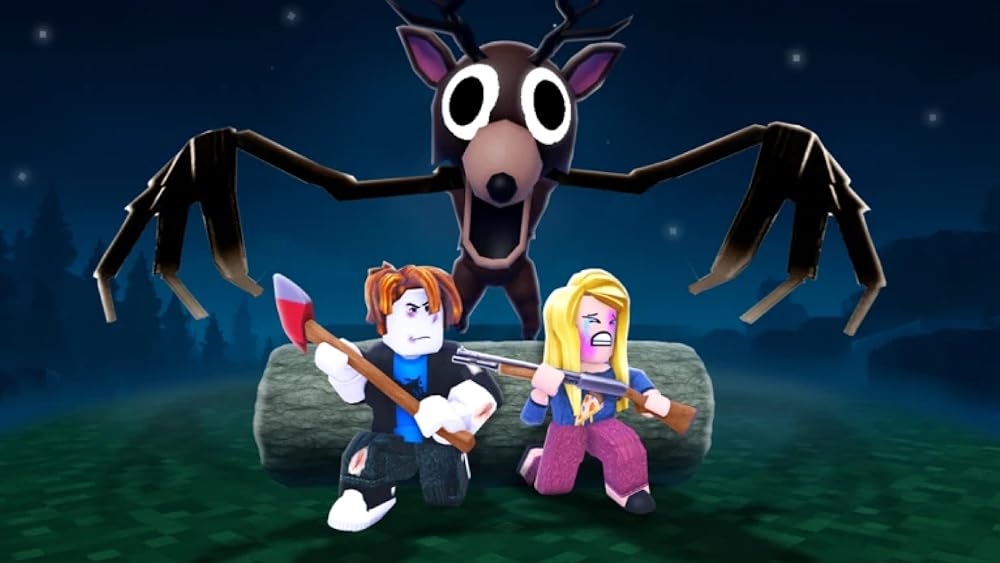
99 Nights in the Forest Overview
99 Nights in the Forest invites you into a vibrant, enchanted realm where exploration, puzzle-solving, and strategic combat interweave within a beautifully crafted environment. You traverse through a magical forest filled with wonder and danger, uncovering mysteries through persistent investigation and overcoming challenges through both intellectual problem-solving and skillful combat. This is adventure gaming that respects player curiosity, rewards thorough exploration, and creates genuine satisfaction through discovery.
Click to play more 99 Nights in the Forest games.
The game establishes atmosphere through visual artistry and audio design working in concert. The forest itself becomes a character—vibrant colors, detailed landscapes, hidden areas, and environmental details create environments that feel alive and purposeful. Sound design complements visuals through ambient forest sounds, creature calls, and atmospheric music that shifts based on environment and tension levels. Together, these elements create immersive presence that draws players into the forest's world rather than simply observing it.
What distinguishes 99 Nights in the Forest is its balance between multiple gameplay systems. Exploration provides discovery and environmental storytelling. Puzzles require critical thinking and environmental observation. Combat demands strategy and skill rather than reflexive button-mashing. Collectibles unlock abilities, areas, and narrative elements. This balance prevents any single system from dominating; instead, players experience varied gameplay constantly shifting between exploration, puzzle-solving, combat, and collection. No two play sessions feel identical, maintaining engagement through constant mechanical variety.
For players seeking adventure games offering exploration depth, those enjoying puzzle-solving challenges, combat enthusiasts seeking strategy-focused encounters, and anyone appreciating beautiful game worlds with layered complexity, 99 Nights in the Forest delivers. This is adventure gaming that challenges mind and reflexes equally, creating holistic gameplay experiences where success demands varied competencies.
Key Details
Genre: Action Adventure / Puzzle Exploration / Fantasy
Difficulty Level: Medium (Accessible learning curve; escalating challenge)
Average Play Time: 120-180 minutes
Best For: Adventure enthusiasts, puzzle lovers, combat-focused players, exploration-oriented gamers, players seeking beautiful environments, casual and hardcore players, all ages
How to Play 99 Nights in the Forest
Getting Started
Enter the forest and absorb the environment – observe visual details, listen to audio cues, understand the landscape's layout and available areas
Begin systematic exploration – search for hidden areas, collectibles, and environmental details that provide narrative context
Encounter your first enemies and learn combat mechanics through controlled engagement
Discover your first puzzle and work through its solution using environmental observation and logical thinking
Collect items that expand capabilities – understand how collectibles enable progression and unlock new areas
Basic Controls
WASD or Arrow Keys: Move your character through the forest; directional input determines movement direction and speed
Left Mouse Button (LMB) or Left Click: Execute primary attack; combat engagement with enemies
Spacebar: Jump over obstacles, reach elevated areas, or avoid ground-level threats; essential for platforming and evasion
Number 1: Equip first weapon; typically starting weapon with balanced properties
Number 2: Equip second weapon; alternative weapon with different tactical properties
Mouse or Directional Input: Aim attacks; direction of attack often matches movement or mouse direction
Shift or Additional Keys (varies): Sometimes used for secondary abilities, dodging, or special actions
Objective
Your interconnected goals form the adventure progression
Explore the forest systematically by discovering all areas, investigating hidden locations, and understanding the landscape's interconnected layout
Uncover the forest's mysteries through environmental storytelling, discovered documents, and NPC interactions
Complete environmental puzzles requiring observation, logic, and creative use of collected items
Overcome combat encounters through strategic weapon selection, enemy pattern recognition, and tactical positioning
Collect items and collectibles that enhance abilities, unlock new areas, and provide narrative context
Progress through increasingly challenging levels as the forest reveals deeper secrets and more formidable obstacles
Reach the forest's heart and confront the central mystery driving the narrative
Complete your 99-night journey determined by your exploration depth, puzzle-solving success, and combat effectiveness
Success means reaching the conclusion and understanding the forest's complete narrative. Mastery means discovering every secret, solving all puzzles, and defeating all challenges efficiently.
99 Nights in the Forest Features & Highlights
- Stunning Visual Design – Vibrant colors, detailed landscapes, and beautiful environmental design create immersive forest atmosphere
- Immersive Audio Design – Ambient sounds, creature calls, and dynamic music enhance atmosphere and provide audio cues guiding exploration
- Balanced Gameplay Systems – Exploration, puzzles, combat, and collection systems create mechanical variety preventing gameplay monotony
- Environmental Storytelling – Visual details, architectural choices, and object arrangements tell stories without exposition
- Puzzle Variety and Integration – Diverse puzzles ranging from logic challenges to environmental manipulation; solutions often connect to narrative or exploration
- Strategic Combat Encounters – Enemies with distinct behaviors and weaknesses; victory requires pattern recognition and tactical thinking rather than reflexive action
- Collectible Progression – Items enhance abilities, unlock areas, and provide narrative context; collection rewards exploration
- Escalating Challenge – Early areas establish mechanics and build confidence; later areas introduce complexity and genuine difficulty
99 Nights in the Forest Tips & Strategies
Beginner Tips
Explore thoroughly before progressing – Hidden areas, collectibles, and puzzle components often reward patient investigation
Observe enemy behavior patterns – Most enemies follow predictable patterns; understanding these patterns enables strategic engagement
Read environmental details – Visual cues often indicate puzzle solutions, collectible locations, or path directions
Experiment with both weapons – Different enemies have different vulnerabilities; switching weapons against appropriate threats improves combat efficiency
Use jumping strategically – Platforming elements aren't just obstacles; they're navigation tools and combat evasion mechanics
Common Mistakes to Avoid
Don't rush through areas – Speedy progression often causes you to miss collectibles, puzzles, and narrative elements
Avoid committing to single weapon – Weapon versatility provides combat advantage; learn when each weapon excels
Don't ignore audio cues – Sounds often indicate danger, collectible locations, or puzzle solutions
Avoid overcommitting in combat – Aggressive engagement often results in damage; learn to balance offense and positioning
Quick Win for Starting Out
Spend time exploring the first area without worrying about progression pressure
Collect every visible item and examine everything you can interact with
Practice combat against weaker enemies before encountering challenging opponents
Create a mental map of area layout and connection points
Experiment with puzzle interactions without fear of failure; most puzzles allow experimentation
Advanced Strategies
Master weapon switching – Fluid weapon transitions mid-combat allow quick adaptation to enemy types and combat situations
Exploit enemy positioning – Positioning enemies against terrain obstacles, edges, or other hazards enables environmental damage or tactical advantage
Stack collectible benefits – Understanding which collectibles synergize allows strategic collection prioritizing items that complement each other
Plan exploration routes – Understanding area connections and collectible locations allows efficient exploration minimizing backtracking
Combine puzzle solutions – Complex puzzles often require multiple simple solutions combined; break problems into components
System Mastery Tip
Master environmental awareness – Recognizing audio cues, visual indicators, and spatial relationships transforms confusion into understanding. Experienced players instantly identify puzzle components, recognize hidden areas through environmental cues, and anticipate threats through audio warnings. Developing this awareness elevates your entire experience.
What to Watch Out For
The Deep Forest Ambush – Specific forest section combines multiple enemy types simultaneously. Don't rush; understand enemy positions and engagement order before committing. Use terrain and range to manage multiple threats efficiently
The Mirror Puzzle – This environmental puzzle requires understanding reflections and spatial relationships. Logic matters more than reflexes; take time to comprehend the puzzle's mechanics before attempting solution
The Boss Guardian – The forest's primary obstacle combines combat skill requirements with puzzle components. Don't engage purely through combat reflexes; observe patterns and exploit weaknesses through understanding its behavior
99 Nights in the Forest Elements Explained
Environmental Exploration and Discovery
The forest rewards curiosity through hidden areas, collectibles, and environmental storytelling. Thorough exploration provides resources (items for combat), narrative understanding (environmental storytelling revealing forest history), and practical benefits (discovering shortcuts, understanding puzzle components). The game trusts players to explore without excessive guidance; environmental design communicates navigability through visual cues rather than explicit markers.
This approach creates satisfying discovery moments where careful observation yields breakthroughs. Finding a hidden area feels like personal accomplishment rather than following waypoint instructions. Solving puzzles through environmental clues generates intellectual satisfaction. The exploration system rewards patience and observation, creating consistent incentive to investigate everything. Different players discover different secrets based on exploration thoroughness, creating varied individual experiences within the shared game world.
Puzzle Design and Integration
Puzzles range from environmental observation challenges (finding hidden items or understanding patterns) to logic puzzles (combining solutions to achieve objectives) to practical challenges (manipulating environment to progress). Solutions often require collectibles, environmental interaction, or understanding spatial relationships. The puzzle design avoids artificial difficulty—solutions emerge logically from environments rather than requiring obscure reasoning.
Puzzles also integrate with other systems. A combat puzzle might require defeating enemies in specific order to progress. An exploration puzzle might require collectibles to unlock areas. A collection puzzle might require understanding how to combine items. This integration creates cohesion where puzzle-solving connects meaningfully to other gameplay systems. Solving puzzles doesn't interrupt adventure; it advances it through meaningful challenge.
Combat Strategy and Enemy Variety
Enemies possess distinct behaviors, movement patterns, and vulnerabilities. Some are fast but weak; others are slow but powerful. Some are vulnerable to specific weapons. Some attack in patterns allowing defensive positioning. Understanding these distinctions determines combat success. Rather than generic "attack everything," the game rewards observing individual enemy types and adapting tactics accordingly.
Combat also integrates with environmental interaction. Terrain features, elevation changes, and hazards can be exploited tactically. Positioning enemies against terrain creates vulnerability windows. Using environment as defense mechanism reduces damage taken. This approach transforms combat from isolated mechanical encounter into environmental puzzle-solving where space and positioning matter as much as reflexes.
99 Nights in the Forest Frequently Asked Questions
Q: I'm stuck on a puzzle. How should I approach it?
A: First, examine the environment carefully—visual cues often indicate solutions. Second, consider which collectibles you possess; many puzzles require specific items. Third, observe environment interaction patterns; if something can be manipulated, try different approaches. Fourth, look for environmental storytelling providing narrative context suggesting puzzle logic. Finally, if genuinely stuck, explore other areas; you might find missing items or clues elsewhere. Return to the puzzle with fresh perspective; solutions often become obvious after time away.
Q: Which weapon should I use in different situations?
A: This varies by weapon design, but generally: learn which weapon works against which enemy types through experimentation. Some weapons are better for fast enemies; others for heavy enemies. Some provide range advantages; others offer power. The game encourages weapon versatility—switching weapons based on threats rather than committing to single weapon. Practice both weapons until you understand their strengths and can switch fluidly during combat.
Q: How important is combat skill versus puzzle-solving?
A: Both matter. Combat is accessible enough that players lacking reflexes can succeed through positioning and understanding enemy patterns. Puzzle-solving requires observation and logic but avoids requiring obscure reasoning. The game balances both; you won't get stuck long-term if you excel at one but struggle at the other. Weak areas create more challenge, but with patience and observation, all players can progress.
Q: Should I collect everything I find?
A: Generally yes, but inventory limits might require choices. Collect all visible items; understand what each does before deciding what to keep. Some items are more valuable than others based on current challenges. Experimentation reveals which collectibles matter most for your playstyle. You can revisit areas to collect items you initially skipped if needed.
Q: Can I explore areas out of intended order?
A: Generally yes, though some areas unlock only after collecting specific items or solving particular puzzles. The forest interconnects allowing multiple approaches to many locations. Early areas remain accessible later; you can explore in varied orders. However, early areas are designed to teach mechanics before later challenges. Attempting heavily later areas without preparation often results in excessive difficulty.
Q: How long should each area take?
A: This varies tremendously based on exploration thoroughness and puzzle-solving speed. Some areas might take 10-15 minutes; others might consume 30+ minutes if you explore exhaustively or puzzle-solve slowly. There's no time pressure; the game rewards patient, thorough engagement. Some players rush through in 2-3 hours; others invest 5+ hours exploring comprehensively.
Q: What if I die in combat?
A: Most games include checkpoint systems or resurrection mechanics. You typically respawn nearby or at last major checkpoint rather than losing all progress. However, understand that respawning doesn't eliminate challenge—you must still overcome the encounter successfully to progress. Multiple deaths might indicate you need better positioning, different weapon strategy, or preparation through collectible gathering.
Q: Are there multiple endings?
A: 99 Nights in the Forest typically features a primary ending determined by reaching the conclusion. However, how thoroughly you've explored and which puzzles you've solved might influence narrative nuances. Different players' experiences vary based on their journey and discoveries, but the core ending remains consistent.
Q: How does the "99 Nights" concept matter to gameplay?
A: The title suggests a specific time period or narrative structure. This might represent the adventure's duration (99 actual game sessions, 99 in-game days, or metaphorically 99 challenges). Understanding the concept's narrative significance emerges through exploration and story discovery. The number might have thematic importance to the forest's mysteries.
Q: What makes this game different from other adventure games?
A: The balance between exploration, puzzle-solving, and combat creates distinctive mechanical variety. Beautiful visual and audio design creates immersive atmosphere. Environmental storytelling provides narrative depth without exposition. Puzzle integration with other systems prevents them from feeling like interruptions. Collectible progression ties directly to ability expansion and narrative understanding. These elements combine creating wholesome adventure experience emphasizing varied challenge and beautiful world design.
Q: Can I play this game casually or does it require dedication?
A: The game accommodates casual play—there's no time pressure or punishment for slow progression. However, thorough engagement provides greatest satisfaction. Casual players can enjoy surface-level adventure; dedicated players discover deeper mysteries and complete secrets. Choose your engagement level; both are legitimate approaches. The game rewards dedication without requiring it for basic progression.
Q: What should I do if I feel lost?
A: Revisit earlier areas and explore more thoroughly—you might find collectibles or puzzle components you missed. Check whether you have required items for puzzles; missing items suggest areas you haven't fully explored. Listen to audio cues; sounds often provide directional hints. Read environmental details; visual indicators often show progression paths. If still confused, take a break; fresh perspective often clarifies previously obscure situations.
Q: Is this game scary or just adventurous?
A: The game emphasizes adventure and exploration rather than horror. The forest is magical and beautiful rather than frightening. Some challenges might be tense (combat, tricky platforming), but the overall tone is wonder and discovery rather than fear. It's suitable for all ages without excessive frightening content.
Games Like 99 Nights in the Forest You Might Enjoy
If you like 99 Nights in the Forest, you might also enjoy:
- Survive 99 Nights in the Forest Original - it shares the same forest-survival pressure, resource planning, and escalating night threats.
- Deer Cannibal 99 Nights in the Forest - it shares the same forest-survival pressure, resource planning, and escalating night threats.
- Vampire Survival - it shares the same forest-survival pressure, resource planning, and escalating night threats.