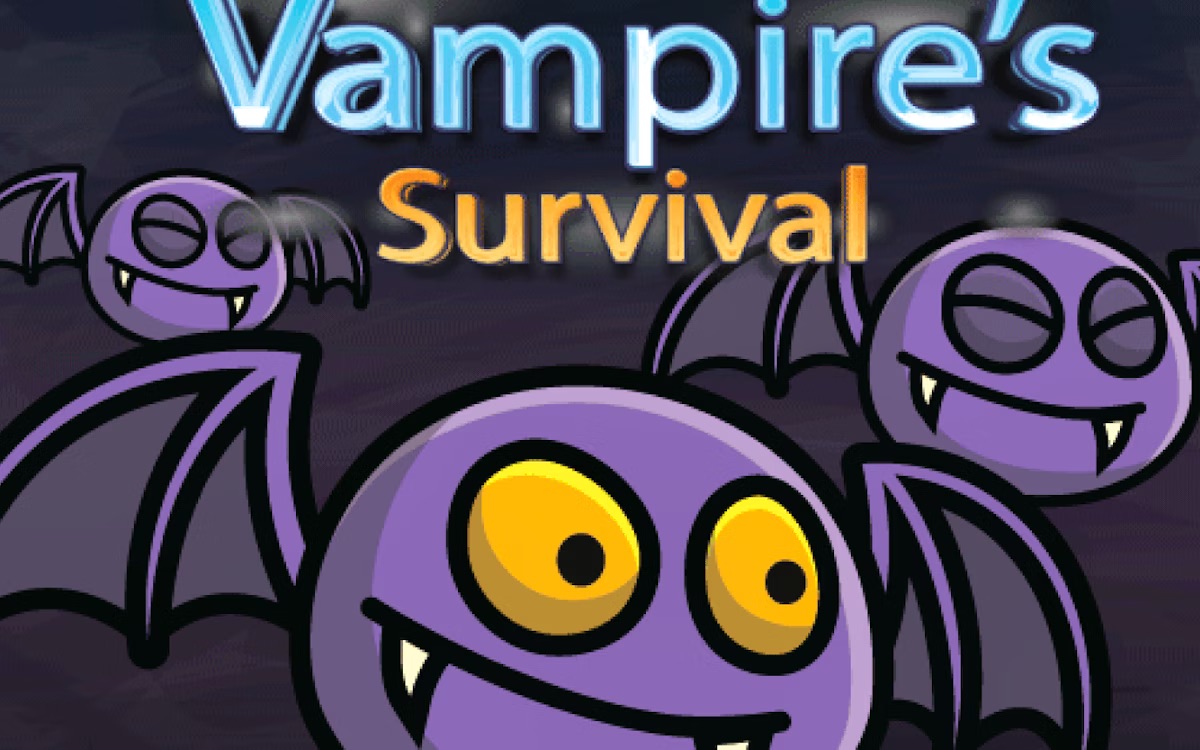




Vampire Survival Overview
Vampire Survival plunges you into relentless combat against supernatural hordes where survival depends on split-second decisions, strategic ability usage, and efficient resource management. This is action-focused survival where you don't hide or wait—you fight. Waves of vampires and supernatural creatures assault you continuously, forcing constant engagement. Success means staying alive through sheer combat prowess, tactical ability sequencing, and smart resource allocation. Failure means being overwhelmed by the tide.
The game establishes urgency through wave-based combat design. Enemies emerge in predictable but increasingly numerous patterns. Each wave introduces new threat types with different abilities and tactical requirements. You must adapt your combat approach, manage resources between waves, and prepare for escalating challenges. Audio design amplifies urgency—creature sounds, combat effects, and atmospheric elements create pervasive pressure. Visual effects communicate threat intensity through screen-filling enemy numbers and impactful combat reactions.
What distinguishes Vampire Survival is its marriage of arcade-style action with strategic progression. Combat is mechanically accessible—mouse-based controls make engagement intuitive—but tactically sophisticated. Which abilities should you use against current threats? When should you consume resources versus conserve them? Which upgrades provide maximum value? How should you position yourself in dangerous terrain? The game rewards players who think strategically within frantic action contexts. Casual players can survive through reflexive action; experienced players succeed through planning ahead and understanding long-term progression strategies.
For players seeking action-focused survival, those who enjoy vampire themes and supernatural combat, and players who appreciate the satisfaction of overcoming escalating odds through skill and strategy, Vampire Survival delivers. This is horror-adjacent action—the vampire theme provides thematic context for combat rather than generating fear. Instead, you feel empowerment as your character develops from vulnerable human into capable combatant capable of facing increasingly nightmarish odds.
Key Details
Genre: Action Survival / Wave-Based Combat / Character Progression
Difficulty Level: Medium (Starts easy, escalates significantly)
Average Play Time: 30-60 minutes per run; multiple runs for complete progression
Best For: Action enthusiasts, vampire game fans, players seeking fast-paced combat, those enjoying wave survival mechanics, fans of character progression and upgrades, casual and hardcore gamers
How to Play Vampire Survival
Getting Started
Select your character – choose from available options with different starting stats and abilities
Understand initial combat mechanics – practice using basic attacks and abilities against early-wave enemies
Learn resource management – observe health, stamina, and inventory systems while maintaining combat engagement
Survive the first few waves to understand escalation pace and encounter variety
Upgrade strategically between waves to improve your combat effectiveness and survivability
Basic Controls
Mouse Movement: Position your character in the arena; determines movement direction and positioning relative to enemies
Left Mouse Button (LMB): Execute primary attack; typically directional based on mouse position relative to character
Right Mouse Button (RMB): Activate secondary ability; varies by character and equipment
Mouse Wheel or Number Keys: Switch between equipped abilities or items
Spacebar or Quick Keys: Activate specific special abilities or consumables
Click and Drag: Some games use drag mechanics for area effects or directional targeting
Double-Click: Sometimes used for sprint or dash abilities for quick repositioning
Objective
Your interconnected goals form the survival progression
Survive successive enemy waves by defeating enemies faster than they overwhelm you
Manage health effectively by avoiding damage, using defensive abilities, and consuming healing items strategically
Accumulate resources (experience points, loot, crafting materials) through enemy defeats
Level up your character by spending experience points to improve stats and unlock new abilities
Craft and equip items that provide combat advantages and survivability improvements
Upgrade weapons and abilities to increase damage output and utility
Adapt tactics to encounter changing threat types as waves escalate
Achieve the longest survival time possible before inevitable overwhelming by enemy numbers
Success means surviving as many waves as possible. Mastery means understanding optimal progression strategies and consistently reaching advanced waves.
Vampire Survival Features & Highlights
- Fast-Paced Combat Intensity – Continuous action where waves escalate in number and difficulty; keeps players engaged and adrenaline elevated
- Character Progression and Leveling – Gain experience points enabling stat improvements, new ability unlocks, and character power scaling throughout run
- Strategic Ability System – Diverse abilities with different tactical applications; choosing which abilities to use when determines combat success
- Resource Management Complexity – Balance health, stamina, and inventory; strategic consumable usage affects survivability and combat readiness
- Crafting and Upgrade Systems – Collect materials to craft items and upgrade weapons; progression decisions compound across the run
- Diverse Enemy Types – Different vampire variants and supernatural creatures possess different abilities, weaknesses, and tactical requirements
- Environmental Variety – Multiple terrain types and arena layouts provide visual diversity and unique tactical challenges
- Escalating Difficulty – Early waves establish mechanics; later waves combine enemies in overwhelming numbers requiring mastered combat and progression
Vampire Survival Tips & Strategies
Beginner Tips
Master movement first – Positioning is more important than rapid clicking; learn to circle strafe around enemy groups
Understand ability cooldowns – Know which abilities are available and when; plan ability sequencing rather than spamming
Prioritize high-threat enemies – Focus damage on threats that pose greatest danger rather than closest enemies; tactical target selection matters
Manage health conservatively – Don't let health drop to dangerous levels; use healing items preventatively rather than reactively
Upgrade survivability early – Increasing health and defense provides more value early than pure damage upgrades
Common Mistakes to Avoid
Don't panic-use abilities – Frantic ability usage wastes powerful effects; use abilities strategically against appropriate threats
Avoid overextending – Pushing into large enemy groups often results in dangerous situations; maintain distance and pull enemies toward you
Don't ignore stamina – Stamina management determines combat duration; don't completely exhaust stamina leaving you vulnerable during recovery
Avoid weak upgrade choices – Not all upgrades are equal; prioritize upgrades that address current survival challenges
Quick Win for Starting Out
Spend the first wave learning enemy behavior without rushing
Identify which enemy types pose greatest threats to your playstyle
Upgrade health before damage if you're taking excessive damage
Practice positioning—kiting (moving while attacking) is more effective than standing still
Experiment with different ability combinations to find effective sequences
Advanced Strategies
Master kiting mechanics – Moving in circles while attacking keeps you out of enemy melee range while maintaining offensive pressure
Exploit enemy AI patterns – Many enemies follow predictable movement patterns; understand these patterns and position accordingly
Stack synergistic upgrades – Upgrades that complement each other (critical chance with critical damage) provide more value than random selections
Manage waves strategically – Use early waves to position yourself, prepare abilities, and enter later waves at optimal positioning
Prioritize crowd control – Abilities that slow, stun, or immobilize enemies often provide more survival value than pure damage
System Mastery Tip
Master ability sequencing – Understanding which abilities to use in which order against specific enemy combinations transforms overwhelming situations into manageable encounters. Some abilities create openings others exploit. Some create crowd control others amplify damage. Learning these synergies separates casual survivors from advanced players.
What to Watch Out For
The Vampire Lord Introduction – This specific enemy type often appears mid-run and possesses powerful abilities. Don't engage directly; use crowd control and positioning to maintain distance. Learn its attack patterns before confronting directly
The Resource Scarcity Point – At specific wave numbers, enemy loot drops typically decrease while enemy numbers increase. Preparation before this point determines survivability after. Build resource reserves early
The Ability Cooldown Trap – Late-game waves require rapid ability usage but cooldowns prevent constant ability access. Manage stamina and cooldowns carefully; don't rely on single powerful abilities for extended periods
Vampire Survival Elements Explained
Wave-Based Combat Progression
Waves represent enemy groups with increasing numbers and complexity. Early waves introduce basic enemy types teaching fundamental combat mechanics. Mid-game waves combine multiple enemy types requiring adaptive tactics. Late-game waves overwhelm through sheer numbers, testing whether you've developed sufficient strength to survive onslaught. This escalation creates natural difficulty progression—the game teaches you to succeed at each stage before presenting the next challenge.
Wave structure also creates resource management moments. Between waves, you can: spend accumulated resources on upgrades, equip different items based on next wave's enemy composition, heal if necessary, and prepare abilities. These moments provide strategic planning opportunities where informed decisions compound advantages. Players who use inter-wave time strategically prepare better than those who rush toward next engagement. The wave structure transforms survival from continuous panic into rhythmic cycles of intense combat and strategic preparation.
Character Progression and Power Scaling
Experience points earned from enemy defeats enable character leveling. Each level grants stat improvements (health, damage, speed, defense) and/or unlocks new abilities. This progression creates satisfying power-scaling where characters start vulnerable and become progressively more capable. Early-wave struggles that seem overwhelming become trivial for experienced characters. This progression creates dopamine cycles—leveling provides tangible power increases rewarding player effort.
Progression also creates long-term strategy decisions. How should you allocate stat improvements? Which new abilities deserve priority? Should you focus on offense or survivability? Different choices create different character archetypes—some players emphasize damage output; others prioritize survivability. These strategic choices create player identity and differentiation. Two players pursuing similar runs might make different progression choices creating distinctly different playstyles and survival strategies.
Resource Management and Crafting Systems
Resources (experience, materials, currency) accumulate through enemy defeats and environmental interaction. These resources enable crafting (creating items from materials) and purchasing upgrades. Strategic resource allocation determines combat readiness. Do you spend currency immediately on healing, or save it for better upgrades? Do you craft defensive items, weapons, or ability enhancements? These decisions create meaningful strategic depth.
Crafting systems also provide player agency. Rather than being forced into specific progressions, players craft items matching their playstyle. A aggressive player might craft weapons and damage amplifiers. A defensive player might craft armor and survivability items. This system rewards informed decision-making—understanding what provides maximum value for your situation creates strategic advantage. Resource scarcity creates pressure—you can't craft everything, only what matters most. This prevents player paralysis (unlimited options) while enabling meaningful choice.
Vampire Survival Frequently Asked Questions
Q: I keep dying to specific enemy types. How should I handle them?
A: Study their attack patterns and movement behavior. Different enemy types have different weaknesses—some are vulnerable to crowd control, others to specific damage types. Understand which of your abilities effectively counter specific enemy types. When possible, isolate these threats and engage them separately. Use positioning and kiting to maintain distance. If specific enemies consistently kill you, prioritize upgrades that address their threat (damage if you need to kill them faster, defense if they deal excessive damage).
Q: What's the optimal upgrade path?
A: Early upgrades should focus on health and defense; survivability matters more than damage when you're vulnerable. Mid-game should balance offense and defense based on what's killing you. Late-game typically emphasizes damage since health scaling alone becomes insufficient. However, optimal paths vary based on character choices, playstyle, and enemy composition. Experiment to find what works for you. There's no single "correct" progression; different approaches succeed with different playstyles.
Q: How should I use abilities strategically?
A: Abilities have cooldowns (waiting periods between uses), so use them purposefully rather than constantly. Save powerful abilities for high-threat situations. Use crowd control abilities when surrounded. Use damage abilities against priority targets. Some abilities synergize (combinations providing greater effect than independent use). Learn these synergies. Don't waste powerful abilities on weak enemies; reserve them for threatening situations. Ability sequencing (using abilities in specific orders) often creates better results than random activation.
Q: Can I survive indefinitely or does the game end?
A: Wave difficulty eventually exceeds even well-equipped characters' capabilities. Most runs end when enemy numbers or threat levels overwhelm you despite optimal play. Some games include specific ending points (reaching a final wave or specific survival time). Expect runs to last 30-60 minutes depending on skill and decision quality. Each run is a complete experience with natural conclusion rather than endless survival. Subsequent runs allow attempting improved strategies or different character choices.
Q: Should I focus on health or damage?
A: Early game: prioritize health for survivability. Mid-game: balance based on challenge—if you're being killed too quickly, add health; if you're not killing enemies fast enough, add damage. Late-game: typically damage becomes more important since bosses and high-tier threats require quick elimination. However, this varies by playstyle. Defensive players might always prioritize health; aggressive players might always emphasize damage. Find balance matching your preferences.
Q: What's the difference between equipment types?
A: Different equipment provides different bonuses. Weapons increase damage. Armor increases defense. Accessories provide utility (speed, special effects). Rings or amulets provide stat bonuses. Understanding what each equipment type provides enables informed decisions about which to craft or equip. Different situations call for different equipment—adapt based on current challenges and upcoming wave compositions.
Q: How does loot work?
A: Enemies drop loot (materials, currency, items) when defeated. More powerful enemies drop better loot. Certain abilities or equipment might increase loot quantity or quality. Collect dropped loot to gather resources for crafting and upgrades. Some loot appears only from specific enemy types; defeating diverse enemies provides diverse resources. Efficient resource gathering requires defeating many enemies, so wave survival directly correlates with resource accumulation.
Q: Can I replay waves or practice specific encounters?
A: Most versions feature runs where you face new wave sequences each attempt. Some versions might include practice modes or ability to customize encounters. Check game options for available modes. Standard runs involve progressive waves with no ability to repeat or pause. Each run is a continuous experience from wave one until survival ends.
Q: What makes different characters distinct?
A: Different characters typically start with different stats, starting abilities, and progression options. Some characters might excel at range while others prefer melee. Some emphasize speed; others emphasize power. Some possess unique abilities unavailable to other characters. These differences create distinct playstyles and strategies. Experimenting with different characters provides gameplay variety and allows finding your preferred combat style.
Q: How important is positioning?
A: Extremely important. Positioning determines which enemies you're engaging, your distance from threats, and your ability to escape danger. Good positioning allows managing multiple threats simultaneously. Poor positioning results in being surrounded or trapped. Develop habits of constantly moving, maintaining distance from threats, and avoiding positioning where multiple enemies can attack simultaneously. Positioning expertise separates casual players from experienced survivors.
Q: What's the difference between difficulty modes?
A: Difficulty modes typically adjust enemy damage, health, wave escalation speed, and loot quantities. Easier modes provide more resources and less dangerous enemies, allowing focus on learning mechanics. Normal modes provide balanced challenge for experienced players. Hard modes create significant challenge requiring mastered mechanics and optimal progression decisions. Choose difficulty matching your skill level. There's no shame in lower difficulties; they provide legitimate gameplay experiences.
Q: Why do I plateau at specific wave numbers?
A: Plateaus typically indicate you've reached difficulty matching your current character power. To progress further, you need better equipment or higher-level character stats. Focus on farming earlier waves efficiently to accumulate upgrade resources. Alternatively, reassess your progression strategy—you might be investing in wrong upgrades. Sometimes changing abilities or equipment approach provides breakthrough. Persistent plateaus might indicate you need practice or strategic reconsidering rather than simple persistence.
Q: What makes Vampire Survival different from other wave survival games?
A: The vampire/supernatural theme provides distinctive visual and audio atmosphere. Character progression systems create long-term satisfaction. Crafting and upgrade mechanics provide meaningful strategic decisions. Wave escalation design teaches mechanics progressively while maintaining challenging difficulty curve. Combination of accessible controls with strategic depth accommodates casual and hardcore players. These elements create distinctive experience emphasizing action alongside strategic progression rather than focusing primarily on one or the other.
Games Like Vampire Survival You Might Enjoy
If you like Vampire Survival, you might also enjoy:
- 99 Nights in the Forest - it shares the same forest-survival pressure, resource planning, and escalating night threats.
- Survive 99 Nights in the Forest Original - it shares the same forest-survival pressure, resource planning, and escalating night threats.
- Deer Cannibal 99 Nights in the Forest - it shares the same forest-survival pressure, resource planning, and escalating night threats.