
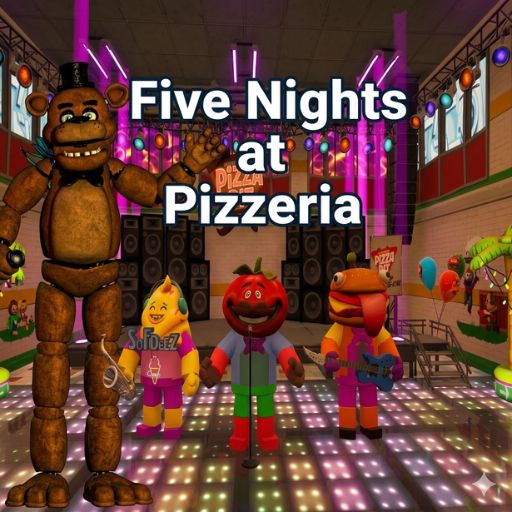
Freddy Fazbears Pizzeria Simulator Overview
Run the restaurant. Buy the robots. Try to survive them.
Freddy Fazbear's Pizzeria Simulator is a survival horror game disguised as a cheerful restaurant management sim — and the disguise is half the point. By day, you are Michael Afton, a businessman tasked with building Freddy Fazbear's Pizzeria into a thriving establishment: designing the menu, managing legal matters, purchasing animatronic performers to attract customers, and chasing high scores. By night, those same animatronics are hunting you through the office, and survival requires a completely different set of skills.
The dual-mode structure is the game's defining mechanic and its greatest source of tension. The lighthearted restaurant simulation of the daytime hours — pizza creation, robot purchasing, business management — exists in deliberate contrast to the suffocating survival horror of the night shift. Every animatronic you buy to grow the pizzeria's appeal becomes a threat you'll need to manage when the lights go out. The better your daytime business decisions, the more dangerous your nights become.
Underneath the management game and the survival horror is one of the FNAF franchise's most ambitious storylines. Michael Afton's role in the Fazbear Entertainment saga, his connection to Henry Emily and William Afton, and the true purpose of the pizzeria he's been tasked with running unfold across the game's five nights — a narrative that recontextualizes everything that came before it in the series.
Freddy Fazbear's Pizzeria Simulator rewards FNAF veterans with lore payoff and newcomers with one of the franchise's most mechanically varied entries.
Key Details
| Genre | Survival Horror / Restaurant Management Simulation |
| Difficulty Level | Medium / Hard |
| Average Play Time | 45–90 minutes per full run |
| Best For | FNAF franchise fans seeking story resolution, survival horror players who enjoy layered mechanics, and simulation game players drawn to the dual day/night structure |
How to Play Freddy Fazbears Pizzeria Simulator
Getting Started
- Complete the daytime simulation first — each in-game day begins with the restaurant management phase. Make pizza, serve customers, handle legal paperwork, and purchase new animatronics and equipment. Your performance here determines your score and what animatronics you'll face at night.
- Purchase animatronics strategically — buying new robots grows your pizzeria's appeal and revenue, but each one you acquire becomes an active threat during the night phase. Balance business growth with manageable night-shift difficulty.
- Enter the office at nightfall — when the daytime phase ends, you shift to your office for the survival horror portion of the night. Your computer terminal, audio lures, and environmental controls are your primary tools.
- Monitor animatronic positions via computer — use the programs on your office computer to track where the animatronics are and redirect their attention away from your location. Balance between active programs carefully — enabling one can reduce the effectiveness of others.
- Manage sound and temperature — animatronics are attracted to sound. The fan generates noise that can draw them in, so keep it off unless the office temperature rises to a dangerous level. When you must use it, activate it alongside other noisy tasks to mask its signal.
Basic Controls
| Input | Action |
|---|---|
| Mouse Click | Navigate menus, manage restaurant, interact with office systems |
| Computer Terminal (night) | Access animatronic tracking and redirection programs |
| Audio Lure Button | Play sound at a selected location to attract or redirect animatronics |
| Fan Control | Toggle office fan on/off (generates sound — use sparingly) |
| Temperature Monitor (lower right) | Track office heat level to determine when fan use is necessary |
| Vent / Door Controls | Manage office entry points during night phases |
Objective
By day, build and manage Freddy Fazbear's Pizzeria — creating pizza, serving customers, purchasing equipment, and maximizing your restaurant score. By night, survive in your office against the animatronics you've introduced to the building, using sound lures, computer programs, and environmental controls to keep them at bay. Endure five nights to reach the game's conclusion and uncover the full truth of Michael Afton's story.
Freddy Fazbears Pizzeria Simulator Features & Highlights
- Dual day/night game structure — a fully realized restaurant simulation by day and a tense survival horror experience by night, with the decisions of each phase directly affecting the other
- Deep FNAF narrative payoff — Michael Afton's story, his connection to Henry Emily and the Fazbear Entertainment saga, and the true purpose of the pizzeria unfold across five nights of escalating revelation
- Audio lure system — an active animatronic management mechanic that lets you place sound at any location in the building to attract, redirect, and strategically reposition threats during the night shift
- Office computer program management — multiple programs running simultaneously on the night terminal track and influence animatronic behavior, with trade-offs between active programs requiring careful balancing
- Environmental control mechanics — temperature and sound management through the office fan creates a resource tension system that adds a layer of active decision-making to the survival experience
Freddy Fazbears Pizzeria Simulator Tips & Strategies
Beginner Tips
- Buy animatronics conservatively in the early nights. Each robot you purchase during the day phase increases the daytime score and customer appeal — but also adds an active threat to the night phase. In the first two nights, purchasing fewer animatronics makes the survival sections significantly more manageable while you learn the night-phase mechanics.
- Always place audio lures at the location furthest from the animatronic's current position. The goal of the lure is to create maximum distance between the animatronic and your office. Placing sound nearby draws them closer rather than creating the breathing room you need.
- Memorize the temperature threshold, not just the gauge. The fan's on/off decision is one you'll face repeatedly throughout every night. Rather than checking the lower-right temperature monitor reactively, get a feel for how quickly the office heats up and pre-empt the dangerous threshold rather than responding once you're already there.
Advanced Strategies
- Pair fan use with other ongoing audio tasks. When the temperature forces you to activate the fan, layer its noise signal with other sound-generating activities happening simultaneously — audio lures playing elsewhere in the building, computer programs running. The competing signals reduce the fan's effectiveness as an animatronic attractor and buy you longer safe operating windows.
- Treat the computer terminal programs as a rotation, not a set-it-and-forget-it system. The programs available on your night terminal interact with each other — activating one can reduce the effectiveness of another. Experienced players develop a rotation habit, regularly assessing which program is providing the most value in the current moment rather than leaving the same configuration running indefinitely.
What to Watch Out For
- The fan as a passive animatronic invitation. New players frequently leave the fan running because the office gets hot and forgetting to turn it off feels low-stakes. In practice, extended fan operation steadily draws animatronics closer to the office over time. Turn it off the moment the temperature drops to a safe level — every unnecessary second of fan noise is accumulated risk.
- Over-spending on restaurant equipment in the daytime. The simulation phase creates genuine pressure to maximize scores and build the best possible pizzeria. Spending heavily on the highest-tier animatronics and equipment in early days generates impressive daytime scores but creates overwhelmingly difficult night-phase encounters before you've developed the survival skills to manage them.
Freddy Fazbears Pizzeria Simulator Elements Explained
Restaurant Management Phase
The daytime restaurant management phase is more than cosmetic scaffolding around the survival horror — it is an active decision-making system whose outputs directly shape the night-phase challenge. Pizza creation and customer service generate the scores and revenue that measure daytime success; robot and equipment purchasing grows the pizzeria's capabilities and appeal; legal matter management handles the operational complications of running a Fazbear Entertainment franchise.
Every animatronic purchased during the day phase becomes a threat during the night phase. This creates a deliberate tension between daytime ambition and nighttime survivability — the player who builds the most impressive pizzeria faces the most dangerous nights. There is no version of this game where daytime decisions are consequence-free, and players who treat the simulation phase as a pure score-chasing exercise without accounting for night-phase implications will find the later nights significantly more hostile than necessary.
The restaurant's overall development also ties into the game's narrative. The pizzeria you're building is not simply a business — it is the final chapter of the Fazbear Entertainment story, and the equipment and animatronics you acquire across five days contribute to the outcome that Henry Emily has set in motion from the beginning.
Audio Lure System
The audio lure system is the night phase's most active and strategic defensive tool. At any point during the survival horror shift, you can deploy a sound effect to a selected location anywhere in the building — the sound plays for approximately 10 seconds and attracts animatronics in its vicinity toward the source. Used correctly, it redirects threats away from your office, buys time for other actions, and creates breathing room in dangerous situations.
The key principle of effective lure use is distance maximization. The location chosen for each lure should be as far from the animatronic's current position as possible, creating the largest gap between the threat and your office rather than simply moving it sideways. Lures placed too close to a threat's current location provide minimal repositioning benefit and waste the 10-second window.
The lure system is also a forward-planning tool, not just a reactive one. Placing sound in advance of where an animatronic is moving — rather than after it has already closed distance — is more effective than emergency deployment. Tracking animatronic positions through the computer terminal and positioning lures proactively keeps threats at a manageable distance without requiring the kind of panicked response that often leads to suboptimal placement.
Night Office Management System
The night office is a multi-variable management environment — a set of interlocking systems that must be balanced simultaneously to maintain survival through each shift. The computer terminal, audio lure placement, environmental controls, and physical office entry point management all operate concurrently, and decisions made in one area consistently affect the others.
The computer terminal is the informational backbone of the night phase, providing animatronic tracking data and access to redirection programs that influence their behavior. Multiple programs can run simultaneously, but enabling one often reduces the effectiveness of another — requiring regular reassessment of which programs are providing the most value at any given moment rather than a fixed, static configuration.
Environmental management centers on the fan and temperature relationship. The office heats up over time, and the fan is the only cooling mechanism available — but the fan generates sound that attracts animatronics. This creates a constant low-level tension: the office must stay cool enough to function, but the sound cost of keeping it cool must be minimized. Layering fan use with other active sound events, monitoring temperature proactively rather than reactively, and developing a sense of the safe operating range are all habits that turn this system from a liability into a manageable variable.
Freddy Fazbears Pizzeria Simulator Frequently Asked Questions
Q: How do I use the audio lure effectively?
A: Access the audio lure function through your office controls and select a target location — aim for the position in the building that is furthest from the animatronic you're trying to redirect. The sound plays at that location for approximately 10 seconds, drawing nearby animatronics toward it and away from your office. Place lures proactively as animatronics move toward you rather than waiting until they're adjacent to the office to deploy them.
Q: What should I do if the office temperature becomes critically high?
A: Activate the fan to bring the temperature down, but do so strategically. The moment you turn on the fan, begin any other available noisy tasks simultaneously to mask the fan's sound signal and reduce its effectiveness as an animatronic attractor. Monitor the temperature gauge in the lower-right corner and turn the fan off as soon as the temperature returns to a safe level — do not leave it running beyond what is strictly necessary.
Q: Is this game compatible with all browsers and devices?
A: Freddy Fazbear's Pizzeria Simulator is a PC-based game available through Steam and designed for Windows desktop play. It is not a browser-based game. System requirements are modest by modern standards — most mid-range laptops and desktops purchased in the last several years should run it without issue. Check the Steam store page for the current official minimum and recommended specifications.
Q: Can I save my progress between nights?
A: The game saves progress automatically at the completion of each night and daytime phase. If you exit mid-night, you will generally return to the beginning of that night's survival phase on next launch rather than the exact moment you exited. Completing each full night before closing the game is recommended to ensure clean save state transitions.
Q: Who is Michael Afton, and why does the story matter for the FNAF franchise?
A: Michael Afton is the protagonist of Freddy Fazbear's Pizzeria Simulator and a recurring figure in the broader FNAF lore — the son of William Afton, the franchise's primary villain. His role in this game connects directly to Henry Emily, the founder of Fazbear Entertainment, who has set in motion a plan that brings together the franchise's central characters and unresolved storylines for a definitive conclusion. For players familiar with the FNAF series, this game provides significant narrative closure; for newcomers, it stands alone as a complete story while offering substantial additional depth for those who explore the lore.
Games Like Freddy Fazbears Pizzeria Simulator You Might Enjoy
If you like Freddy Fazbears Pizzeria Simulator, you might also enjoy:
- FNAF 6 - it keeps the animatronic pressure, camera checks, and night-shift tension close to the same survival rhythm.
- FNAF 6 Plus - it keeps the animatronic pressure, camera checks, and night-shift tension close to the same survival rhythm.