






Dead By Daylight Overview
Four survivors. One killer. One way out — and it has to be earned.
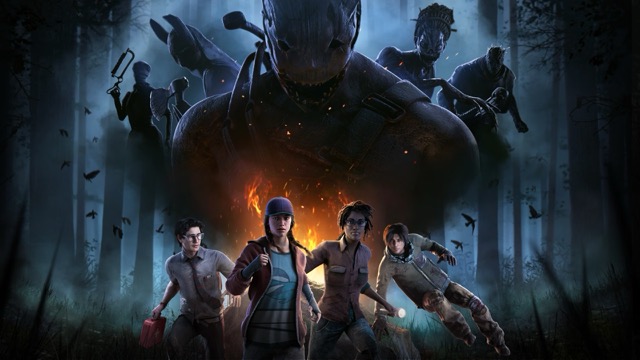
Dead by Daylight is a multiplayer asymmetrical survival horror game that pits four survivors against one killer in a desperate race against death. The survivors' goal is cooperation and escape: repair five generators to restore power, open the exit gates, and get out before the killer finds and eliminates everyone. The killer's goal is simpler and far more violent: hunt, catch, and sacrifice every survivor before they can escape.
What makes Dead by Daylight unlike any other horror game is its asymmetry. The survivors play in third person, relying on stealth, teamwork, and resourcefulness — crouching through tall grass, hiding in lockers, vaulting over obstacles, and communicating to repair generators efficiently without drawing attention. The killer plays in first person with unique powers and abilities that no survivor can replicate — tracking footprints, detecting heartbeats, teleporting across the map, or bending the rules of physics entirely depending on which killer you're playing.
Every match is different. Procedurally generated maps, a roster of killers and survivors drawn from both original lore and iconic horror franchises — including Halloween, A Nightmare on Elm Street, and The Texas Chain Saw Massacre — and the unpredictable dynamic of human players on both sides means no two games play identically. The tension is constant, the stakes are real, and a match that looks like a certain loss for survivors can flip entirely on one well-timed flashlight save or one generator repair completed under the killer's nose.
Dead by Daylight is the definitive multiplayer horror experience for players who want their fear earned rather than scripted.
Key Details
| Genre | Asymmetrical Multiplayer Survival Horror |
| Difficulty Level | Hard |
| Average Play Time | 15–30 minutes per match |
| Best For | Horror fans, multiplayer strategy players, and anyone who enjoys high-stakes team vs. solo gameplay with deep mechanical and character variety |
How to Play Dead By Daylight
Getting Started
- Choose your role — select whether to play as a survivor or killer before entering a match. Each role has a completely different objective, perspective, and set of mechanics. New players are encouraged to try both to understand the full scope of the game.
- Learn the map layout quickly — each match takes place on a procedurally generated map. Spend the opening seconds identifying generator locations, locker positions, pallet clusters, and the general layout before the killer closes distance.
- Survivors: start repairing generators immediately — generators are your primary objective. Five must be repaired before the exit gates can open. Coordinate with teammates to split generator work across the map without clustering in one area and drawing the killer to a single location.
- Survivors: manage noise and visibility — running generates sound and leaves scratch marks visible to the killer. Crouch-walk in areas where the killer might be nearby and save sprinting for chases and emergency situations.
- Killers: locate survivors through available detection tools — use your character's unique tracking abilities, listen for generator repair sounds, and watch for the visual indicators your power provides. Apply pressure across the map rather than fixating on a single survivor.
Basic Controls
| Input | Action (Survivor) | Action (Killer) |
|---|---|---|
| WASD | Move | Move |
| Left Shift | Sprint | — |
| Ctrl | Crouch | — |
| E | Interact (generators, lockers, healing) | Interact (pick up downed survivor) |
| Space | Vault over obstacles | — |
| Left Click | Use item (flashlight, medkit, etc.) | Attack |
| Right Click | Drop item / secondary action | Use power |
| F | Drop pallet | — |
Objective
Survivors: Work with your three teammates to repair five generators, power the exit gates, and escape the map before being caught and sacrificed by the killer.
Killer: Track down all four survivors using your unique powers and abilities, down them, hook them, and prevent enough survivors from escaping to satisfy the Entity — the supernatural force that governs the trial.
Dead By Daylight Features & Highlights
- True asymmetrical gameplay — a completely different experience depending on which side you play, with survivors using third-person stealth and coordination while the killer hunts in first person with unique supernatural powers
- Iconic horror franchise crossovers — killers and survivors drawn from Halloween, A Nightmare on Elm Street, The Texas Chain Saw Massacre, and more bring beloved horror IP into active, playable encounters
- Procedurally generated maps — no two matches share an identical layout, ensuring the strategic landscape shifts every game and memorization alone cannot replace genuine adaptability
- Deep killer and survivor roster — a large cast of characters, each with unique perks, powers, and playstyles, creates extensive replayability and allows specialization into specific strategic identities
- Communication, strategy, and teamwork — survivor success depends on coordinated generator repair, timely rescues, and shared resource use; the game is mechanically and socially demanding in ways solo horror games never reach
Dead By Daylight Tips & Strategies
Beginner Tips
- Crouch-walk as the default, sprint only in chases. Running generates scratch marks visible to the killer and creates noise that narrows your position. Crouching is slower but leaves no trail. Default to crouching when you're near generators the killer might visit, and save sprinting for when a chase has already begun.
- Use pallets decisively, not preemptively. Pallets — the shelves and barriers that can be dropped to stagger a killer — are finite resources distributed across the map. Dropping a pallet before the killer is close enough to be hit by it wastes it. Wait until the killer is tight on your position, then drop for maximum effect and distance gained.
- Never cluster all four survivors on the same generator. It feels efficient to repair together, but it gives the killer a single target that puts all four players at risk simultaneously. Split across multiple generators to apply map-wide pressure and force the killer to travel rather than stand over your entire team.
Advanced Strategies
- Learn each killer's power and design your loop routes accordingly. Every killer has distinct abilities that make certain survivor tactics more or less effective against them. A killer with a ranged attack requires tighter, more unpredictable looping. A killer with map-wide teleportation punishes generator clustering more severely than one who walks. Adapting your strategy to the specific killer you're facing is the core skill gap between average and strong survivors.
- Use flashlights to blind killers at the hook moment, not in open field. The highest-value flashlight use is interrupting a killer in the act of hooking a downed survivor — blinding them at that precise moment forces a drop and creates a rescue opportunity. Open-field flashlight attempts during chases are lower percentage and waste charges that could be saved for a decisive hook intervention.
What to Watch Out For
- Over-relying on lockers as a hiding strategy. Lockers are useful in specific situations, but killers can check them, and clustering near lockers in the vicinity of active generators is a predictable behavior that experienced killers anticipate. Use lockers situationally — to break line of sight in a chase or hide from a specific ability — rather than as a primary survival approach.
- Ignoring teammates in favor of generator repair. Generators are the primary objective, but a team that never rescues hooked survivors quickly loses players. A survivor on their second hook has limited time before being sacrificed to the Entity. Balancing generator progress with timely rescues is the central team coordination challenge, and neglecting the rescue side of it loses games as surely as neglecting generators does.
Dead By Daylight Elements Explained
Survivor Mechanics
Survivors play Dead by Daylight in third person — a perspective that grants wider situational awareness than the killer's first-person view and is central to how stealth and evasion function. The survivor's toolkit is built around movement management, environmental interaction, and cooperation rather than combat. You cannot fight the killer; you can only outlast, outmaneuver, and out-cooperate them.
Generator repair is the primary objective and the clock that governs every match. Five generators must reach full completion to power the exit gates, and each one takes sustained, uninterrupted time to repair — time that the killer is actively trying to deny you. Splitting generator work across the map prevents the killer from covering all repair progress simultaneously and is the fundamental strategic principle of survivor play.
Environmental tools — pallets, windows, lockers, and the terrain features of each map — are the survivor's defensive layer during chases. Pallets stagger the killer when dropped at the right moment; windows create vault opportunities that cost the killer additional time to follow through; the map's terrain determines which looping routes extend a chase long enough for teammates to complete generators while the killer is occupied. Mastering these tools turns a survivor from someone who gets caught into someone who buys their team thirty seconds of uncontested repair time per chase.
Killer Powers & Detection
The killer in Dead by Daylight is a single player against four — a structural disadvantage compensated by unique supernatural powers that no survivor can replicate and a first-person perspective that creates tunnel-vision intensity during chases. Every killer in the roster has a distinct ability that defines their playstyle and shapes how survivors must adapt to face them.
Detection is the foundation of killer play. Generators emit sound audible to the killer across the map; survivors in chase leave scratch marks on the ground and emit a terror radius heartbeat when close; each killer's specific power adds additional tracking tools on top of these baseline systems. Reading the map through these audio and visual signals — identifying which generators are being repaired, where survivors are hiding, and how to apply pressure most efficiently — is the killer's primary strategic challenge.
Horror franchise killers bring their signature abilities into the game intact. Michael Myers stalks with growing power the longer he observes survivors. Freddy Krueger pulls survivors into the Dream World where his powers are amplified. Ghostface can stalk and instantly down unaware survivors. These powers are not cosmetic — they fundamentally alter the strategic landscape of every match they appear in, and survivor players who understand the specific killer they're facing survive significantly longer than those who apply generic evasion tactics regardless of who's hunting them.
Perk & Progression System
Beyond the match itself, Dead by Daylight features a deep perk and progression system that allows both killers and survivors to customize their loadouts with passive abilities that meaningfully influence gameplay. Each character — killer and survivor — has three unique perks that can be unlocked and equipped, and these perks can be mixed and matched across the roster through a teachable system that gradually makes the strongest abilities available to every character.
Survivor perks cover a wide range of tactical functions: faster generator repair, the ability to see killer aura through walls, extended sprint duration, or the ability to recover from downed state without teammate assistance. Killer perks are similarly varied — area denial, faster movement after hooking a survivor, detection amplification, or abilities that interfere with generator repair progress.
The perk system is where Dead by Daylight's strategic depth becomes most visible. Two survivors with identical base characters but different perk loadouts play meaningfully differently and contribute different value to their team. Learning which perks complement your natural playstyle — and which perks counter the killers you encounter most frequently — is an ongoing strategic project that extends the game's replayability well beyond the base content.
Dead By Daylight Frequently Asked Questions
Q: How do I repair generators faster without getting caught?
A: Split generator repair across the map with your teammates so the killer cannot camp a single area and deny all progress simultaneously. Crouch-walk to generators rather than running — running leaves scratch marks and noise that guide killers to your location. While repairing, face the direction the killer is most likely to approach from so you can break off and run the moment you see or hear them. Perks that reduce generator repair time or grant early warning of killer proximity significantly improve repair efficiency and safety.
Q: What should I do when the killer is chasing me?
A: Run toward the nearest pallet cluster or window vault and begin looping — keeping obstacles between yourself and the killer to extend the chase as long as possible. Drop pallets when the killer is close enough that the drop interrupts their movement rather than missing entirely. Vault windows when the angle forces the killer to go around rather than follow immediately. The goal of a chase is not to escape the killer permanently — it is to consume as much of their time as possible while your teammates repair generators uncontested.
Q: Is this game compatible with all browsers and devices?
A: Dead by Daylight is a full PC and console release available on Windows via Steam, PlayStation 4/5, Xbox One/Series, and Nintendo Switch. It is not a browser-based game and requires a platform installation. A stable online connection is required for all game modes, as Dead by Daylight is an online multiplayer-only experience. Check the Steam or console store page for current system requirements and supported platforms.
Q: Can I play Dead by Daylight solo without a pre-made team?
A: Yes — Dead by Daylight's matchmaking fills all four survivor slots with random players if you don't have a pre-made group. Solo queue survivor play is a fully supported mode, though coordination with strangers is more challenging than playing with a communicating team. The killer role is always played solo. Voice communication applications used outside the game can significantly improve the solo queue survivor experience, as the in-game communication tools are limited.
Q: How do I counter specific killers I'm struggling against?
A: Every killer in Dead by Daylight has specific weaknesses tied to their power mechanics. The first step is identifying the killer by their silhouette, sound signature, or power indicator visible when they're within terror radius range. Once identified, adapt your behavior: killers with ranged attacks require unpredictable movement and tighter cover usage; killers with map-wide mobility punish generator clustering and require more spread-out repair strategies; killers whose power requires line of sight can be countered by breaking sightlines aggressively during chases. Learning each killer's specific power through experience — or researching their mechanics before matches — is the most direct path to consistent improvement against the full roster.
Games Like Dead By Daylight You Might Enjoy
If you like Dead By Daylight, you might also enjoy:
- Nightmare of Decay - it matches the same high-pressure horror pacing with dangerous enemies and fast decisions.
- Forsake the Rake - it matches the same high-pressure horror pacing with dangerous enemies and fast decisions.
- Shotgun Roulette - it matches the same high-pressure horror pacing with dangerous enemies and fast decisions.