


Forgotten Hill Surgery Overview
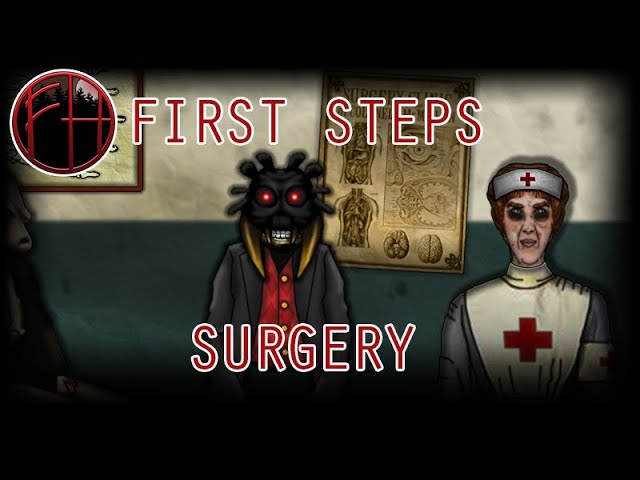
Forgotten Hill: Surgery is a haunting psychological horror puzzle game that combines atmospheric exploration with intricate brain-teasing challenges. You're drawn into the decaying corridors of an abandoned hospital—a place where something deeply wrong happened, and the building itself seems to remember. Every room holds secrets, every shadow conceals danger, and every puzzle you solve peels back another layer of the hospital's dark history.
This isn't a game that relies on jump scares alone. Instead, it builds dread through meticulous sound design, disturbing visual details, and an oppressive atmosphere that never lets you feel safe. As you explore, you'll uncover fragmented pieces of a sinister story—mysterious experiments, unexplained disappearances, and the twisted legacy of Forgotten Hill. The puzzles aren't decorative; they're gateways to understanding what really happened here.
What makes Forgotten Hill: Surgery special is how it weaves narrative and gameplay seamlessly. Every puzzle solved provides both progression and story revelation. The game respects your intelligence, demanding genuine problem-solving while never holding your hand. The distinctive art style—detailed, grotesque, and utterly unsettling—creates an experience that lingers long after you've finished playing. This is horror for those who appreciate psychological dread, mystery lovers who crave complex narratives, and puzzle enthusiasts seeking meaningful challenges wrapped in atmospheric terror.
Key Details
Genre: Horror Puzzle / Exploration Adventure
Difficulty Level: Medium/Hard
Average Play Time: 60-120 minutes
Best For: Horror enthusiasts, puzzle solvers, narrative adventure fans, players seeking psychological dread over action
How to Play Forgotten Hill Surgery
Getting Started
Begin your exploration in the hospital's entry point and take time to absorb the atmosphere—notice the details, the sounds, the unsettling visuals
Examine your surroundings carefully – interact with objects, read any visible text or notes, and listen to the audio cues that hint at the hospital's secrets
Build your inventory by collecting items you find during exploration; these items become puzzle-solving tools and keys to new areas
Start with accessible puzzles in early areas to understand the game's logic and mechanics before facing more complex challenges
Track clues and patterns – the game provides hints through environmental storytelling, so piece together information as you progress
Basic Controls
Mouse Movement: Navigate through hospital areas and move between rooms
Left Click: Interact with objects, pick up items, examine details, and solve puzzles
Right Click: Access your inventory, view collected items, or examine objects more closely
Scroll Wheel: Navigate inventory or zoom in on puzzles for better detail
Objective
Your goals are layered and interconnected
Explore the abandoned hospital thoroughly, uncovering its layout and discovering hidden areas
Collect items and clues scattered throughout the environment that serve as puzzle solutions
Solve challenging puzzles that range from logic-based problems to environmental challenges
Unlock new areas by using collected items and solving puzzles that act as keys and gates
Uncover the hospital's dark history by discovering story elements, reading documents, and piecing together the sinister narrative
Escape or survive by reaching the game's conclusion, which varies based on what you discover and how you progress
Success means solving the mystery. Mastery means understanding every gruesome detail of what happened in Forgotten Hill.
Forgotten Hill Surgery Features & Highlights
- Immersive Atmospheric Design – Distinctive art style and oppressive sound design create genuine psychological dread without relying on cheap jump scares
- Layered Narrative – Uncover a complex, disturbing story through exploration and puzzle-solving; the hospital itself becomes a character with secrets to reveal
- Intelligent Puzzle Design – Challenging brain-teasers that require genuine problem-solving, with solutions often hidden in environmental details and collected clues
- Item-Based Progression – Strategic inventory management where collected items unlock new areas and serve multiple puzzle-solving purposes
- Dark Environmental Storytelling – Visual details, notes, and atmospheric cues tell the hospital's tragic history; no exposition dumps, just discovery
- Creepy Interactive Elements – Interact with detailed environments; mundane objects become unsettling when examined closely in this context
- Adaptive Difficulty – Early puzzles teach mechanics; later challenges demand serious critical thinking and pattern recognition
Forgotten Hill Surgery Tips & Strategies
Beginner Tips
Examine everything obsessively – The game hides clues in minute details. That strange marking on the wall, the peculiar arrangement of objects, the disturbing imagery—these aren't accidents; they're hints
Read all documents and notes you find. They provide both story context and often contain direct or indirect puzzle solutions
Keep a mental map of the hospital layout and which areas have locked doors; this helps you plan which puzzles to prioritize
Common Mistakes to Avoid
Don't ignore audio cues – The sound design is intentional; distressing noises and whispers often indicate nearby puzzle solutions or story elements
Avoid using items randomly – Each item typically serves a specific purpose. If something doesn't work on a puzzle, save it for later rather than wasting it
Don't skip examination of objects – Some items need to be examined multiple times or from different angles to reveal their full details or solutions
Quick Win for Starting Out
Explore the first accessible area completely before attempting major puzzles
Collect every item you can find without forcing solutions
If a puzzle seems impossible, leave it and explore elsewhere—you might find a crucial item or clue that makes it suddenly clear
Advanced Strategies
Connect the narrative threads – Match story elements you discover with environmental details; the game's logic often weaves narrative and puzzles together
Look for symbolic patterns – Forgotten Hill uses recurring symbols and visual motifs; recognizing these patterns often unlocks puzzle solutions
Exploit environmental context – Pay attention to what rooms are and what they contain; a hospital morgue, surgical room, or records office all provide contextual clues to their puzzles
System Mastery Tip
Understand item functionality hierarchy – Some items are single-use puzzle keys; others can be combined or used multiple times in different contexts. Learning which is which prevents wasting resources.
What to Watch Out For
The Surgical Room Trap – This area features complex multi-step puzzles; don't rush. Break the solution into stages and verify each step before moving forward, or you may lock yourself out of progress
Inventory Saturation – Your inventory has limits; carrying too many items makes navigation slow. Drop items you've finished with, but remember where they are in case you need them again
Story Overload Moments – Sometimes discovering multiple story elements in quick succession can feel overwhelming. If you're confused about the narrative, step back and mentally organize what you've learned before continuing
Forgotten Hill Surgery Elements Explained
Inventory and Item System
The inventory system is your primary tool for progression and puzzle-solving. Every item you collect serves a purpose—either directly solving a puzzle, unlocking a new area, or providing crucial story information. The system forces strategic thinking because inventory space is limited. You can't carry everything, so you must decide what to hold and what to leave behind, remembering locations for later retrieval if needed.
Items interact with the environment in multiple ways. A surgical tool might unlock a locked cabinet, disassemble an object, or reveal hidden compartments. The same item in different contexts might enable entirely different solutions. This versatility rewards careful observation—when you pick up an item, examine it thoroughly. Read any labels, notice its condition, and think about where it might be used. The game provides minimal guidance; your job is recognizing connections between items and environmental puzzles. Some items combine with others to create tools needed for specific challenges, encouraging inventory manipulation and creative thinking.
Puzzle Complexity Progression
Forgotten Hill: Surgery structures puzzles across a difficulty spectrum that escalates as you progress. Early puzzles teach fundamental mechanics and build confidence. A simple puzzle might involve using a found key to unlock a door or arranging objects in the correct sequence. As you advance, puzzles layer multiple steps, requiring you to solve one challenge to access clues for another.
Mid-game puzzles demand observation and logical deduction. You might need to find multiple clues scattered across different rooms, piece them together mentally, and apply the solution in a completely different location. Late-game puzzles become genuinely challenging, sometimes requiring you to revisit earlier areas with new understanding or combine mechanics you've learned separately. The progression feels natural and earned rather than arbitrarily difficult. Each puzzle teaches you something about how the game thinks, making you progressively better at solving its challenges.
Environmental Storytelling and Narrative Integration
The hospital's history unfolds through environment rather than cutscenes or dialogue. Puzzle solutions often reveal story elements, and story discoveries frequently provide puzzle hints. A journal entry might reference "the red door," guiding you toward a specific location. A disturbing image might explain why certain puzzles exist or what they represent thematically.
This integration creates a unique experience where narrative and gameplay reinforce each other. You're not playing a puzzle game with a story attached; you're uncovering a story through puzzle-solving. The art style, sound design, and environmental details all contribute to atmosphere and narrative simultaneously. As you progress, the hospital's dark history becomes increasingly clear—not through exposition, but through discovery. This approach demands more engagement from players but rewards careful attention with a deeper, more personal understanding of Forgotten Hill's secrets.
Forgotten Hill Surgery Frequently Asked Questions
Q: How do I know which items are important?
A: Most items you pick up serve puzzle-solving purposes, so if you've collected it, hold onto it until you're well past that area. If you're unsure about an item's purpose, examine it closely—sometimes descriptions or visual details provide hints. Generally, if an item can be picked up, keep it until you've explored thoroughly enough to understand its use.
Q: What should I do if I'm stuck on a puzzle?
A: First, explore thoroughly—missing a crucial clue or item is the most common cause of puzzle frustration. Re-examine all visible objects and read any documents in the area. If you're still stuck, leave the puzzle and explore other areas; you might find necessary items or clues elsewhere. Pay attention to environmental storytelling; sometimes thematic or symbolic connections explain puzzle solutions. If genuinely stuck, remember that the game provides audio and visual cues—listen carefully and observe details closely.
Q: Can I get locked out of progress by using items wrong?
A: Generally no, though the game may penalize careless item use. If you use an item on the wrong puzzle, you might lose access to it temporarily, requiring you to find it again or solve an alternate path. The game is designed to be solvable even with suboptimal choices, though it may force you to backtrack or find workaround solutions. Play thoughtfully but don't be paralyzed by fear of mistakes.
Q: Is there a save system?
A: Forgotten Hill: Surgery typically features automatic checkpoint saves. Your progress saves as you complete major puzzle sections and unlock new areas. You can usually close and reopen the game with your progress intact. However, individual puzzle states are tracked in real-time, so significant mistakes might require re-solving certain puzzles, adding to the challenge and immersion.
Q: How much of the story can I miss?
A: Many story elements are discoverable but not mandatory. You can complete the game's main objective without finding every document or clue. However, the game rewards thorough exploration—discovering everything provides a much deeper, more complete understanding of Forgotten Hill's dark history. Different players will experience slightly different narratives based on what they discover, adding to replayability.
Q: What happens if I use an item in the wrong place?
A: Most items can only be used where they're intended, so attempting to use something incorrectly simply results in nothing happening. The game won't let you waste items on inappropriate puzzles. If an item doesn't work somewhere, it's not the right solution for that puzzle—save it for elsewhere.
Q: Can I play this game with just a mouse?
A: Yes! The entire game is designed around mouse controls. Left-click to interact and navigate, right-click for inventory access. No keyboard input is required, making it completely mouse-driven and accessible for various play styles.
Q: How long does a typical playthrough take?
A: Most players take 60-120 minutes to complete the game, depending on puzzle-solving speed and how thoroughly you explore. Some puzzles might frustrate faster solutions, while efficient players might finish quicker. The game encourages thorough exploration, so taking your time is rewarded with fuller story understanding and a richer experience.
Games Like Forgotten Hill Surgery You Might Enjoy
If you like Forgotten Hill Surgery, you might also enjoy:
- Saw 4 Trapped Online - it offers another tense escape route built around puzzles, danger, and careful exploration.
- Cabin Horror - it offers another tense escape route built around puzzles, danger, and careful exploration.
- Portrait of an Obsession a Forgotten Hill Tale - it offers another tense escape route built around puzzles, danger, and careful exploration.