



Kuzbass Overview
You came for a funeral. You may not leave at all.
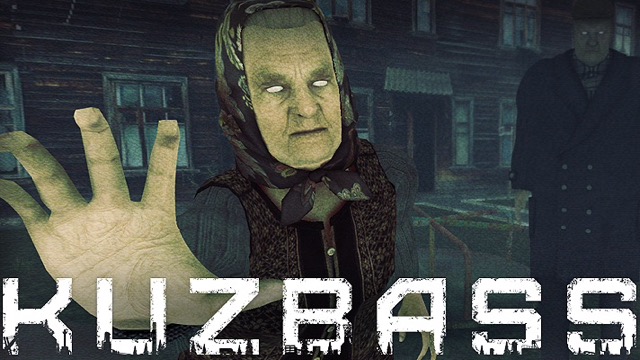
Kuzbass is a first-person horror game set in an abandoned Soviet-era village — a place that should be empty but isn't, and where the few survivors left are somehow worse than no one being there at all. You play as Slavik, who has traveled with his family to his grandmother's funeral in the remote village of Kuzbass. What greets them is wrong in ways that compound the longer they stay: the village is almost entirely deserted, the remaining inhabitants are deeply disturbed, and something old and deliberate is operating beneath the surface of everything they thought they understood about why they came here.
The game's setting does real work. An abandoned post-Soviet village at night — its architecture collapsing, its streets empty, its remaining inhabitants providing exactly the wrong kind of company — is a distinctly Eastern European horror atmosphere that feels genuinely different from the Western-facing haunted houses and entertainment venues that dominate the genre. The darkness of Kuzbass is a particular kind of dark: the kind that comes from isolation, from history, from a place that was once alive and isn't anymore.
The central conflict unfolds around a witch whose evil secret sits at the heart of the village's emptying, and the game confronts players with a genuine moral dimension alongside its survival horror challenge. The choice the game offers — uncover the evil and defeat it, or sacrifice your loved ones to claim the magical abilities it represents — is not cosmetic. It shapes the story you're living through and the ending you reach.
Puzzle-solving, stealth, resource management, and the weight of a real decision: Kuzbass is horror with something to say about what you're willing to do to survive.
Key Details
| Genre | First-Person Horror / Narrative Adventure |
| Difficulty Level | Medium / Hard |
| Average Play Time | 45–90 minutes |
| Best For | Horror fans drawn to atmospheric Eastern European settings, narrative-driven players who want their choices to matter, and anyone who enjoys stealth-based puzzle survival with genuine moral weight |
How to Play Kuzbass
Getting Started
- Orient yourself in the village before going anywhere unfamiliar — the abandoned streets of Kuzbass are disorienting in the dark. Take your initial moments to identify landmarks, note the positions of structures you might need to return to, and establish a mental map before venturing into less familiar areas.
- Collect everything interactive — items, documents, and objects found throughout the village serve puzzle solutions, provide story context, and enable survival options that become important later. Use E to pick up anything that allows interaction.
- Approach unknown areas in stealth — the village's monsters and the witch respond to movement and sound. Default to crouching (C) when entering any space where a threat might be present, and save running for confirmed pursuit situations rather than general movement.
- Solve puzzles as your primary progression mechanism — the village's secrets are locked behind puzzles distributed through its buildings and streets. Gather clues from your environment and from collected items before attempting solutions, and use your bag (I) to access and organize what you've found.
- Consider your choices carefully — the game presents a genuine moral decision: defeat the evil and uncover the witch's secret, or sacrifice your loved ones for the magical abilities on offer. This choice has real consequences for the story's conclusion. Know what you're choosing before you commit.
Basic Controls
| Input | Action |
|---|---|
| WASD / Arrow Keys | Move through the village |
| E | Pick up items / interact with objects and mechanics |
| C | Crouch (stealth mode) |
| I | Open / close bag (inventory) |
| Mouse Wheel | Cycle through items in bag |
| Tab | Pause game |
| Mouse | Look around / control camera |
Objective
Explore the abandoned village of Kuzbass at night, solving puzzles that reveal the truth of what happened here and what the witch is hiding. Evade the monsters and disturbing survivors that threaten you while uncovering the village's evil secret. Ultimately, face the choice the game offers: defeat the witch and free the village, or accept the sacrifice that grants power. The ending depends on what you decide.
Kuzbass Features & Highlights
- Atmospheric post-Soviet horror setting — an abandoned Eastern European village at night, rendered with the specific desolation of a place that was once inhabited and isn't anymore — a horror atmosphere distinctly different from the genre's Western defaults
- Genuine moral choice with multiple endings — the decision between defeating the evil and sacrificing loved ones for power is not cosmetic; it changes the story's conclusion and makes every playthrough a reflection of the player's priorities under pressure
- Layered narrative mystery — the witch's secret and the village's emptying unfold through environmental exploration, collected documents, and puzzle solutions rather than explicit exposition, rewarding players who engage thoroughly with the environment
- Stealth-integrated survival — crouch mechanics and sound awareness are central to navigation and monster evasion, making movement through the village a considered activity rather than a brisk walk between objectives
- Full inventory management system — a bag with item cycling and organizational capability supports the puzzle-solving and resource management that sustain play across the full runtime
Kuzbass Tips & Strategies
Beginner Tips
- Crouch everywhere you haven't confirmed is safe. The C key drops your movement profile and reduces the sound and visibility that attract monsters and the witch. Walking upright through the village's dark streets in areas you haven't thoroughly explored is consistently more dangerous than the time cost of crouching movement. Default to stealth; save running for confirmed emergencies.
- Open your bag frequently and review what you're carrying. The inventory (I key, cycle with mouse wheel) is how you access puzzle items and track what you've collected. Players who don't check their bag regularly often possess the solution to a puzzle they're stuck on without realizing it. Review your inventory when any puzzle element isn't immediately clear.
- Don't make the moral choice hastily. The decision the game offers — defeat the evil or accept the sacrifice — comes with real story consequences. When the choice presents itself, pause and consider what each option means for Slavik, his family, and the village. The game rewards deliberate decision-making rather than instinctive responses.
Advanced Strategies
- Map the village mentally before the witch becomes fully active. The early portion of the game, before the main threat escalates to its most dangerous state, is the best window to learn the village layout — which buildings are accessible, where the puzzle elements are distributed, and which routes between locations are open. This spatial knowledge becomes critical when navigating under active pursuit pressure later in the game.
- Use ambient sound to detect threat proximity before visual contact. The village's sound design provides advance warning of monster and witch proximity. Learning to distinguish ambient environmental sounds from the specific audio signatures of approaching threats — and stopping movement to listen at uncertain junctions — consistently provides more warning time than waiting for visual confirmation.
What to Watch Out For
- The village's disorienting layout in the dark. Kuzbass's abandoned streets and structures are intentionally difficult to navigate, and the darkness compounds this. Players who move quickly through unfamiliar areas without establishing reference points frequently become lost during pursuit situations where knowing the fastest route to safety is critical. Invest time in orientation before the game's pressure peaks.
- Neglecting puzzle items because they don't look important. The village is filled with objects, documents, and items that don't announce their relevance through visual prominence. A document on a table, a small object in a corner, or an interactable element in an easily overlooked area may be the missing component for a puzzle you've been stuck on. Thorough examination of every accessible space is more reliable than intuition about what matters.
Kuzbass Elements Explained
Village Exploration & Puzzle System
The village of Kuzbass is both the game's setting and its primary puzzle structure — a space where exploration and mystery-solving are inseparable rather than alternating modes. Puzzles are not isolated mini-games presented in obvious locations; they are woven into the village's environment, requiring players to move through the space, gather context from multiple sources, and assemble solutions from components that the village reveals gradually.
Documents, objects, and environmental details found throughout the village's buildings and streets serve the dual purpose of advancing puzzle solutions and building the story of what happened here. A letter found in one building may explain a symbol visible in another; an item collected from one location may be the key component for a puzzle encountered fifteen minutes later. The puzzle system rewards players who treat the entire village as a connected information space rather than a series of isolated locations with independent challenges.
Stealth and puzzle-solving intersect throughout the village in ways that make both more demanding simultaneously. The most important puzzle components are frequently in the most dangerous areas — spaces where the witch or monsters make sustained searching difficult. Learning to gather information efficiently during brief safe windows, then processing and applying it from more secure positions, is the core skill the system develops across the game's runtime.
Stealth & Monster Evasion
Stealth is not a supplementary option in Kuzbass — it is the fundamental posture from which all safe navigation operates. The C key crouching mechanic reduces both the player character's movement noise and visual profile, making it the default mode of movement in any unfamiliar or potentially dangerous area. The village's monsters and the witch respond to sound and movement, making the contrast between crouched and upright navigation mechanically significant rather than cosmetically different.
The witch is the game's central threat figure — the repository of the village's evil secret and the antagonist whose presence escalates as the story unfolds. She is more dangerous than the village's other monsters and requires greater caution during her active periods. Learning her behavioral patterns across the game's full runtime — where she tends to be at different story stages, what triggers her active searching versus her patrol movement, and which areas of the village she prioritizes — is the knowledge that transforms her from an overwhelming presence to a manageable, if deeply frightening, threat.
The game's sound design actively supports stealth decision-making. Threat proximity is telegraphed through audio before visual contact becomes possible, giving players who have learned to listen accurately a reaction window that purely visual monitoring doesn't provide. The village's ambient sound palette — wind, structural sounds, distant movement — is distinct from the specific audio signatures of approaching threats, and developing the ability to distinguish between them is a genuine survival skill rather than background knowledge.
Moral Choice & Multiple Endings
The moral choice at the heart of Kuzbass is unusual in horror games for the genuine weight it carries. Most horror game endings are determined by player skill — survival or failure, escape or death. Kuzbass presents a situation where both choices it offers could be described as survival, and the distinction is entirely about what the player is willing to accept as the cost of that survival.
The witch's evil secret — the truth of why the village emptied and why so few inhabitants remain — is what the game's puzzles and exploration are building toward revealing. Defeating the evil means engaging with that truth fully, facing what the witch represents at her most dangerous, and resolving the village's situation in a way that prioritizes Slavik's family's safety over any personal gain. Accepting the sacrifice means taking what the witch offers at the cost of what she demands — a transaction with real consequences for the people Slavik came to Kuzbass to honor.
Neither path is clearly positioned as the correct choice. The game presents the moral dimension honestly and allows players to sit with the weight of the decision before committing. Multiple playthroughs reveal what each choice actually means for the story's conclusion, and the full picture of what Kuzbass is saying about its central conflict only emerges from experiencing both outcomes.
Kuzbass Frequently Asked Questions
Q: How do I solve puzzles in the village when I can't find the right item?
A: Open your bag with I and review everything you've collected — the solution component may already be in your inventory without you having recognized its relevance. If nothing in your bag applies, return to rooms and areas you've visited and examine surfaces and objects you may have passed without fully interacting. Use E on anything that appears interactive, even if it doesn't look obviously important. Puzzle components in Kuzbass don't announce their relevance — thorough searching is more reliable than instinct.
Q: What should I do when the witch is actively searching for me?
A: Immediately crouch with C if you're not already crouching, and move toward the nearest area of concealment — a room you can close yourself into, a dark corner that breaks sightlines, or structural cover between you and the witch's position. Do not run unless the witch has confirmed your location and is in direct pursuit — running generates significantly more sound than crouching movement and can attract attention you didn't already have. Once concealed, stay still and listen for audio cues that indicate the witch has moved away before resuming movement.
Q: Is this game compatible with all browsers and devices?
A: Kuzbass is designed for modern desktop browsers, with best performance on up-to-date Chrome or Firefox on a desktop or laptop. The game uses keyboard controls (WASD/Arrow Keys for movement, E for interaction, C to crouch, I for inventory, Tab to pause) combined with mouse controls for camera and item cycling. Touchscreen and mobile devices are not suitable for the full control scheme. Audio is integral to threat detection — headphones or quality speakers are strongly recommended.
Q: Can I save my progress during the game?
A: Check the in-game menu (Tab to pause) for available save or checkpoint options. Given the game's narrative structure, checkpoints may be available at significant story beats rather than as a continuous save system. Completing major puzzle sequences and story moments before exiting a session is advisable to avoid replaying resolved sections on next launch.
Q: Does the moral choice affect the ending significantly, or is it cosmetic?
A: The choice between defeating the evil and accepting the sacrifice produces genuinely different story conclusions rather than minor variations on the same outcome. Each ending reveals different aspects of the witch's secret and resolves Slavik's situation in ways that are narratively distinct. Players who want to experience the full story of Kuzbass will find both endings worth reaching — the second playthrough has the additional dimension of knowing what the first ending revealed about the village's history, which reframes some of the earlier events and choices in meaningful ways.
Games Like Kuzbass You Might Enjoy
If you like Kuzbass, you might also enjoy:
- Overnight Interview - it leans into eerie story clues, confined spaces, and slow-burn horror discovery.
- The Coffin of Andy and Leyley - it leans into eerie story clues, confined spaces, and slow-burn horror discovery.
- Human Expenditure Program - it leans into eerie story clues, confined spaces, and slow-burn horror discovery.