





BLOODMONEY 2 Overview
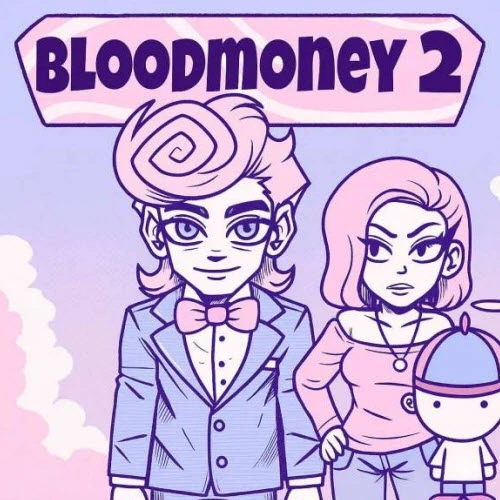
BLOODMONEY 2, subtitled Human Expenditure Program, is a psychological horror simulation developed by SHROOMYCHRIST that reframes the original BLOODMONEY!'s premise entirely. Where the first game put you in the role of attacker, BLOODMONEY 2 places you in the role of caretaker: you are Eun-Mi Harvington, responsible for the wellbeing of Harvey Harvington — a lost program described as your husband, existing in a fractured, fragile digital state. The horror in BLOODMONEY 2 is not about what you're doing to Harvey but about understanding what Harvey is, why he exists in this state, and what the Human Expenditure Program actually means.
Five mini-games structure the experience, each earning money that funds Harvey's care — feeding, sleep management, and engagement that maintains his stability and uncovers story fragments from his broken past. The cute visuals and twisted humor of the original BLOODMONEY! remain, but they're now layered over a narrative about guilt, responsibility, and ethical obligation rather than pure financial escalation. Two possible endings reflect the cumulative weight of your choices: how you managed Harvey's wellbeing, which memories you uncovered, and what understanding of his situation you developed across the full experience.
BLOODMONEY 2 is available as a commercial release on itch.io.
Key Details
- Genre: Psychological Horror Simulation / Virtual Pet / Horror RPG
- Difficulty Level: Easy–Medium
- Average Play Time: 30–60 minutes
- Best For: BLOODMONEY! fans seeking narrative depth, psychological horror simulation enthusiasts, players who enjoy morally weighted care-giver game design
How to Play BLOODMONEY 2
Getting Started
- Begin as Eun-Mi and orient yourself to Harvey's current state — observe his condition before making any care decisions.
- Play the five available mini-games to earn money that funds Harvey's care across the experience.
- Use earned money to feed Harvey — choosing between candy, bread, donut, pie, cake, or a big salad, each affecting his wellbeing differently.
- Manage Harvey's sleep schedule to maintain his memory reconstruction stability and readiness for mini-games.
- Pay attention to the story fragments that surface through interactions — Harvey's past is assembled gradually from what his care reveals.
Basic Controls
All interactions: Mouse Click
Mini-game participation: Mouse Click (one-button mechanics)
Feeding and care choices: Mouse Click on selected option
Objective: Care for Harvey Harvington through feeding, sleep management, and mini-game participation, uncovering story fragments that reveal his tragic past and the nature of the Human Expenditure Program — working toward one of two possible endings determined by your cumulative ethical choices.
BLOODMONEY 2 Features & Highlights
- Complete premise inversion from BLOODMONEY! — you are now the caretaker rather than the attacker, reframing Harvey's story from a new relational position
- Five unique mini-games — each earns money for Harvey's care while revealing story fragments that advance the narrative
- Harvey's feeding and sleep system — six food options with distinct wellbeing effects plus sleep management create a genuine care loop rather than a cosmetic interaction layer
- Memory reconstruction narrative — Harvey's fragmented past surfaces through consistent care and interaction, making the story discovery organic to the caretaking gameplay
- Two possible endings — outcomes determined by the ethical weight of accumulated care choices rather than a single final decision
BLOODMONEY 2 Tips & Strategies
Beginner Tips
- Approach BLOODMONEY 2's care system with genuine engagement rather than treating it as a resource loop — Harvey's reactions to specific feeding choices and sleep patterns are where the narrative's emotional content lives.
- Pay attention to the story fragments that surface through each mini-game rather than focusing exclusively on the money earned — the narrative is distributed across these fragments rather than concentrated in cutscenes.
- The food choices (candy, bread, donut, pie, cake, big salad) appear to have distinct wellbeing effects — experiment across multiple interactions to understand which foods improve Harvey's stability versus which affect it negatively.
Advanced Strategies
- The two endings appear to reflect a sustained pattern of ethical choices rather than a single binary decision — maintaining consistent care principles throughout the experience rather than switching approaches late produces cleaner alignment with one ending versus the other.
- Harvey's mood changes are observable through his visual state and interactions — reading these changes as information about the effectiveness of your current care approach enables adjustment before negative outcomes compound.
- The Human Expenditure Program's nature is revealed through the accumulated story fragments rather than any single revelation — maintaining engagement with each mini-game's narrative content builds a more complete understanding than treating mini-games as pure income sources.
What to Watch Out For
- BLOODMONEY 2's psychological horror operates through implications about Harvey's situation rather than overt horror content — players expecting the escalating visual shock of BLOODMONEY! may find the sequel's subtler approach requires more patient engagement.
- Sleep management affects mini-game readiness — neglecting Harvey's sleep schedule impairs the mini-game performance that funds his care, creating a cascade that affects both narrative discovery and game progression.
BLOODMONEY 2 Elements Explained
Caretaker Role & Ethical Framework: BLOODMONEY 2's decision to cast the player as Harvey's caretaker rather than his attacker is the design choice that distinguishes it from the original and justifies the sequel's existence as more than a repeat. The player's relationship to Harvey is now one of responsibility rather than exploitation — you are ostensibly his wife, bound to his wellbeing through the Human Expenditure Program's framework. This relational positioning makes every care choice carry ethical weight: what you feed Harvey, when he sleeps, how you engage with him through mini-games all reflect a relationship dynamic rather than pure resource management. The horror in BLOODMONEY 2 emerges from what that relationship actually is, what Harvey actually is, and whether ethical care is possible within the Program's structure.
Five Mini-Games & Story Fragment System: The five mini-games that fund Harvey's care serve a dual purpose: they generate the money that enables feeding and sleep maintenance, and each one surfaces story fragments that reconstruct Harvey's past. This structure means that engaging with mini-games for their money value and engaging with them for their narrative content aren't separate activities — they're the same interaction serving both functions simultaneously. Players who approach mini-games purely as income sources miss the story fragments that make Harvey's situation interpretable; players who engage with the narrative receive both the story content and the funding it generates. The mini-game-as-story-delivery mechanism is the game's primary design innovation over the original BLOODMONEY!'s simpler upgrade loop.
Memory Reconstruction & Harvey's Past: Harvey's existence as "a lost program" is explained gradually through the memory reconstruction that consistent care enables. His tragic past — accessible through accumulated interactions, mini-game story fragments, and sustained engagement with his care cycle — reveals why he exists in this digital, fragmented state and what the Human Expenditure Program represents for both Harvey and Eun-Mi. The reconstruction narrative is non-linear: fragments don't arrive in chronological order but in the order that Harvey's current stability allows them to surface. This means the full picture of Harvey's past requires sustained care across the full experience rather than being discoverable through a single playthrough shortcut.
BLOODMONEY 2 Frequently Asked Questions
Q: How are the two endings in BLOODMONEY 2 determined?
A: The endings reflect the cumulative weight of your ethical choices across the full experience — how you managed Harvey's care, which story fragments you uncovered, and the consistency of your engagement with his wellbeing. The outcomes appear to align with sustained patterns of ethical versus neglectful care rather than a single final choice.
Q: What is the difference between the food options in Harvey's feeding system?
A: The six food options (candy, bread, donut, pie, cake, big salad) each affect Harvey's wellbeing differently. Experimenting across multiple feeding interactions reveals which foods improve his stability and mood versus which affect him negatively — the wellbeing effects inform which options align with ethical care choices.
Q: Is BLOODMONEY 2 compatible with mobile devices?
A: Yes. The game is mouse-click only and supports browser play on desktop, tablet, and mobile. The one-button mechanic translates naturally to touchscreen play.
Q: Do I need to play the original BLOODMONEY! first?
A: Familiarity with BLOODMONEY! provides useful context for the sequel's premise and Harvey's situation, but BLOODMONEY 2 is designed as a standalone experience with its own complete narrative. The sequel's premise inversion (caretaker rather than attacker) is more impactful with knowledge of the original's approach.
Q: Is BLOODMONEY 2 an official release?
A: Yes. BLOODMONEY 2 (Human Expenditure Program) was developed by SHROOMYCHRIST and released on itch.io in September 2025. It is an official sequel to BLOODMONEY! by the same developer.
Games Like BLOODMONEY 2 You Might Enjoy
If you like BLOODMONEY 2, you might also enjoy:
- Nightmare Kart - it shares the same browser horror tension, quick decision-making, and replay-friendly pressure.
- Horror Tale 2 - it shares the same browser horror tension, quick decision-making, and replay-friendly pressure.
- Sprunki Pyramixed - it shares the same browser horror tension, quick decision-making, and replay-friendly pressure.