
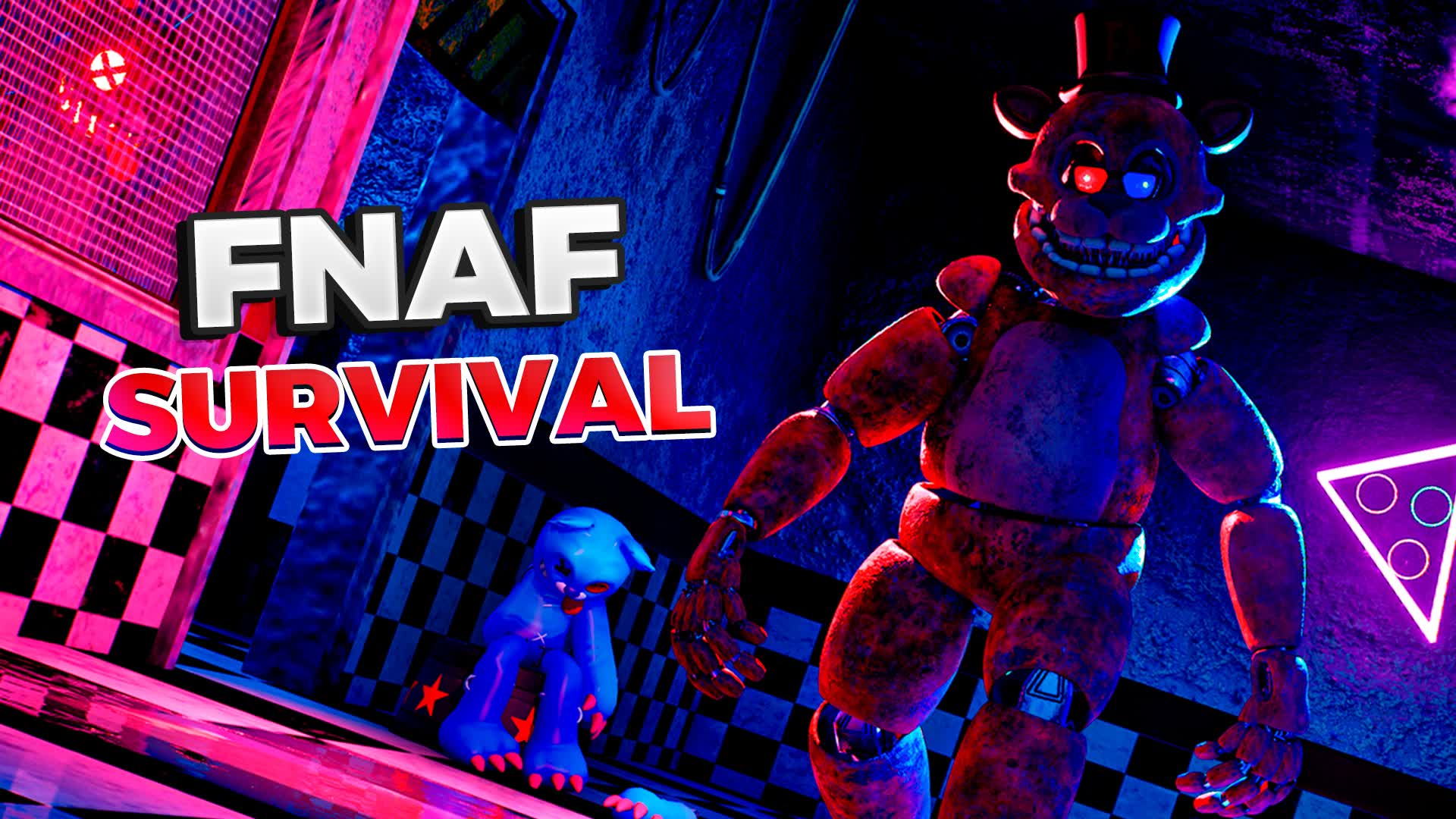







FNAF Survival Overview
You took the night shift. You didn't think it would be like this.
FNAF Survival drops you into the skin of a security guard tasked with watching over a darkened facility haunted by something that should not be alive. The animatronic toys that entertain children by day have become something else entirely at night — and you are alone with them, armed with nothing but a small flashlight and whatever nerve you can hold onto until morning.
This is a game built entirely around psychological pressure. There are no weapons, no combat options, and no safe room to retreat to. Your only advantages are observation, audio awareness, and the ability to stay calm when every sound in the dark is telling you to panic. Freddy and the other animatronics move through the facility with their own behaviors and patterns — learning to read them is the difference between surviving the night and becoming another mystery in this haunted place.
What FNAF Survival does exceptionally well is make darkness feel genuinely threatening. Your flashlight illuminates only a small cone of the room at any given moment, and the surrounding blackness is not empty. Footsteps, mechanical sounds, and the glow of eyes in the dark are your only warning system — and they require both attention and composure to interpret correctly before it's too late.
For players who have lived through the original Five Nights at Freddy's and want to return to that specific, suffocating dread — or newcomers drawn to the franchise's mythology of haunted toys and unanswered questions — FNAF Survival delivers the genre at its most tense.
Key Details
| Genre | Survival Horror |
| Difficulty Level | Hard |
| Average Play Time | 15–30 minutes per attempt |
| Best For | FNAF franchise fans, survival horror players, and anyone who enjoys atmosphere-driven games built around tension management rather than action |
How to Play FNAF Survival
Getting Started
- Orient yourself in the dark — when the shift begins, use your flashlight to scan the immediate area around you. Establish what's in the room and where the key sightlines are before the animatronics begin moving.
- Locate Freddy's position immediately — scan the room for the glow of Freddy's eyes. Knowing where he is at the start of the night gives you a baseline to track his movements against.
- Listen before you look — audio cues arrive before visual confirmation. Train yourself to stop and listen whenever you hear footsteps, running, or mechanical sounds before sweeping the flashlight toward the source.
- Move and check methodically — anomalies in the facility require you to check the darkened rooms. Move slowly and deliberately, sweeping the flashlight in controlled arcs rather than spinning it frantically.
- Manage your composure — fear is a gameplay mechanic here as much as a feeling. Panicked, reactive play leads to missed cues and fatal mistakes. Breathe, slow down, and treat every movement as a deliberate decision.
Basic Controls
| Input | Action |
|---|---|
| Mouse Movement | Aim and sweep flashlight |
| WASD / Arrow Keys | Move through the facility |
| Left Click / F | Toggle or use flashlight |
| Mouse / Look | Check surroundings and scan for animatronics |
Objective
Survive until morning. Endure the full night shift without being caught by the animatronic creatures moving through the facility. Use your flashlight, your ears, and your composure to track their locations and avoid fatal encounters. Every minute survived is a victory; making it to dawn is the ultimate goal.
FNAF Survival Features & Highlights
- Immersive first-person survival horror — experience the FNAF genre from inside the darkness, where your only tool is a flashlight and your only defense is awareness
- Animatronic AI with distinct behaviors — Freddy and the other haunted toys move with their own patterns and logic, rewarding players who learn to read and anticipate their movements
- Audio-driven threat detection — footsteps, running sounds, and mechanical voices serve as your early warning system, making headphone play a genuine strategic advantage
- Psychological tension design — the game is engineered to destabilize composure through sound, darkness, and the constant uncertainty of what's moving just outside the flashlight's reach
- FNAF universe mythology — the haunted toy storyline connects to the broader FNAF lore of mysterious animatronics and unanswered questions, rewarding franchise fans with familiar dread in a new context
FNAF Survival Tips & Strategies
Beginner Tips
- Headphones are not optional. The audio layer in FNAF Survival is your primary threat detection system. Footsteps, running, and animatronic voices give you warning before visual contact occurs. Playing through speakers, especially in a noisy environment, removes this advantage entirely and significantly increases your chances of being caught without warning.
- Sweep slowly, not frantically. New players instinctively spin the flashlight rapidly when they hear a sound. This creates strobing, disorienting movement that makes it harder to identify what you're looking for. Train yourself to move the light slowly and deliberately toward the suspected source.
- Find Freddy's eyes first every time you enter a room. His glowing eyes are visible in the darkness beyond the flashlight's reach. Locating them before doing anything else gives you a fixed point of reference to orient all other awareness around.
Advanced Strategies
- Learn the animatronic movement patterns over multiple runs. The creatures follow internal logic. Each failed attempt is an opportunity to observe their behavior — where they tend to move from, which paths they favor, how quickly they close distance. This knowledge compounds across runs and turns random-feeling scares into predictable patterns you can prepare for.
- Use silence as a positioning tool. Standing still and listening is often more useful than moving and checking. When you're not generating your own footstep sounds, the audio environment becomes significantly clearer — small sounds you'd otherwise miss become identifiable.
What to Watch Out For
- Panicking after a jump scare. The animatronics are designed to cause sudden frights that push players into reactive, uncontrolled movement. The moment after a scare — when adrenaline spikes and the instinct is to run — is precisely when slow, deliberate action matters most. Panic movement in a darkened room with moving threats ends runs faster than the original scare did.
- Fixating on one direction. Tracking one animatronic closely while ignoring what's happening in your peripheral environment is the most common fatal mistake. FNAF Survival is a multi-threat environment — awareness of the full space matters more than perfect tracking of a single entity.
FNAF Survival Elements Explained
Flashlight Mechanics
The flashlight is simultaneously your most powerful tool and your greatest limitation in FNAF Survival. It is the only source of meaningful light in the facility, and without it, you are navigating pure darkness. But what it illuminates is only a narrow cone — the rest of the room, behind you, in the corners, beyond the beam's reach, remains hidden.
This asymmetry defines the game's tension. The flashlight lets you see, but it does not let you see everything. Using it well means developing a disciplined scanning pattern: slow, deliberate sweeps that cover the room systematically rather than erratic pointing at every noise source. The instinct to jerk the flashlight toward sounds is natural and usually counterproductive — by the time visual confirmation is needed, the audio cue has already told you what you need to know.
Managing the flashlight also means accepting what it reveals. Finding Freddy's glowing eyes in the dark beyond the beam is better than not knowing where he is. Confirmation of threat position, however frightening, is more useful than unconfirmed uncertainty.
Animatronic Behavior System
Freddy and the other animatronic creatures that stalk the facility are not random. Each operates according to its own internal movement logic — preferred paths, triggering conditions, approach speeds, and behavioral patterns that remain consistent across runs. This is the game's core learnable system, and mastering it is what separates players who survive consistently from those who don't.
Freddy's glowing eyes are his most distinctive tell. Visible even beyond the flashlight's reach, they allow you to track his position without direct illumination — an advantage that becomes essential in the later, more chaotic minutes of a shift. Other animatronics announce themselves primarily through audio: footsteps on different floor surfaces, the sound of running, or mechanical vocalizations that indicate proximity and direction.
Every failed run contains information about animatronic behavior. Players who approach each attempt as an observation session — noting where creatures appeared, what triggered their movement, and how quickly they closed distance — accumulate pattern knowledge that makes subsequent runs progressively more survivable.
Psychological Pressure System
FNAF Survival is engineered to attack composure. The darkness, the audio design, the sudden appearances, and the sustained uncertainty of not knowing where every threat is at any given moment are all deliberate design choices aimed at producing exactly one thing: the feeling that control is slipping away.
This psychological pressure is the game's primary challenge, and it operates independently of the mechanical challenge. A player who understands every animatronic pattern can still fail because panic interrupted correct execution. The game knows this and uses jump scares, unexpected sounds, and the claustrophobic limitation of the flashlight to manufacture moments of composure failure.
Managing the psychological layer requires preparation before the session as much as skill during it. Accepting that scares will happen and resolving in advance not to let them dictate your next action is a genuine strategy. Players who treat fear as information — this sound means something is close, these eyes mean Freddy is in this quadrant — rather than as an emotional override make measurably better survival decisions under pressure.
FNAF Survival Frequently Asked Questions
Q: How do I find Freddy in the dark?
A: Look for the glow of Freddy's eyes, which remain visible in the darkness beyond your flashlight's reach. Scan the room slowly from a stationary position — his eyes will appear as two faint points of light in the dark. Establishing his location at the start of each room check gives you a critical positional reference point for the rest of your time in that space.
Q: What should I do if I hear footsteps or running nearby?
A: Stop moving immediately and listen. Identify the direction of the sound before sweeping your flashlight toward it slowly. Rapid, reactive flashlight movement in response to audio cues is less effective than a deliberate, controlled look toward the sound source. If the sound is close, back toward a wall to reduce the angles from which you can be approached.
Q: Is this game compatible with all browsers and devices?
A: FNAF Survival is designed for modern desktop browsers, with best performance on Chrome or Firefox on an up-to-date desktop or laptop. The game's audio design is central to the experience, so a system capable of delivering clear, directional sound is strongly recommended. Mobile and touchscreen devices are not recommended due to the keyboard and mouse control requirements.
Q: Can I save my progress or resume a run?
A: Each run represents a single night shift from start to finish. There is no mid-run save system — if you're caught before morning, the run ends and begins again from the start of the shift. Given the game's short session length, this is intentional: each attempt is a complete, self-contained survival scenario.
Q: Why do I keep getting caught even when I know where the animatronics are?
A: Knowing a threat's position and reacting correctly to it are two separate skills. The most common gap is reaction time — specifically, what you do in the seconds immediately after detecting an animatronic at close range. Slow, controlled movement away from a confirmed threat position is more effective than fast, panicked movement in any direction. If position awareness isn't translating to survival, focus the next run specifically on your physical response in the moments after detection rather than your detection accuracy itself.
Games Like FNAF Survival You Might Enjoy
If you like FNAF Survival, you might also enjoy:
- FNAF 6 - it keeps the animatronic pressure, camera checks, and night-shift tension close to the same survival rhythm.
- FNAF 6 Plus - it keeps the animatronic pressure, camera checks, and night-shift tension close to the same survival rhythm.