






Haunted School Overview
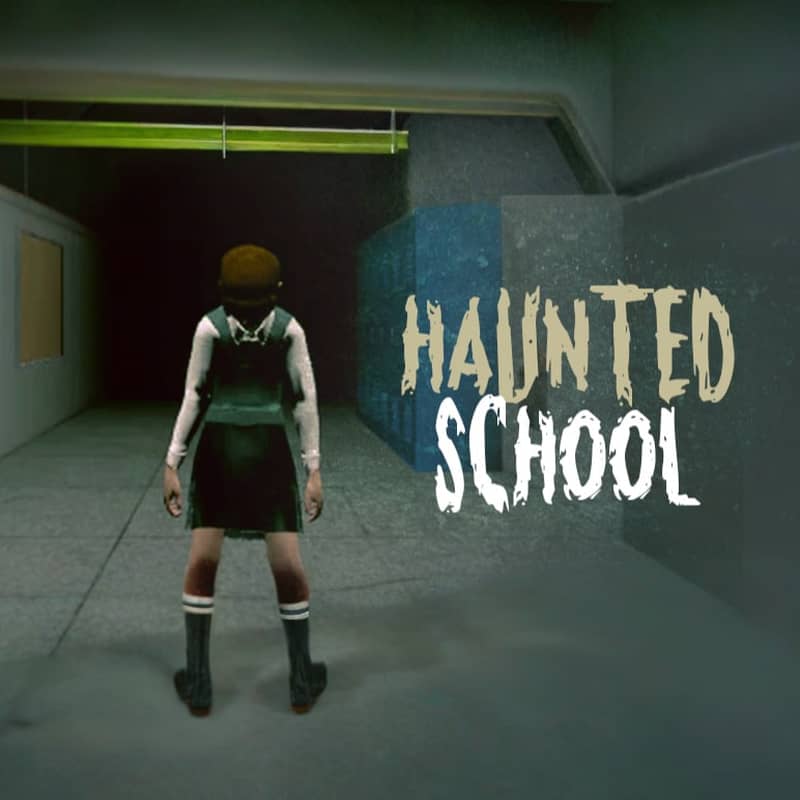
Haunted School transforms an ordinary educational institution into a nightmare landscape where supernatural forces have corrupted every classroom, hallway, and hidden corner. You navigate this cursed environment searching for ritual components—candles, mystical artifacts, and ceremonial items—that will allow you to confront and destroy the dark entities haunting the school. This is exploration horror meets tactical survival, where patient investigation and careful planning matter more than reflexive combat.
The game establishes atmosphere through environmental design and audio detail working in concert. Classrooms feel abandoned yet occupied by invisible presences. Hallways stretch unnaturally. Lockers emit disturbing sounds. Audio design—whispered voices, footsteps that don't belong to you, the ambient hum of supernatural distortion—creates persistent psychological pressure. The school becomes increasingly hostile as you progress, revealing that something fundamental corrupted this place and continues to dwell within its walls.
What distinguishes Haunted School is its ritual-based victory condition. You're not fighting enemies to progress; you're gathering ritual components and preparing a ceremony to banish supernatural forces. This shifts gameplay from reflexive combat toward methodical collection and strategic preparation. Exploration becomes purposeful—you need specific items. Puzzle-solving unlocks areas containing ritual components. Encounters with supernatural entities become navigation challenges where evasion and stealth matter more than confrontation. The game rewards patience, systematic exploration, and understanding that careful preparation enables victory more effectively than aggressive engagement.
For players seeking exploration-focused horror with supernatural atmosphere, environmental puzzle-solving, and the satisfaction of gradually gathering victory conditions through persistent investigation, Haunted School delivers. This is horror for patient explorers, those who appreciate atmosphere over action, and players seeking the unique satisfaction of assembling solutions piece by piece rather than winning through mechanical skill.
Key Details
Genre: Exploration Horror / Supernatural Adventure / Survival
Difficulty Level: Medium
Average Play Time: 90-150 minutes
Best For: Horror enthusiasts, exploration-focused players, puzzle lovers, patience-rewarded gamers, atmospheric horror fans, those seeking tactical evasion over combat
How to Play Haunted School
Getting Started
Acclimate to the school environment – take time to observe the layout, notice architectural features, and understand available spaces
Learn movement controls immediately – practice walking, crouching, sprinting, and understanding movement mechanics for later evasion
Begin systematic exploration – search classrooms, offices, and hallways for items, candles, and ritual components; take note of what you find
Encounter your first supernatural entity and learn evasion mechanics; understand that avoiding threats is preferable to confrontation
Complete your first ritual component collection to understand the progress system and motivate continued exploration
Basic Controls
WASD or Arrow Keys: Move through the school; directional input determines movement direction
C Key: Crouch to move stealthily and reduce visibility to supernatural threats; crouching slows movement but makes you harder to detect
Left Shift: Sprint to move faster; useful for evading threats or crossing dangerous areas quickly (consumes stamina)
Left Mouse Button (LMB): Interact with environment; fire weapons when armed; execute actions requiring direct engagement
E Key: Pick up items, ritual components, candles, and other collectibles found throughout the school
G Key: Drop items you're carrying; useful for managing inventory or leaving items in safe locations
R Key: Reload weapons if you have ammunition; necessary between combat engagements
Number 1 / Number 2: Switch between inventory slots or weapon types; allows quick access to different equipment
ESC Key: Pause the game; access menus, review inventory, and manage settings
Objective
Your interconnected goals form the game's survival and victory progression
Explore the school systematically to discover layout, identify safe areas, and locate valuable items
Collect ritual components (candles, mystical artifacts, ceremonial items) necessary for the banishment ceremony
Gather weapons and defensive items that enable survival encounters and threat management
Solve environmental puzzles that unlock areas containing ritual components or safe passage
Evade or survive supernatural entities by understanding their patterns and using stealth, speed, and terrain
Prepare the ritual ceremony by assembling collected components in the designated ritual location
Execute the ceremony to confront and destroy the dark forces haunting the school
Escape or conclude the narrative determined by successful ritual execution and survival of final encounters
Success means collecting sufficient ritual components and executing the banishment ceremony. Mastery means gathering all components efficiently while minimizing dangerous encounters.
Haunted School Features & Highlights
- Systematic Exploration Rewards – Thorough investigation yields ritual components, weapons, and items; exploration itself provides progression toward victory
- Atmospheric Environmental Design – Realistic dark atmosphere, eerie sound design, and visual details create genuine psychological tension without relying on jump scares
- Ritual-Based Victory Condition – Unique progression system where gathering components and executing rituals replaces traditional combat-based advancement
- Supernatural Threat Evasion – Encounters emphasize stealth and avoidance over combat; understanding threat patterns allows strategic navigation
- Item Collection and Management – Strategic inventory decisions affect what you can carry and how prepared you are for encounters
- Environmental Puzzle Integration – Puzzles require logic and observation; solutions often connect to ritual preparation or threat avoidance
- Progressive Difficulty and Intensity – Early areas establish mechanics; later areas introduce more aggressive threats and require complete ritual preparation
- Cooperative Play Options – Playing with others can ease tension and distribute inventory management, making exploration less overwhelming
Haunted School Tips & Strategies
Beginner Tips
Master movement controls early – Comfortable navigation is essential; practice walking, crouching, and sprinting before encountering serious threats
Search every classroom – Items and components are distributed throughout the school; systematic exploration provides resources and understanding of layout
Collect candles obsessively – They're essential for the ritual; whenever you see a candle, pick it up; abundance of components enables ritual execution
Understand threat detection – Supernatural entities rely on sight and sound; crouching and moving slowly makes you harder to detect; use stealth strategically
Create mental maps – Understanding school layout helps you anticipate threat locations and plan efficient exploration routes
Common Mistakes to Avoid
Don't run everywhere – Sprinting creates noise and exhausts stamina; balance speed with stealth and stamina management
Avoid unnecessary combat – Most supernatural threats are better avoided than fought; engage only when necessary for component access
Don't ignore ritual component requirements – Understand what components you need for the ceremony; focus collection toward these specific items
Quick Win for Starting Out
Spend the first 5-10 minutes exploring the starting area without worrying about threats
Collect every item and candle you find without forcing combat
Practice crouching and moving stealthily before encountering threats directly
Create a mental checklist of ritual components you need
Identify safe rooms where you can hide or rest if threatened
Advanced Strategies
Exploit entity behavior patterns – Most supernatural threats follow predictable patrol routes and detection patterns; observe before acting
Plan collection routes strategically – Map efficient exploration paths that minimize unnecessary backtracking and threat exposure
Use terrain and architecture tactically – Narrow passages, multiple exits, and room layout allow strategic navigation around threats
Manage stamina for evasion – Understand when sprinting is necessary versus when steady, quiet movement suffices; preserve stamina for critical moments
System Mastery Tip
Master threat assessment – Quickly determine whether a threat requires evasion, hiding, or aggressive response. Different entities behave differently; recognizing these differences allows appropriate tactical response. Some threats are deterred by weapons; others only by hiding. Learning these distinctions transforms overwhelming situations into manageable encounters.
What to Watch Out For
The Gymnasium Encounter – This large space contains multiple threats with limited cover. Don't try to cross directly; use bleachers and equipment for concealment. Alternatively, find an alternative route that bypasses the space entirely if possible
The Basement Ritual Location – This is where you execute the ceremony, but it's the school's most dangerous area. Don't attempt descending without complete ritual preparation and appropriate weapons. Ensure you have all necessary components before committing to this area
The Library Trap – This area contains valuable components but multiple threats with complex patrol patterns. Study threat behavior extensively before attempting collection. Sometimes it's possible to retrieve items during low-threat periods
Haunted School Elements Explained
Ritual Component Collection System
The ritual-based victory condition creates unique progression mechanics. Rather than leveling up or acquiring increasingly powerful weapons, you're gathering specific items—candles, artifacts, ceremonial objects—that enable the final ritual. This transforms exploration from open-ended investigation into purposeful collection. You know what you need; exploration becomes systematic hunting for specific items.
This system creates emergent gameplay where player exploration determines readiness. Thoroughly exploring the school allows complete ritual preparation before facing final threats. Rushing to the final location without components forces incomplete rituals or dangerous improvisation. The system rewards patient, systematic exploration and punishes hasty confrontation. Different players' experiences vary based on collection speed and risk tolerance. Some gather every component meticulously; others collect minimum requirements and rush to ritual. Both approaches are valid; consequences differ accordingly.
Threat Detection and Evasion Mechanics
Supernatural entities possess sight and sound detection systems. They notice movement, detect noise, and respond to disturbances. Understanding these detection mechanics enables strategic evasion. Crouching reduces sound production and visibility. Sprinting creates noise and exhausts stamina. Staying still makes you nearly invisible but leaves you immobile. This creates constant tactical choices—when should you move? When should you hide? When should you sprint?
This system makes encounters feel like puzzles to solve rather than obstacles to overcome. The question isn't "can I defeat this threat?" but "how can I navigate around it?" Different threats have different detection ranges and response patterns. Some are easily evaded by moving slowly. Others require hiding or taking alternate routes. Learning these patterns allows efficient threat navigation. The system rewards observation and planning over reflexive action. Players who study threat behavior succeed; those who panic often get caught.
Inventory Management and Resource Economics
Your carrying capacity is limited. You must decide what to carry—ritual components, weapons, consumables, tools. Strategic inventory decisions affect your preparedness and mobility. Carrying maximum items reduces movement speed and makes evasion harder. Carrying too few items leaves you unprepared for encounters. This creates optimization gameplay where players balance carrying capacity against readiness.
The system also creates checkpoint moments—safe locations where you can store items and rearrange inventory. Identifying safe spaces and using them strategically allows carrying more overall resources than your immediate capacity. This transforms resource management into spatial puzzle-solving. Where should you store items? Which safe locations provide optimal access to dangerous areas? Which items are worth carrying versus storing? These decisions create strategic depth around what seems like tedious mechanics.
Haunted School Frequently Asked Questions
Q: I can't find all the ritual components. Where should I look?
A: Components are distributed throughout the school's various rooms. Ensure you've explored every classroom, hallway, office, and hidden area. Some components might be in less obvious locations—behind furniture, on high shelves, in locked cabinets. Solving environmental puzzles sometimes reveals hidden areas containing components. If you're struggling to find specific items, explore areas you haven't thoroughly investigated. Return to familiar areas and search more carefully; you might have missed items initially.
Q: What's the best strategy for avoiding supernatural threats?
A: Observe threat behavior before acting. Understand their patrol routes, detection ranges, and response patterns. Use stealth (crouching, moving slowly) to navigate past threats rather than engaging them. When threatened, identify multiple escape routes and choose the path with least resistance. Sometimes hiding is better than running. Understand which threats are deterred by weapons versus which only respond to evasion. Different threats require different tactical approaches; flexibility matters more than single-strategy dominance.
Q: Can I defeat supernatural entities with weapons?
A: Some entities can be damaged or deterred by weapons, though not all threats can be definitively defeated. Weapons are primarily for survival and self-defense rather than entity destruction. The ritual ceremony is the intended method for addressing the core haunting. Use weapons strategically to create escape opportunities or defend yourself when necessary, but don't expect combat to solve the fundamental problem. Weapons are tools for survival; rituals are solutions.
Q: How many ritual components do I need to succeed?
A: The game typically requires collecting a specific set of components for the ritual ceremony. Some components might be optional (extra candles, additional artifacts) while others are mandatory. The game usually indicates required components through puzzles or narrative. Collect everything you can find; abundance provides options and security. Having extra components allows flexibility if one component is damaged or lost.
Q: What happens if I encounter a threat I can't evade?
A: Encounters are designed to be survivable through strategic evasion or defense. If you're being directly threatened, options include: hiding in a nearby room or closet, sprinting to a distant location, using weapons to deter threats, or finding alternate routes. The game rarely forces you into unwinnable situations. If you're struggling, consider whether there's an alternate path or if you're carrying items making you move too slowly. Sometimes dropping items temporarily improves your survival chances.
Q: Is playing with others essential or just helpful?
A: Cooperative play is optional but recommended. Playing alone is completely viable; you manage inventory and evasion independently. Playing with others distributes item collection (one player focuses on components while another watches for threats) and provides emotional support during tense moments. The game scales to player count, so difficulty remains appropriate. Choose solo or cooperative based on your preference; both are legitimate approaches.
Q: How long does the ritual ceremony take?
A: The ritual typically requires time to execute after reaching the ceremony location. During this time, you're vulnerable to threat interruption. Ensure you have adequate components before initiating the ritual. If threats interrupt, you might need to pause the ceremony and defend yourself. Preparation and readiness determine whether you can execute the complete ritual without dangerous interruption. Never begin the ritual when threats are actively pursuing you; establish safety first.
Q: Can I explore after completing the ritual?
A: This depends on the specific game version. Some versions conclude after ritual completion, transitioning to ending sequence. Others allow continued exploration after ritual success. Check whether you want to explore remaining areas before initiating the ceremony. Some components might have narrative or story significance worth discovering beyond mechanical requirements.
Q: What's the difference between crouching and sprinting?
A: Crouching moves you slowly but makes you nearly undetectable by threats; it's ideal for stealth and evasion when threats aren't directly pursuing you. Sprinting moves you quickly but creates noise and exhausts stamina; it's essential when threats are actively chasing you. Balance depends on situation—use stealth when possible, sprint when necessary. Overusing either approach creates vulnerability; flexibility matters.
Q: Are there multiple endings?
A: Haunted School typically features a primary ending determined by successfully executing the ritual ceremony. However, variations in how thoroughly you've explored and which components you've gathered might influence narrative nuances or ending details. The core ending remains consistent once you complete the ritual successfully.
Q: How does difficulty scale as I progress?
A: Threat aggression and frequency generally escalate as you progress. Early areas contain fewer threats with predictable patterns. Mid-game introduces multiple simultaneous threats and more complex patrol patterns. Late-game becomes significantly more challenging, with threats guarding valuable components or ritual locations. The escalation tests your accumulated skills and knowledge. If you're struggling, it might indicate you haven't adequately prepared; returning to earlier areas for additional components or studying threat patterns might provide necessary advantages.
Q: What makes Haunted School different from other survival horror games?
A: The ritual-based victory condition (gathering components to execute a ceremony rather than fighting through enemies) creates unique progression. Emphasis on exploration and stealth over combat distinguishes it from action-focused horror. Cooperative play options and atmospheric design without excessive jump scares make it distinctive. The school setting and supernatural focus differentiate it from corporate or cosmic horror alternatives. These elements combine to create a particular experience emphasizing patience, exploration, and atmospheric tension over reflexive action.
Games Like Haunted School You Might Enjoy
If you like Haunted School, you might also enjoy:
- Overnight Interview - it leans into eerie story clues, confined spaces, and slow-burn horror discovery.
- The Coffin of Andy and Leyley - it leans into eerie story clues, confined spaces, and slow-burn horror discovery.
- Human Expenditure Program - it leans into eerie story clues, confined spaces, and slow-burn horror discovery.