Horror Tales Overview
You're a kid in a small town. Someone is hunting you and your friends. And you're running out of places to hide.
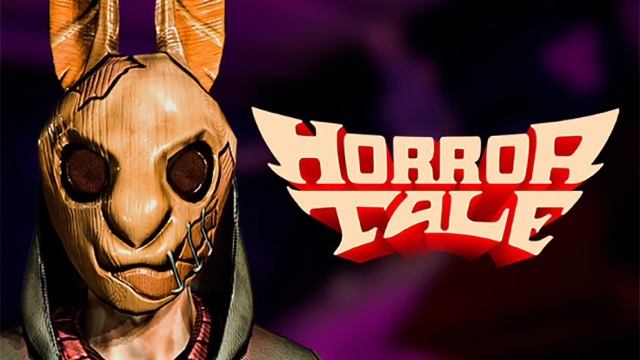
Horror Tales is a first-person horror adventure game set in the 1990s town of Lakewitch — a small American community with a dark secret closing in fast. You play as a child navigating a nightmare that no adult seems equipped to stop: a strange kidnapper has targeted you and your friends, and the only way through is to use your courage, your wits, and whatever you can find along the way.
The game's 1990s setting is not just aesthetic — it shapes everything about the survival experience. No smartphones, no GPS, no easy answers. Your resources are the places you know: the treehouse where you and your friends used to feel safe, the foggy forest at the edge of town where things get strange, and a spooky house that holds answers you're not sure you want. Each location has its own atmosphere, its own puzzles, and its own brand of danger.
What gives Horror Tales genuine replay value beyond its unsettling atmosphere is its branching structure. Your decisions throughout the game influence which mysteries you uncover and which endings you reach — making no two full playthroughs identical for players who want to see everything the story contains. Three difficulty settings allow you to calibrate the challenge to your experience level, from a more forgiving introduction to the story to a punishing hard mode that demands precise resource management and puzzle-solving under pressure.
Atmospheric, story-driven, and built for players who want their horror personal and their mystery earned.
Key Details
| Genre | First-Person Horror Adventure |
| Difficulty Level | Easy / Medium / Hard (player selectable) |
| Average Play Time | 60–90 minutes per playthrough |
| Best For | Story-driven horror fans, players who enjoy mystery and puzzle-solving, and anyone drawn to atmospheric 1990s-set coming-of-age horror |
How to Play Horror Tales
Getting Started
- Select your difficulty — choose between Easy, Medium, and Hard before starting. Easy prioritizes the story experience with more forgiving resource availability; Hard demands careful rationing and precise puzzle-solving. Select based on whether you want atmospheric immersion or mechanical challenge as your primary focus.
- Explore every location thoroughly — each area you visit contains items, clues, and puzzle elements essential to progression. Search your treehouse, the foggy forest, and the spooky house completely before moving on. Missed supplies and overlooked clues become significant problems later.
- Monitor your health and energy — both meters require active management. Food and water maintain energy; other supplies address health. Letting either drop to critical levels impairs your ability to run, solve puzzles, and evade the kidnapper effectively.
- Solve location puzzles to progress — each area contains puzzles that must be solved to advance the story or unlock new locations. Collect items and examine the environment for clues before attempting puzzle solutions.
- Make decisions deliberately — the game tracks your choices and uses them to shape which mysteries unfold and which ending you reach. Decisions that seem minor can have significant downstream effects on the story.
Basic Controls
| Input | Action |
|---|---|
| WASD | Move |
| Mouse | Look around / aim camera |
| F | Interact / Start action |
| C | Crouch / Squat |
| X | Exit / Put down item |
| H | Open hints menu |
| Camera Sensitivity | Adjustable in Options menu |
| Interface Transparency | Adjustable in Options menu |
Objective
Explore the locations of Lakewitch — the treehouse, the foggy forest, and the spooky house — finding puzzle solutions and essential supplies while evading the kidnapper targeting you and your friends. Manage your health and energy to stay functional, collect food, water, batteries, and weapons to sustain your survival, and make the decisions that shape which version of the mystery you uncover. Escape. Survive. Find out the truth.
Horror Tales Features & Highlights
- Branching mysteries and multiple endings — player decisions throughout the game influence which story threads unfold and which of several endings is reached, giving multiple playthroughs meaningfully different narrative content
- Three selectable difficulty levels — Easy, Medium, and Hard calibrate both resource availability and puzzle challenge, making the game accessible to story-focused players while maintaining a demanding experience for horror veterans
- Distinct location-based atmosphere — the treehouse, foggy forest, and spooky house each deliver their own visual identity, sound design, and threat level, ensuring the game's environments feel like individual horror experiences within a connected world
- Active health and energy management — both meters degrade during play and require regular replenishment through collected supplies, adding a survival layer beneath the puzzle and evasion challenge
- Immersive 1990s setting — a pre-digital small-town American atmosphere that strips away modern conveniences and forces reliance on environmental awareness and personal resourcefulness
Horror Tales Tips & Strategies
Beginner Tips
- Check the hints menu early and often. Pressing H opens the hints menu, which provides guidance when puzzle elements aren't immediately clear. New players who ignore this resource spend significantly more time stuck than those who use it as intended. The hints are there — use them without guilt, especially in your first playthrough.
- Collect every supply you encounter, even if you don't need it immediately. Food, water, batteries, and weapons are distributed throughout each location, and their availability is not guaranteed when you need them most. A full inventory in an easy stretch of the game provides the buffer that carries you through resource-scarce difficult sections.
- Crouch when approaching areas where the kidnapper might be. The C key drops your movement profile and reduces the noise and visibility that alerts the kidnapper to your position. Defaulting to crouching in unfamiliar or high-risk areas is a habit that prevents more encounters than any reactive strategy.
Advanced Strategies
- Revisit previous locations after making significant decisions. The branching structure means that choices made in one area can open new content or change available items in locations you've already visited. Backtracking with intention — rather than assuming a location is fully exhausted — often reveals story content that linear forward movement misses.
- Play the hard difficulty after completing a full story run. Hard mode's resource scarcity creates a fundamentally different pacing that reveals puzzle solutions and evasion routes you didn't need to find on easier difficulties. It also tends to surface story details that resource pressure on earlier runs prevented you from exploring thoroughly.
What to Watch Out For
- Letting energy drop while focused on puzzle-solving. The health and energy meters continue depleting during puzzle sequences — a detail easy to forget when absorption in a clue search takes attention away from the survival meters. Check both meters between every major puzzle attempt, not just when you feel like something is wrong.
- Making decisions too quickly on your first playthrough. The branching structure rewards deliberate choice-making, but first-time players often select dialogue and action options without fully reading them in the tension of a threatening moment. Slowing down at decision points — even when the kidnapper feels close — produces outcomes you understand rather than ones that surprise you at the ending.
Horror Tales Elements Explained
Exploration & Puzzle System
The exploration and puzzle system structures every hour of Horror Tales. Each of the game's primary locations — the treehouse, the foggy forest, and the spooky house — is a layered environment containing interactive objects, collectible items, environmental clues, and puzzle mechanisms that must be engaged in the correct sequence to advance the story. Nothing in these spaces is purely decorative; the game's design philosophy treats the environment itself as the primary storytelling medium.
Effective exploration requires patience and completeness. The instinct to move quickly — particularly when the kidnapper is active or a location feels threatening — works against the thorough searching that puzzle-solving depends on. A clue missed in the treehouse may be the key to a puzzle encountered deep in the spooky house, and backtracking under pressure is significantly harder than searching carefully the first time. Full location sweeps before moving on are never wasted time in this game.
Puzzle solutions in Horror Tales are grounded in environmental logic rather than arbitrary combination. Clues point toward solutions that make sense within the world's 1990s small-town context — found objects, environmental observations, and story information from notes and dialogue all contribute to a solution picture that rewards paying attention to the game's world rather than treating it as a collection of interactable points.
Health, Energy & Resource Management
Survival in Horror Tales is sustained by two active meters — health and energy — and the supply chain of food, water, batteries, and weapons that keeps both functional. Health degrades through encounters with the kidnapper and certain environmental hazards; energy depletes continuously during movement and action and drops faster during sprinting and extended evasion sequences. Neither meter is decorative — allowing either to reach critical levels impairs movement speed, interaction capability, and ultimately leads to a failed run.
The resource management challenge is distribution across the game's full runtime rather than moment-to-moment conservation. Resources are distributed unevenly — early locations tend to be more supply-rich than later ones, and the game's pacing is designed to ensure that players who spend conservatively early arrive at difficult sections with meaningful reserves. Players who deplete supplies freely at the start because the early game feels manageable find themselves rationing desperately in the locations where resource pressure compounds with puzzle difficulty and kidnapper aggression simultaneously.
Batteries specifically deserve attention as a resource category. They power the tools and devices that expand your capabilities in dark or threatening areas, and unlike food and water — which are primarily meters to manage — batteries directly determine what actions you can take. Running out of batteries in a situation that requires powered equipment is a hard stop that forces backtracking or improvisation; maintaining a modest battery reserve prevents the most avoidable form of progress block.
Branching Story & Multiple Endings
The branching narrative system is Horror Tales' most distinctive design feature and the primary driver of its replay value. Decisions made throughout the game — in dialogue choices, action selections, and how you respond to specific events — are tracked and accumulated into a story state that determines which mysteries fully resolve, which remain partially obscured, and which ending the game delivers. These are not surface-level cosmetic variations; different paths reveal genuinely different information about the kidnapper, the town of Lakewitch, and the events that preceded the game's opening.
The branching structure rewards second and third playthroughs with a specific kind of dramatic irony — knowing outcomes from a previous run while watching a different set of decisions lead to a different version of events creates a richer understanding of the story's full architecture than any single playthrough can provide. Players who complete the game once with curiosity about what they might have missed are consistently rewarded for returning.
Difficulty interacts with the branching system in a subtle but meaningful way. Hard mode's resource pressure forces different decisions than Easy or Medium — not just in how you manage supplies, but in which story options you have the energy and tools to pursue. A choice that requires full health and a specific item to execute may simply be unavailable on Hard if the resource chain leading to it was disrupted. This means Hard mode is not simply a more difficult version of the same story, but a materially different path through the game's possibility space.
Horror Tales Frequently Asked Questions
Q: How do I access hints when I'm stuck on a puzzle?
A: Press H at any time during gameplay to open the hints menu. It provides contextual guidance based on your current location and progress through the puzzle system. The hints menu is an intentional design feature — use it freely rather than spending extended time stuck on a single puzzle element. On your first playthrough especially, the hints system exists to keep the story moving rather than let one puzzle block the full experience.
Q: What should I do if the kidnapper is close and I have no weapons?
A: Crouch immediately using C to reduce your movement noise and visibility profile, then move toward the nearest area of concealment — furniture, corners, or environmental cover that breaks the kidnapper's sightline. Avoid sprinting unless you have confirmed distance to cover, as sprint generates significantly more sound and visual cues than crouching movement. If a hiding spot is nearby, reach it and stay still until the kidnapper's audio cues confirm they've moved away.
Q: Is this game compatible with all browsers and devices?
A: Horror Tales is designed for modern desktop browsers with best performance on up-to-date versions of Chrome or Firefox on a desktop or laptop. The game uses keyboard and mouse controls — WASD for movement and mouse for camera — making touchscreen and mobile devices unsuitable for the full experience. Camera sensitivity and interface transparency are both adjustable in the Options menu to suit different hardware setups and personal preferences.
Q: How do the different difficulty settings affect the story?
A: All three difficulty settings — Easy, Medium, and Hard — deliver the same core story and access to the same branching decision points. The differences lie in resource availability, puzzle challenge level, and the margin for error in kidnapper encounters. Easy provides more supplies and gentler puzzle difficulty for players prioritizing story immersion; Hard reduces supply distribution and demands more precise evasion and puzzle-solving. On Hard specifically, resource pressure can close off some story options that require specific items to pursue, meaning different paths through the narrative become available.
Q: How many different endings are there, and how do I reach them all?
A: Horror Tales features multiple endings determined by the accumulated weight of decisions made throughout the game. The exact endings available are part of the mystery the game invites you to discover — no single playthrough reveals all of them. To reach different endings, make meaningfully different decisions at the game's key choice points rather than the same choices with minor variations. Adjusting difficulty between runs also surfaces different story paths, as resource availability shapes which options are practically reachable. Players seeking all endings benefit from keeping notes on which decisions led to which outcomes across multiple runs.
Games Like Horror Tales You Might Enjoy
If you like Horror Tales, you might also enjoy:
- Overnight Interview - it leans into eerie story clues, confined spaces, and slow-burn horror discovery.
- The Coffin of Andy and Leyley - it leans into eerie story clues, confined spaces, and slow-burn horror discovery.
- Human Expenditure Program - it leans into eerie story clues, confined spaces, and slow-burn horror discovery.