


Alone II Overview
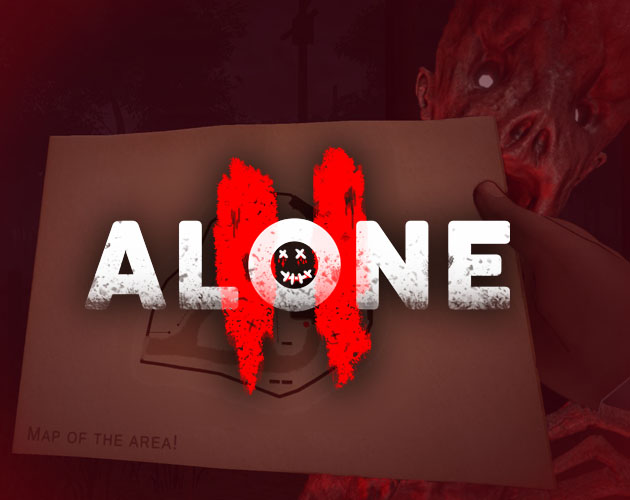
Alone II is a first-person horror exploration game built around a single oppressive premise: you are trapped somewhere, you don't know where, and the only way out is to piece together enough clues to understand your environment before the things that share that space with you make escape impossible. The sequel deepens the original's formula with more complex environments, more dangerous ghost encounters, and a sense of uncertainty about the space itself — your map is a tool, not a guarantee.
The game's standout atmospheric element is its creepy background music, which the source material notes is specifically designed to induce physical discomfort in attentive players. Combined with the first-person view and deliberately ambiguous level design, Alone II prioritizes sustained dread over discrete scare moments. You're not waiting for a jump scare — you're already uneasy, and every small activity that might alert the ghosts is a continuous source of anxiety rather than a single escalating event.
Alone II is built for players who enjoy exploration-based horror with genuine puzzle-solving at its core. It doesn't hold your hand on controls or objectives, treating discovery of both as part of the experience.
Key Details
- Genre: First-Person Horror / Exploration / Escape Puzzle
- Difficulty Level: Hard
- Average Play Time: 30–50 minutes
- Best For: Horror exploration fans, players who enjoyed the first Alone, atmospheric horror enthusiasts who prefer sustained dread over jump-scare-based design
How to Play Alone II
Getting Started
- Launch Alone II and take a moment to orient in the first-person environment before moving — observe immediate surroundings and identify the direction that looks most explorable.
- Access your map to understand the general layout of the space; use it to plan routes rather than wander without direction.
- Move carefully through each area, examining every corner for clues, items, and environmental information relevant to escape.
- Be aware of ghost presence — any small activity or careless movement may attract ghost encounters. Observe before acting.
- Build your understanding of the escape route incrementally; each clue discovered refines your picture of how to get out.
Basic Controls
Look around / adjust view: Mouse
Move: Arrow Keys or WASD
Additional interactions: Context-dependent; instructions appear during exploration
Objective: Locate enough clues to identify your escape route, navigate the unknown space using the map, and reach the exit while avoiding or managing ghost encounters that respond to player activity.
Alone II Features & Highlights
- First-person horror immersion — the perspective places every dark corridor and ghost encounter directly in the player's line of sight with no third-person distance
- Map-guided exploration — a navigational map provides spatial context in a deliberately disorienting environment, making route-planning a skill rather than a given
- Atmospheric sound design — background music engineered to create sustained unease across the full play session rather than punctuating specific scare moments
- Ghost encounter system — ghosts respond to player activity, making noise management a continuous awareness requirement throughout exploration
- Sequel depth — Alone II expands on the original's formula with a more complex environment and more dangerous threats
Alone II Tips & Strategies
Beginner Tips
- Consult the map frequently but don't treat it as a complete guide — Alone II's level design uses the map to orient you, not to reveal every relevant detail. The map shows layout; exploration reveals content.
- Move slowly in areas where you haven't confirmed ghost positions. The game's ghost behavior responds to activity, meaning cautious movement prevents most encounters rather than luck.
- Note the location of every clue you find, even those whose significance isn't immediately apparent. In escape puzzle design, context builds over multiple discoveries rather than through any single item.
Advanced Strategies
- Develop a systematic search pattern for each new area rather than following visual interest — unstructured exploration misses items in less obvious positions, which are often the most significant.
- Ghost encounters are a signal that you've been too active in a particular area for too long. When a ghost appears, treat it as feedback about your movement pattern rather than simply a hazard to escape.
- Use the map to identify which areas you've already fully explored versus which you've passed through — the distinction matters in the later game when clue density increases.
What to Watch Out For
- The first-person perspective limits awareness of what's behind and beside you — develop a habit of occasional camera sweeps rather than moving continuously forward.
- The game's deliberate ambiguity about your location is not a design flaw; fighting it by trying to fix your position precisely on the map produces frustration. Work with approximate orientation rather than demanding precision.
Alone II Elements Explained
First-Person Perspective & Environmental Dread: Alone II's first-person camera does more than create immersion — it removes the spatial safety of a third-person view where threats are visible before they're immediate. In first-person, ghosts and dangers appear within the same visual frame as the environment you're trying to read for clues, meaning attention to exploration and attention to threat cannot be separated. This forces players into a constant cognitive split between information-gathering (looking for clues) and threat-monitoring (watching for ghost presence), which is the primary source of the sustained anxiety that defines the game's horror experience. The perspective also makes the environment feel larger and more disorienting than it might in a top-down or third-person format, reinforcing the premise that you genuinely don't know where you are.
Map Navigation & Spatial Uncertainty: The map in Alone II provides a framework for understanding the environment without resolving the game's core uncertainty about your situation. It shows spatial layout — which areas connect to which, approximate room configurations — but doesn't mark clue locations, ghost positions, or exit routes. This makes the map a navigational aid rather than a solution guide, which preserves the exploration challenge while preventing players from becoming completely spatially lost. Learning to use the map effectively involves recognizing which areas you've already searched (to avoid redundant backtracking) versus which remain unexplored, and planning routes that balance clue-hunting efficiency with threat-awareness based on recent ghost encounter patterns.
Ghost Encounter Behavior: The ghost system in Alone II is built around activity detection rather than fixed patrol routes. Ghosts respond to "small activities" — movements, interactions, and other player actions that generate detectable signals within the game's space. This means the encounter rate is partially within the player's control: cautious, deliberate movement generates fewer encounters than reactive or panicked navigation. When ghosts do appear, they arrive as a consequence of something the player did rather than as a timed or random event, which makes them feel like a meaningful threat response rather than a pure randomizer. Managing your activity level — being intentional about when you interact with the environment versus when you simply move through it quietly — is the primary ghost-avoidance skill the game develops across a full run.
Alone II Frequently Asked Questions
Q: How do I avoid ghost encounters in Alone II?
A: Move carefully and minimize unnecessary activity in any given area. Ghosts respond to player actions rather than patrolling on fixed routes — deliberate, quieter movement reduces encounter frequency. When a ghost appears, withdraw from the area and allow it to dissipate before continuing exploration.
Q: What should I do if I can't find the next clue?
A: Return to the map and identify areas you've passed through quickly rather than fully searched. Alone II places clues in positions that require deliberate searching rather than casual observation — revisiting areas with systematic attention often surfaces missed items.
Q: Is Alone II compatible with mobile devices?
A: Yes. The game is built in HTML5 and supports browser play on desktop, tablet, and mobile.
Q: Can I save my progress?
A: Alone II is a browser-based horror game. Progress is maintained within an active session; check whether browser local storage provides any persistence between sessions.
Q: Do I need to play the first Alone before Alone II?
A: The first game provides useful context for Alone II's atmosphere and design approach, but Alone II can be experienced as a standalone horror exploration game without prior knowledge of the original.
Games Like Alone II You Might Enjoy
If you like Alone II, you might also enjoy:
- Horror Tale 2 - it also focuses on finding routes, solving pressure-heavy problems, and escaping before danger closes in.
- Sprunki Pyramixed - it also focuses on finding routes, solving pressure-heavy problems, and escaping before danger closes in.
- Granny - it also focuses on finding routes, solving pressure-heavy problems, and escaping before danger closes in.