
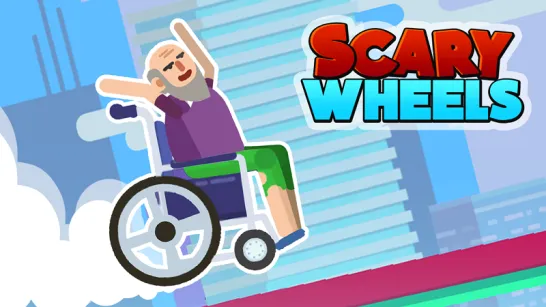








About Scary Wheels
A vehicle and rider cross courses full of steep drops, sharp obstacles and moving traps. Balance determines whether reaching a platform becomes a stable landing or another loss. The next section needs to be read before momentum carries you into it.
How to Play Scary Wheels
Use Up and Down to move forward or reverse, and adjust the vehicle's balance as you cross each obstacle. Check the landing area before a drop, then control your speed through the next slope or trap.
Controls
| Input | Action |
|---|---|
| Up / Down | Move forwards / reverse |
| Left / Right | Lean backwards / forwards |
Controlling the Rider's Balance
Forward and reverse control movement along the course; left and right lean the rider and vehicle. These inputs solve different problems. On a slope, decide how much speed you need for the next obstacle. During a drop, use the lean controls to adjust the vehicle's orientation for the surface below.
The course can combine steep terrain, spikes and moving hazards. Look beyond the immediate gap to the landing area: a jump that clears one obstacle can still leave the rider pointed into the next trap. Enter an unfamiliar section with enough control to adjust rather than carrying full speed into a surface you have not read yet.
Choosing an Approach
Use a failed attempt to identify the specific part that caused trouble. A poor landing calls for a change in balance; arriving too fast at a trap calls for a change in the approach. Alter one decision on the next attempt so you can see whether it improves that section.
Practical Tips
- Enter an unfamiliar obstacle with enough control to stop or adjust the approach.
- Read the surface after a jump, not only the gap itself, so the landing does not immediately run into another trap.