Cabin Horror Overview
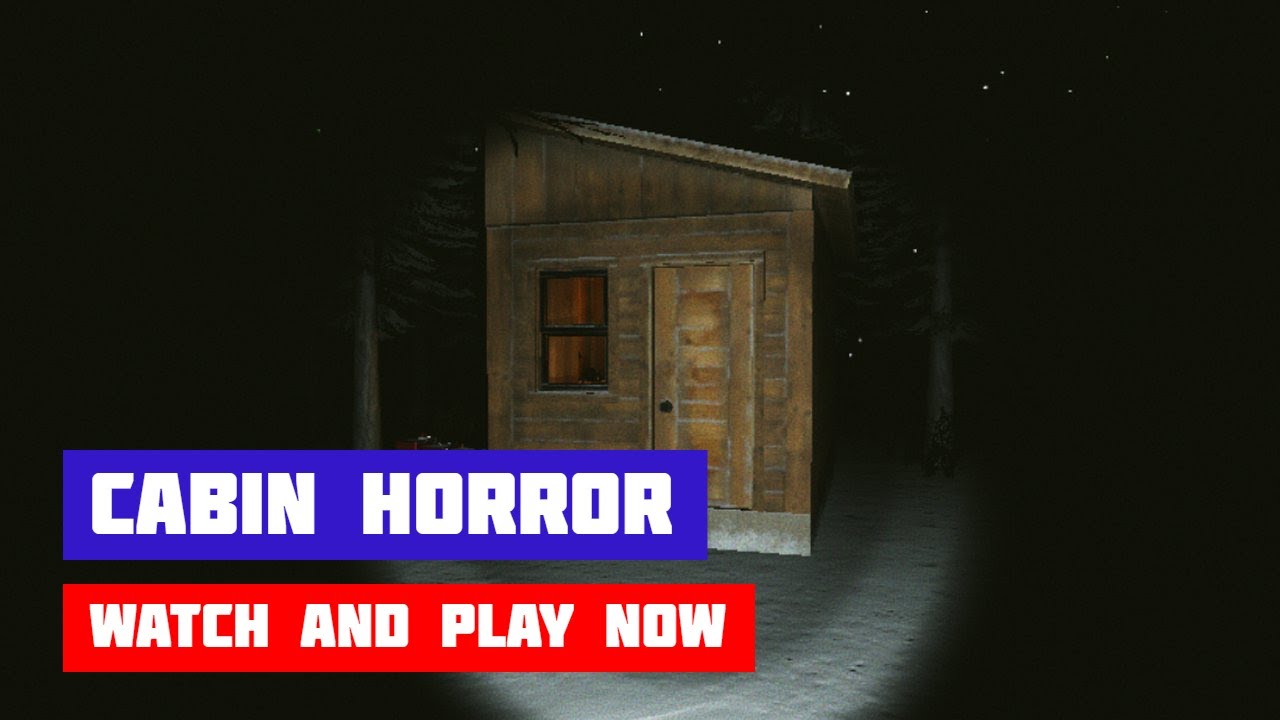
Your tire blows out in the middle of a forest at night. No signal. No help coming. Just trees, darkness, and something moving out there you can't quite see.
Cabin Horror is a first-person horror experience that unfolds as a single, linear story — and it only ends one way. You play as a stranded driver who must venture into the woods, find a remote cabin, and piece together the terrifying truth of what haunts this forest. Every action you take is scripted, every discovery deliberate, and the emotional journey from relief to dread is carefully engineered to feel as real as possible.
What sets Cabin Horror apart from open-ended survival games is its commitment to pure storytelling. This is not a game you can win or lose through skill — it is a game you experience. The first-person perspective puts you directly behind the eyes of the protagonist, making every creak of the cabin floorboards and every rustle in the trees feel personal. When you read the notes on the cabin table, you feel the same dawning horror the character does. When you follow the blood trail into the dark and spot what left it, the fear is entirely your own.
The game's emotional arc is its greatest achievement: the small comfort of finding the cabin, the creeping unease of the notes, the visceral dread of following blood stains to their source, and the full terror of what waits at the end. Cabin Horror is short, sharp, and genuinely frightening — a horror story you don't watch but live through.
Key Details
| Genre | First-Person Horror / Narrative |
| Difficulty Level | Easy (story-driven, no combat) |
| Average Play Time | 10–20 minutes |
| Best For | Horror fans who enjoy atmospheric, story-driven experiences and cinematic first-person gameplay |
How to Play Cabin Horror
Getting Started
- Retrieve your backpack — you've broken down on a dark forest road. Start by moving to the trunk of your car and picking up your backpack. This is your first interaction and sets everything in motion.
- Enter the forest and find the cabin — follow the path into the trees. The cabin is your immediate destination and your only point of relative safety. Move carefully and stay on the path.
- Settle in and investigate the cabin — once inside, sit down and rest. Check the table for food if you're hungry, and — critically — read any notes you find. They contain information essential to understanding what's happening.
- Respond to what you hear — if you hear sounds from outside, open the door and investigate. Follow whatever you find, even when instinct tells you not to.
- Trust the sequence — every action in this game must be performed in order. Attempting to skip ahead or do things out of sequence will stall your progress. Follow the story as it unfolds.
Basic Controls
| Input | Action |
|---|---|
| WASD / Arrow Keys | Move / Walk |
| E | Interact with items (pick up, read, open, sit) |
| Mouse | Look around / control camera |
Objective
Follow the story from beginning to end in the correct sequence. There are no alternate endings, no escape routes, and no way to change what happens — only the truth of what lurks in this forest, revealed one step at a time. The goal is to experience the full story and uncover what the cabin and the woods are hiding.
Cabin Horror Features & Highlights
- True first-person immersion — every event is seen through the protagonist's eyes, making the fear feel immediate and personal rather than observed from a safe distance
- Atmospheric, story-driven design — a fully scripted narrative experience with a clear emotional arc, built to deliver dread at a carefully controlled pace
- Realistic environmental storytelling — the cabin interior, the forest path, the blood trail, and the creature are all rendered to feel grounded and genuinely threatening rather than stylized or cartoonish
- Linear mission structure — designated actions in a fixed sequence ensure the story lands exactly as intended, building tension without giving players an escape hatch from its conclusion
- Emotional progression — the game is engineered to walk you through a specific sequence of emotions: relief, curiosity, unease, dread, and terror — in that order
Cabin Horror Tips & Strategies
Beginner Tips
- Do everything in order. The game explicitly requires actions to be taken in sequence. If something isn't responding to your input, you've likely skipped a prior step — backtrack and complete it before moving forward.
- Read every note fully. The notes on the cabin table aren't set dressing. They contain the context that makes the second half of the game significantly more terrifying. Rushing past them diminishes the experience and loses critical story information.
- Use headphones. Audio cues are a core part of Cabin Horror's tension system. Sounds from outside the cabin, footsteps, and environmental audio are designed to signal what's coming before you can see it. Playing without headphones mutes a major portion of the experience.
Advanced Strategies
- Pause before opening the door. When you hear sounds outside the cabin, take a moment before interacting with the door. Listen to what's happening and let the anticipation build — this is the game working as intended, and rushing through it shortens the most effective scare sequence.
- Look around fully in each environment. The game rewards players who take time to observe their surroundings. Environmental details — how the cabin is arranged, what the notes reference, what you can see through the windows — add depth to the story that a linear sprint misses.
What to Watch Out For
- Skipping interactions and getting stuck. Because actions must be completed in sequence, bypassing any step (not sitting down, not eating, not reading the notes) will prevent the next event from triggering. If the game seems unresponsive, return to your last completed action and check for anything you may have missed.
- Playing in a noisy environment. External noise competes directly with the game's audio design, which is responsible for much of the tension. A quiet room significantly improves the experience — this game is built to be played alone, in the dark, with the sound up.
Cabin Horror Elements Explained
First-Person Perspective
The first-person perspective in Cabin Horror is not a casual design choice — it is the entire delivery mechanism for the game's horror. By putting you directly behind the protagonist's eyes, the game removes the psychological buffer that third-person or top-down views provide. There is no character model to watch react to something frightening. There is only what you see, what you hear, and what your own imagination constructs in the gaps.
This perspective makes familiar actions feel charged with meaning. Walking into an unfamiliar cabin alone at night, sitting down at a stranger's table, reading notes that reveal something is deeply wrong — each of these moments lands differently when experienced in first-person than it would observed from outside the character's body.
The game leverages this throughout its runtime, most effectively in its final sequences. When the threat in the forest becomes visible, the first-person view ensures you encounter it exactly as the protagonist does — without warning, at close range, with no camera cut to soften the impact.
Linear Story Structure
Cabin Horror operates on a strict sequential mission structure that defines every aspect of its design. Unlike open-world or choice-driven games, there is no branching path, no alternate ending, and no way to alter the story's destination. Every player who completes the game experiences the same arc and arrives at the same conclusion: the death of the protagonist.
This is not a limitation — it is the design intent. Horror is most effective when it is controlled. By removing player agency over the outcome, the game can guarantee the pacing of its tension, the timing of its reveals, and the emotional impact of its ending. You cannot save yourself. You can only choose how carefully you pay attention to the story unfolding around you.
The fixed sequence also means that the game rewards replay with different attention rather than different outcomes. A second playthrough, knowing what the notes mean and what's waiting in the forest, transforms the early sequences from innocent exploration into something far more foreboding.
Environmental Storytelling
The world of Cabin Horror communicates its story through physical details as much as through direct action. The cabin's interior, the placement of the notes, the condition of the road, the dead bear, and the blood trail are not random set dressing — each is a deliberate piece of a larger narrative about what this forest is and what happened here.
Reading the notes carefully is the primary way the game delivers its lore, but environmental observation adds a second layer of context. Players who take time to look at their surroundings — rather than sprinting from one interaction prompt to the next — will find details that make the horror feel earned rather than arbitrary. The monster's existence is foreshadowed long before it appears; the clues are there for players willing to look.
This approach to storytelling reflects a broader design philosophy: the game trusts players to be active readers of their environment rather than passive recipients of explicit exposition. The full picture of what happened in this forest only emerges for players who engage with everything it shows them.
Cabin Horror Frequently Asked Questions
Q: How do I pick up my backpack from the trunk?
A: Walk to the back of your car using WASD or Arrow Keys to move and press E when the interaction prompt appears over the trunk. This is the game's first required action — nothing else will progress until the backpack is retrieved.
Q: What should I do if the game isn't responding to my inputs?
A: Cabin Horror requires all actions to be completed in a specific order. If the game feels unresponsive, you've likely missed a prior step in the sequence. Common ones to check: Did you sit down inside the cabin? Did you eat? Did you read the notes on the table fully? Return to your last completed interaction and look for anything incomplete nearby.
Q: Is this game compatible with all browsers and devices?
A: Cabin Horror is designed for modern desktop browsers. Chrome and Firefox on an up-to-date desktop or laptop provide the best performance. The game uses keyboard controls (WASD/Arrow Keys and E), so mobile and touchscreen devices are not supported. For the intended experience, play with headphones in a quiet environment.
Q: Can I save my progress and return later?
A: Given the game's short runtime of 10–20 minutes, it is designed to be completed in a single session. There is no formal save system — closing your browser will restart the experience from the beginning. The linear structure and brief playtime make a full run from start to finish the intended way to play.
Q: What happens after the story ends?
A: Cabin Horror has one ending, and it is not a happy one. The story concludes with the death of the protagonist. The game is designed as a complete, self-contained horror narrative — what it offers is the journey to that ending and the fear experienced along the way, not a resolution the player can influence or escape.
Games Like Cabin Horror You Might Enjoy
If you like Cabin Horror, you might also enjoy:
- Saw 4 Trapped Online - it offers another tense escape route built around puzzles, danger, and careful exploration.
- Portrait of an Obsession a Forgotten Hill Tale - it offers another tense escape route built around puzzles, danger, and careful exploration.
- Backroom Game - it offers another tense escape route built around puzzles, danger, and careful exploration.