






Portrait of an Obsession a Forgotten Hill Tale Overview
There is a painting you cannot stop thinking about. It does not belong to you — but it will.
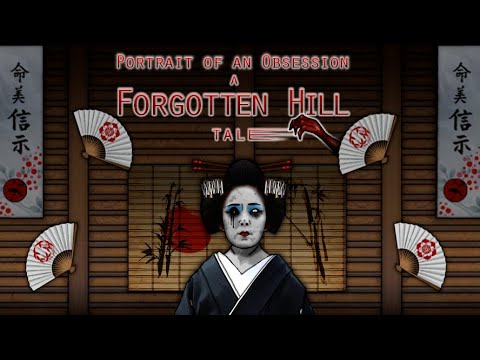
Portrait of an Obsession: A Forgotten Hill Tale is a Japanese-art-inspired puzzle adventure from FM Radio, set within the darkly atmospheric Forgotten Hill universe. You play as a thief consumed by a singular fixation: stealing a painting that has taken hold of your mind. Breaking into the owner's home is only the beginning. What waits inside is a labyrinth of locked rooms, cryptic puzzles, collectible items, and something far more dangerous than a security system.
The game's Japanese aesthetic sets it apart visually from typical Western point-and-click adventures. Its art direction — deliberate, stylized, and steeped in a quiet sense of wrongness — gives every room its own distinct character while maintaining a cohesive atmosphere of elegant dread. Puzzles are embedded into the environment itself: inscribed on walls, built into doors, hidden in statues and objects. Nothing is purely decorative; everything is a potential clue.
What elevates Portrait of an Obsession beyond a standard puzzle game is the layering of its systems. Observational puzzles, item collection, and creature combat all feed into each other, and progress requires managing all three simultaneously rather than treating them as separate challenges. The story underneath — the obsession, the house, the painting's secret, and the demonic thing guarding it — rewards players who pay attention.
For fans of atmospheric puzzle games with strong visual identity and meaningful narrative payoff, this is essential Forgotten Hill.
Key Details
| Genre | Puzzle Adventure / Point-and-Click Horror |
| Difficulty Level | Medium / Hard |
| Average Play Time | 30–60 minutes |
| Best For | Fans of escape room puzzles, atmospheric horror, point-and-click adventures, and the Forgotten Hill series |
How to Play Portrait of an Obsession a Forgotten Hill Tale
Getting Started
- Enter the house — your objective from the first moment is to break into the painting owner's home. Examine the exterior and immediate entry point carefully for your first puzzle before moving inside.
- Survey every room thoroughly — walls, doors, statues, and furniture all potentially contain puzzle elements or hidden clues. Click on everything that appears interactive before attempting to solve anything.
- Collect every item you encounter — items found throughout the house are not incidental; they are required puzzle components. Pick up everything and keep track of what you're carrying.
- Solve environmental puzzles to unlock rooms — each locked room or door presents a puzzle whose answer is hidden somewhere in the environment. Cross-reference what you see on walls and objects with the lock or mechanism you're trying to open.
- Place items correctly and defeat the creature — as you progress deeper into the house, collected items must be placed in specific positions to unlock new puzzle stages. The final obstacle before reaching the painting is a demonic creature that must be defeated to access the hidden room.
Basic Controls
| Input | Action |
|---|---|
| Mouse Click | Interact with objects, examine items, select puzzle elements |
| Click on Item | Pick up and add to inventory |
| Click on Environment | Examine walls, doors, statues for clues and puzzles |
| Inventory | Access collected items and select for placement or use |
Objective
Navigate through the painting owner's house, solving every environmental puzzle, collecting key items, and using them in the correct positions to unlock deeper rooms. Defeat the demonic creature guarding the final chamber, steal the painting, and return home to the forgotten hill — with your obsession satisfied at last.
Portrait of an Obsession a Forgotten Hill Tale Features & Highlights
- Distinctive Japanese art style — a visually striking aesthetic that sets Portrait of an Obsession apart from typical Western point-and-click games, with every room carrying its own carefully designed atmosphere
- Multi-layered puzzle design — environmental puzzles are embedded in walls, doors, and statues throughout the house, demanding close observation and lateral thinking rather than simple trial-and-error
- Item collection and placement system — a meaningful inventory mechanic where every collected object has a specific purpose and incorrect placement actively blocks progress
- Creature combat encounter — the final act introduces a demonic guardian that must be defeated before the painting can be claimed, adding a tension spike to the puzzle-driven gameplay
- Forgotten Hill universe narrative — the game sits within the broader Forgotten Hill story world, offering the series' signature blend of unsettling atmosphere and dark narrative payoff
Portrait of an Obsession a Forgotten Hill Tale Tips & Strategies
Beginner Tips
- Examine every surface, not just obvious interactive elements. Puzzle answers in Portrait of an Obsession are frequently written on walls, incorporated into decorative objects, or embedded in environmental details that don't look like clues at first glance. Click broadly and read everything.
- Never discard or overlook a collected item. Every item in the game has a purpose. If something goes into your inventory, it will be needed. Players who ignore small or seemingly unimportant objects frequently get stuck later because a required placement item is missing.
- Match puzzle elements to their corresponding locks before guessing. Each puzzle presents visual information that connects to a specific door, mechanism, or statue. Resist the urge to try combinations randomly — find the source of the clue first, then apply it.
Advanced Strategies
- Work room by room rather than across the whole house. Jumping between all available spaces simultaneously creates inventory confusion and makes it harder to connect clues to their relevant puzzles. Fully exhaust one room's observations before moving to the next.
- Return to previously visited rooms after unlocking new areas. New rooms frequently reveal context that recontextualizes clues seen earlier. A symbol or object that seemed irrelevant in the first room may become the key to a second-room puzzle after you've seen what comes next.
What to Watch Out For
- Attempting the creature encounter unprepared. The demonic guardian is the game's final major obstacle, and approaching it without having completed the prior puzzle and item sequences will stall your progress. Ensure all available items have been correctly placed before engaging the creature.
- Missing clues embedded in the art and décor. The Japanese aesthetic means that decorative elements — paintings within the painting owner's home, patterns on screens, arrangements of objects — frequently double as puzzle components. What looks like pure atmosphere often contains the answer to a puzzle you haven't solved yet.
Portrait of an Obsession a Forgotten Hill Tale Elements Explained
Environmental Puzzle System
The environmental puzzle system is the structural backbone of Portrait of an Obsession. Rather than presenting puzzles as isolated mini-games disconnected from the world around them, the game integrates its challenges directly into the house's architecture and décor. Combination codes are carved into walls. Sequences are embedded in the arrangement of statues. Symbols on doors correspond to patterns found in entirely different rooms.
This design approach means that solving any given puzzle is a two-step process: first, locating the clue that contains the answer; second, applying that answer to the correct mechanism. The clue and the lock are almost never in the same place, which forces players to maintain an active mental map of what they've seen and where they saw it.
The system rewards methodical players who observe before acting. Each room should be fully examined — every wall, every object, every interactive surface — before any puzzle-solving begins. Players who rush toward the nearest combination lock without first scouting the environment for its corresponding clue will find themselves guessing, and guessing in this game costs time without a corresponding reward.
Item Collection & Placement
Items scattered throughout the house form a parallel progression system that runs alongside the environmental puzzles. Unlike passive collectibles, every item in Portrait of an Obsession is a functional puzzle component — each one has a specific location in the house where it must be placed to unlock the next stage of progression.
The inventory functions as your active toolkit, and managing it well means developing a sense of which items are immediately applicable and which are being held for later use. Some items are used almost immediately after collection; others are carried across multiple rooms before their placement point becomes clear. Resist the urge to force items into positions prematurely — the game will signal when a placement is correct.
The interplay between item placement and environmental puzzles is where the game's depth emerges. Placing an item correctly frequently reveals a new puzzle, which in turn leads to a new room or unlocks a new item — creating a layered progression chain that keeps the gameplay moving while maintaining a consistent sense of discovery.
Creature Combat
The demonic creature encounter in Portrait of an Obsession represents a deliberate tonal shift in the game's final act — from methodical puzzle-solving to a direct confrontation with something dangerous and supernatural. After working through the house's increasingly complex puzzle chains, the creature stands as the final obstacle between you and the painting you've come to steal.
Combat in this context is not an action sequence in the traditional sense. Like the puzzles that precede it, defeating the creature requires understanding the correct approach rather than reflexes or sustained fighting. Players who have been collecting and placing items throughout the house will find they have what they need; those who have skipped or missed items may find themselves without the means to succeed.
The creature's presence also serves a narrative function. It confirms that the house and the painting are not simply the eccentricities of a reclusive collector — something genuinely wrong inhabits this place, and the obsession driving your theft may have origins more sinister than a simple fixation. Defeating the guardian and claiming the painting is the resolution of both the gameplay and the story simultaneously.
Portrait of an Obsession a Forgotten Hill Tale Frequently Asked Questions
Q: How do I unlock the doors inside the house?
A: Each locked door presents a puzzle whose solution is hidden somewhere in the surrounding environment — typically on nearby walls, adjacent objects, or in rooms you've already explored. Examine every surface in the area around a locked door for symbols, numbers, or patterns that correspond to its mechanism. If a door isn't opening, the clue is elsewhere in the house and you need to look further.
Q: What should I do if I'm stuck and can't progress?
A: First, check that you've picked up every available item in all accessible rooms — a missing item is the most common cause of a progress block. Second, revisit previously explored rooms to see if anything has changed or if you overlooked an interactive element. Third, cross-reference any unused inventory items with mechanisms or placement points you've passed but not solved yet.
Q: Is this game compatible with all browsers and devices?
A: Portrait of an Obsession: A Forgotten Hill Tale is a browser-based point-and-click game designed for desktop play. Modern browsers including Chrome, Firefox, and Edge on desktop or laptop provide the best experience. The game is mouse-driven, so touchscreen and mobile devices may have limited compatibility depending on the platform.
Q: Can I save my progress mid-game?
A: The game may retain session progress through browser-based storage if you remain in the same tab. Closing or refreshing your browser may reset your progress, so completing the game in a single session is recommended. Check the game's main or pause menu for any available save or checkpoint options before exiting.
Q: How do I defeat the creature guarding the painting?
A: The creature encounter is the culmination of the item collection system — the tools and items gathered throughout the house provide what you need to defeat it. Ensure you've collected all available items and placed those with designated positions before engaging the creature. If the encounter feels impossible, return to unexplored areas of the house to check for missed items or uncompleted puzzle steps.
Games Like Portrait of an Obsession a Forgotten Hill Tale You Might Enjoy
If you like Portrait of an Obsession a Forgotten Hill Tale, you might also enjoy:
- Saw 4 Trapped Online - it offers another tense escape route built around puzzles, danger, and careful exploration.
- Cabin Horror - it offers another tense escape route built around puzzles, danger, and careful exploration.
- Backroom Game - it offers another tense escape route built around puzzles, danger, and careful exploration.