






Hospital Survive the Night Overview
You took the night shift at a hospital. The patients are not resting.
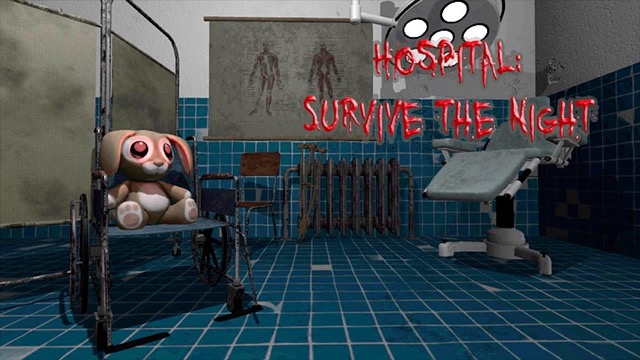
Hospital: Survive The Night is a survival horror game that trades the familiar entertainment venues of FNAF-style gameplay for something more viscerally unsettling — a haunted hospital full of patients who should be bedridden and are very much not. You are the security guard. Five nights of shifts stand between you and answers. The hospital is hiding something, and the things moving through its corridors after dark are not interested in letting you find out what.
What distinguishes Hospital: Survive The Night from pure survival horror is its investigation layer. Before survival mode locks the guard room at 7 a.m., the hospital's hallways and rooms are accessible — and they're full of notes, medical records, reports, and unsent letters that piece together the institution's dark history. The freedom to explore comes first; the containment of survival mode comes after the walkie-talkie is collected and the real night begins. This two-phase structure — investigate, then endure — gives the game a narrative depth that purely reactive survival games rarely achieve.
The survival phase puts you in the guard room with a specific toolkit: a flashlight, CCTV access, door control systems, and sirens. Patients move through the hospital with intention, pressing toward the guard room with escalating determination across all five nights. Your job is to block their approach through door management, redirect their attention through creative use of the building's systems, and keep your composure while the hospital's secrets compound into something you didn't fully prepare for.
Five shifts. One hospital. A lot of unsent letters. Time to find out why.
Key Details
| Genre | Survival Horror / Investigation |
| Difficulty Level | Medium / Hard |
| Average Play Time | 20–40 minutes per shift |
| Best For | Horror fans who enjoy narrative-driven survival games, players who like investigation phases alongside reactive gameplay, and anyone who finds the hospital setting more unsettling than the usual haunted pizzeria |
How to Play Hospital Survive the Night
Getting Started
- Explore the hospital before collecting the walkie-talkie — the pre-survival phase is your window to investigate freely. Move through the hospital's rooms and corridors, reading every note, medical record, report, and letter you can find. This is your best opportunity to understand what happened here before the patients start hunting you in earnest.
- Use creativity to access every room — not all rooms open straightforwardly. The hospital's layout rewards problem-solving and lateral thinking. Push to access every space you can during the free exploration phase — locked rooms may require interacting with the environment in non-obvious ways.
- Collect the walkie-talkie to begin survival mode — once you pick up the walkie-talkie in the guard room, survival mode activates and the guard room locks until 7 a.m. Only enter survival mode when you're ready for the night to begin in earnest.
- Use CCTV to monitor patient positions — the CCTV system is your primary awareness tool during survival mode. Track patient movements through the hospital and use that information to pre-empt door closures and siren activations before patients reach critical proximity.
- Block and divert patients systematically — closing doors blocks patient approach routes; sirens and other building devices redirect their attention away from the guard room. Use both tools in combination to manage simultaneous approach threats rather than responding to each one in isolation.
Basic Controls
| Input | Action |
|---|---|
| WASD / Arrow Keys | Move through the hospital |
| Left Shift | Run |
| Right Mouse Button (hold) | Turn flashlight on / off |
| Left Mouse Button | Interact with objects and machines |
| ESC | Pause game |
| Walkie-Talkie (guard room) | Activate survival mode and lock the guard room |
| CCTV System | Monitor patient locations throughout the hospital |
| Door Controls | Close doors to block patient approach routes |
| Siren Controls | Activate sirens to divert patient attention |
Objective
Survive five night shifts in the haunted hospital. During the free exploration phase before collecting the walkie-talkie, investigate the hospital's rooms for notes, records, and letters that reveal the institution's secrets. Once survival mode activates, use CCTV, door controls, and sirens to prevent patients from reaching the guard room until 7 a.m. Endure all five nights to reach the game's conclusion.
Hospital Survive the Night Features & Highlights
- Dual-phase gameplay structure — a free exploration phase that rewards investigation before the walkie-talkie triggers survival mode, giving the game narrative depth alongside reactive survival horror
- Hospital setting and atmosphere — a genuinely unsettling environment distinct from entertainment-venue FNAF alternatives, with the specific dread of medical spaces repurposed into something threatening
- Environmental storytelling through documents — notes, medical records, reports, and unsent letters distributed throughout the hospital build a layered picture of the institution's history for players willing to seek them out
- Multi-tool survival system — flashlight, CCTV, door controls, and sirens each serve distinct defensive functions, creating a layered toolkit that demands simultaneous management rather than reliance on any single system
- Five-night escalating challenge — five separate shifts with escalating patient aggression and pressure, ensuring difficulty builds meaningfully across the full game rather than plateauing after the first night
Hospital Survive the Night Tips & Strategies
Beginner Tips
- Read every document during the free exploration phase — all of them. Notes, medical records, reports, and unsent letters are not filler. They are the mechanism through which the hospital's story is delivered, and the information they contain recontextualizes what the patients are and why they're doing what they're doing. Players who skip the investigation phase survive the nights but don't understand what they survived.
- Activate the walkie-talkie only when you're ready. The moment you pick up the walkie-talkie, survival mode begins and the guard room locks. There's no way to re-enter free exploration once this happens. Take as much time as you need in the investigation phase — the hospital will not start hunting you until you initiate the mode change yourself.
- Use sirens proactively, not just reactively. Sirens divert patient attention by creating noise elsewhere in the hospital. Activating them when a patient is already at the guard room door is less effective than activating them when CCTV shows a patient approaching from a distance — redirecting before they arrive is consistently more effective than redirecting after they've closed distance.
Advanced Strategies
- Combine door closures with siren activations for multi-patient management. When CCTV shows patients approaching from multiple directions simultaneously, closing the door on the most immediate threat while using a siren to redirect the secondary threat extends your safe window without requiring the door to handle both situations alone.
- Use your flashlight strategically during exploration, not constantly. The flashlight is your primary visibility tool during both the investigation phase and movement in the survival phase, but holding it on continuously may reveal your position to patients in certain hospital configurations. Learn which areas of the hospital require light and which can be navigated with ambient visibility to reduce unnecessary flashlight exposure.
What to Watch Out For
- Leaving document areas unread during free exploration. The hospital's documents are distributed throughout its rooms, not clustered in obvious locations. Players who move through rooms quickly during exploration without checking surfaces, desks, and furniture leave significant story content undiscovered. Thorough searching during the free phase is more time-efficient than realizing you missed context halfway through Night 3.
- Over-relying on door closures without using sirens for distance management. Closed doors are a hard stop — but they don't resolve the threat, only delay it. Patients that can't get through a door will look for alternatives. Pairing door closures with siren activations to actively move patients away from the guard room area is consistently more effective than door management alone, which can lead to a surrounded guard room situation where every entry point is simultaneously threatened.
Hospital Survive the Night Elements Explained
Investigation Phase & Environmental Storytelling
The investigation phase — the period before the walkie-talkie is collected and survival mode activates — is Hospital: Survive The Night's most distinctive design feature and the element that gives its horror genuine narrative grounding. Unlike purely reactive survival horror games where the threat is self-contained and unexplained, this game builds its dread on a foundation of discoverable history: medical records that reveal what patients were admitted for, reports that document when things started going wrong, notes and unsent letters from staff who understood what was happening before it was too late to leave.
This content is distributed throughout the hospital's accessible rooms and requires active searching to find — it won't present itself to players who walk the corridors without examining surfaces, opening drawers, or checking the corners of rooms that don't have obvious interactive elements. The investigation phase rewards curiosity and completeness in equal measure.
The phase has no time pressure and no active threats, which is precisely the point. The freedom to explore at a deliberate pace — reading fully, moving room to room without urgency, piecing together the institution's history — is structurally contrasted with the survival mode that follows. The comfort of the investigation phase makes the moment the walkie-talkie activates survival mode feel like a door closing rather than a game mechanic triggering.
CCTV & Multi-System Defense
The defensive toolkit available in survival mode — CCTV, door controls, sirens, and flashlight — operates as a layered system where each component serves a distinct function and proficiency requires using all of them in coordination rather than relying on any single tool for all situations.
CCTV is the informational foundation of everything else. Without knowing where patients are in the hospital, door closures and siren activations are reactive guesses rather than strategic decisions. Maintaining regular CCTV checks — cycling through feeds to build a continuous picture of patient positions and movement directions — is the prerequisite for effective use of every other system.
Door controls are the hard defensive response — a closed door physically prevents patient entry through that access point. They are the most certain response to an immediate threat but address only that specific access point and don't resolve the patient's presence elsewhere in the hospital.
Sirens are the redirection tool — they generate noise elsewhere in the hospital that diverts patient attention away from the guard room. They are most effective at distance, used proactively before patients are adjacent to the guard room rather than as emergency counters after close approach. A siren activation that pulls a patient from across the hospital gives significantly more safe time than one deployed when the patient is already at the door.
Flashlight provides visibility during movement phases and targeted illumination when CCTV doesn't cover specific areas, functioning as the sensory tool that bridges the information gaps in the fixed camera system.
Five-Night Shift Structure
The five-night shift structure of Hospital: Survive The Night escalates pressure in both mechanical and narrative dimensions. Each night begins with a free exploration phase — though as nights progress, the time available before patients become fully active may compress — followed by survival mode that continues until 7 a.m.
Patient behavior escalates across the five shifts. Night 1 introduces the hospital's basic threat dynamic at a manageable pace; Night 5 represents the full convergence of everything the institution has been building toward, with patient aggression at its highest and the full weight of the hospital's revealed history informing what you're facing. The escalation is designed to pace the player's mechanical learning alongside the story's revelation — by the time the hardest nights arrive, players who engaged with the investigation phases understand why the situation has gotten worse.
Each shift also adds context to the hospital's mystery. Documents discovered in Night 1's exploration phase establish one layer; records found in Night 3 recontextualize what Night 1 introduced. The full picture of what happened in the hospital only assembles across all five investigations, making the narrative payoff proportional to how thoroughly each exploration phase is engaged with before survival mode takes over.
Hospital Survive the Night Frequently Asked Questions
Q: How do I access locked rooms during the exploration phase?
A: Locked rooms in the hospital require creative interaction with the environment rather than conventional key-finding. Examine objects, machines, and surfaces in adjacent rooms and corridors for switches, panels, or interactive elements that affect the locked room's access. The game rewards lateral thinking rather than obvious item-to-door matching — if a room won't open through direct interaction, look for what in the surrounding environment might change its state.
Q: What should I do when multiple patients are approaching the guard room simultaneously?
A: Use CCTV to establish each patient's distance and approach route before responding. Close the door to block the most immediately threatening patient, then activate a siren directed toward the area the second patient is approaching from to redirect their attention before they reach the guard room perimeter. The goal is to address the immediate threat with door control while using sirens to move the secondary threat to a different area of the hospital, buying time to reassess both situations before the next decision point.
Q: Is this game compatible with all browsers and devices?
A: Hospital: Survive The Night is designed for modern desktop browsers, with best performance on up-to-date Chrome or Firefox on a desktop or laptop. The game uses both keyboard controls (WASD/Arrow Keys for movement, Shift to run, ESC to pause) and mouse controls (right button for flashlight, left button for interaction), making touchscreen and mobile devices unsuitable for the full control scheme. Audio design is integral to awareness of patient proximity — headphones or quality speakers are strongly recommended.
Q: Can I return to the exploration phase after activating survival mode?
A: No — once the walkie-talkie is collected and survival mode activates, the guard room locks and free exploration is no longer available until 7 a.m. ends the shift. This is why thoroughly investigating the hospital before picking up the walkie-talkie is important. If you want to find documents you missed in a previous shift's exploration phase, they will be accessible again at the start of the next shift's free exploration window before survival mode activates.
Q: Do the documents and records discovered during exploration affect gameplay, or are they purely story content?
A: The hospital's documents — notes, medical records, reports, and unsent letters — are primarily story content that builds the hospital's history and explains the nature of the patients and their behavior. However, understanding what the documents reveal does have practical implications for survival: knowing the behavioral patterns and histories of specific patients helps predict how they move and respond to siren activations and door control during survival mode. Players who engage thoroughly with the investigation phase tend to make better defensive decisions not just because they understand the story, but because the story contains information about how the threats work.
Games Like Hospital Survive the Night You Might Enjoy
If you like Hospital Survive the Night, you might also enjoy:
- Overnight Interview - it leans into eerie story clues, confined spaces, and slow-burn horror discovery.
- The Coffin of Andy and Leyley - it leans into eerie story clues, confined spaces, and slow-burn horror discovery.
- Human Expenditure Program - it leans into eerie story clues, confined spaces, and slow-burn horror discovery.