
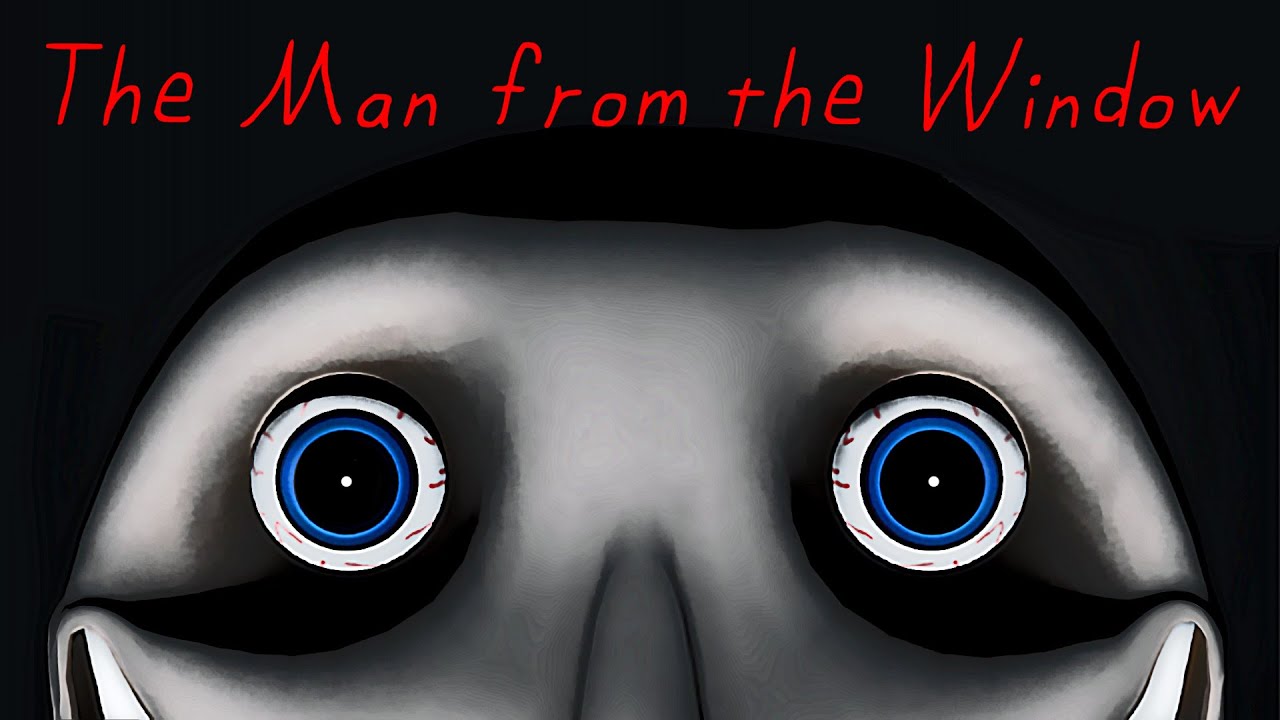








The Man From the Window Overview
Someone read the book. Now he's coming. And you have five minutes.
The Man from the Window is a horror escape game built around a specific and genuinely unsettling premise: a mysterious creature that hunts people who read his books. Within five minutes of the book being opened, The Man knows where you are. He knows about Mama Rabbit. He knows about Audrey. And he is already on his way.
You play primarily through Mama Rabbit — a retired grandmother navigating a mysterious house with limited tools, a small gun, and the urgent need to protect her niece Audrey from a creature that has singled her out as his next target. The house holds keys, puzzles, and a countdown that doesn't slow down while you're figuring out what to do next. Every decision you make shapes what happens — the game features three alternate endings depending on the choices made along the way, and none of them are guaranteed to be the one you're hoping for.
The game's character roster is compact but emotionally effective. Mama Rabbit is not a typical horror protagonist — she is someone's grandmother, navigating an impossible situation with whatever she can find. Junior, her son, provides support through phone calls from a distance. Audrey is the target, and keeping her hidden is the game's emotional core. The Man himself is the least explained and most threatening presence — a creature who collects fans of his books in ways the books themselves never advertise.
Three endings. One creature. Five minutes. What do you do with the book?
Key Details
| Genre | Horror Escape / Puzzle Adventure |
| Difficulty Level | Medium |
| Average Play Time | 15–30 minutes per playthrough |
| Best For | Story-driven horror fans, escape room players, and anyone drawn to horror games with sympathetic protagonists and genuine narrative stakes |
How to Play The Man From the Window
Getting Started
- Understand your timeline immediately — The Man arrives within five minutes of the book being read. Every action you take happens against this countdown. Move with purpose rather than cautious exploration — there is time to be careful, but not time to be slow.
- Locate the keys — keys are your primary progression tool for navigating the house. Search accessible rooms systematically and prioritize key locations before puzzle-solving, as some areas won't open until the right key is found.
- Solve the house's puzzles — barriers between you and safety require puzzle solutions. Gather context from the environment and collected items before attempting solutions, and keep Audrey's safety in mind when deciding which puzzles to prioritize.
- Hide Audrey — Audrey is The Man's target. Finding and securing a hiding place for her is a critical story objective. Leaving her exposed while you solve other puzzle elements is a risk that the game takes seriously.
- Use the gun when necessary — Mama Rabbit has a small gun available. The Man can be killed with it, which opens one of the game's three endings. Knowing when and whether to use it is a decision the game returns to you rather than making for you.
Basic Controls
| Input | Action |
|---|---|
| Mouse Click | Interact with objects, examine items, navigate menus |
| Point and Click | Move Mama Rabbit through the house |
| Inventory | Access collected keys and items |
| Phone (Junior) | Receive calls and guidance from Junior |
| Gun | Use when confronting The Man directly |
Objective
Navigate the mysterious house as Mama Rabbit, finding keys, solving puzzles, and hiding Audrey from The Man — all before he arrives. Your decisions throughout the game determine which of the three alternate endings you reach. Survive, protect Audrey, and decide whether to run or confront what came through the window.
The Man From the Window Features & Highlights
- Three alternate endings — player decisions throughout the game produce genuinely different conclusions, making multiple playthroughs worthwhile for players who want to see the full story space
- Sympathetic protagonist design — playing as Mama Rabbit, a retired grandmother protecting her niece, gives the horror a personal emotional stakes rarely found in the genre's typical protagonist roster
- Five-minute arrival countdown — The Man's timed approach creates constant pressure without artificial difficulty, making every puzzle-solving moment feel consequential
- Compact but meaningful character cast — Mama Rabbit, Audrey, Junior, and The Man each serve a distinct narrative function, delivering a complete story in a small character space
- Direct confrontation option — the small gun and the possibility of killing The Man outright give players genuine agency over how the story concludes rather than limiting outcomes to evasion and escape
The Man From the Window Tips & Strategies
Beginner Tips
- Prioritize Audrey's hiding place early. Audrey being found by The Man is a run-ending situation. Before focusing on keys and puzzles that advance your own escape, identify a viable hiding location for Audrey and secure it. The puzzle solutions you need may take more time than expected, and having Audrey hidden before that time runs out is more important than any single key.
- Listen to Junior's phone calls completely. Junior is Mama Rabbit's primary source of guidance and his calls contain information relevant to puzzle solutions and navigating the house. Skipping or cutting short his dialogue to save time frequently costs more time later when the information he provided would have prevented backtracking or failed puzzle attempts.
- Track the keys you have and the doors they open. The house has multiple locks and multiple keys, and the relationship between them isn't always immediately obvious. Maintain awareness of what's in your inventory and what each key corresponds to rather than discovering you have the wrong key at the moment you need to get through a door quickly.
Advanced Strategies
- Plan your ending before you make the decision that commits you to it. The three endings diverge based on choices made at specific moments in the game. Understanding which ending each choice leads toward — through a first playthrough or foreknowledge — lets you approach subsequent runs with deliberate intent rather than discovering an unintended ending.
- Use the gun as a last resort in your first playthrough. Committing to confronting The Man with the gun produces a specific ending that forecloses the other two. On a first playthrough, reaching any ending without committing the gun is better for understanding the game's full decision space before optimizing for a specific conclusion.
What to Watch Out For
- Running out of time before Audrey is hidden. The five-minute countdown is absolute — The Man arrives regardless of where you are in the puzzle sequence. Players who delay the Audrey hiding task in favor of key and puzzle progression frequently find themselves mid-solution when The Man appears. Hide Audrey first; solve puzzles second.
- Missing interactive elements in rooms you've already visited. The house is small but detail-rich. Puzzle components and key items are embedded in room details that don't always announce themselves as interactive. Revisiting rooms with fresh attention after the game's stakes have become clear often reveals elements that a first pass missed.
The Man From the Window Elements Explained
The Man & The Five-Minute Countdown
The Man from the Window is the game's central threat and its most deliberately unexplained element. He is described as a mysterious creature who kidnaps fans of his books — the mechanism by which reading triggers his awareness of a new target is never fully explained, and that opacity is intentional. What the game makes absolutely clear is the timeline: within five minutes of the book being read, he will find his way to Mama Rabbit's house, and nothing about the house's physical structure will stop him.
The five-minute countdown transforms what might otherwise be a leisurely puzzle adventure into something genuinely pressured. Every key search, every puzzle attempt, every moment spent listening to Junior on the phone is a moment of the countdown consuming itself. The Man's arrival is not telegraphed by a visible timer in a way that allows comfortable pacing — it is a deadline that arrives when it arrives, and being unprepared when it does is the game's primary failure state.
This design choice makes The Man threatening in a way that on-screen horror often isn't: not through jump scares or sudden appearances, but through the sustained awareness that he is coming, has always been coming since the book was opened, and the clock is running whether or not you're keeping track of it.
Character Dynamics
The four characters of The Man from the Window create a small but complete emotional world around the horror premise. Their relationships are the stakes — not abstract survival, but specific people whose connections to each other matter and whose fates are determined by Mama Rabbit's decisions under pressure.
Mama Rabbit is the player character and the game's emotional center — a grandmother navigating a nightmare situation with the tools she has, which are limited but not nothing. Her age and the domestic setting of her house make her an unusual horror protagonist, and the game's horror is more effective for it. She is protecting someone she loves, which is a more immediately relatable motivation than the self-preservation that drives most horror game protagonists.
Audrey is Mama Rabbit's niece and The Man's target — the person whose safety is the game's primary objective and whose exposure to The Man represents the failure state that matters most. She is the reason the puzzle sequence has urgency rather than just difficulty.
Junior is Mama Rabbit's son, present only through phone calls but functionally important as a guidance source and as a reminder of the normal world that exists outside the house's current nightmare. His calls provide both narrative texture and puzzle-relevant information.
The Man is the antagonist whose opacity is his most threatening quality — a creature defined by what he does rather than what he is, arriving with inevitability rather than drama.
Three Alternate Endings
The three endings of The Man from the Window represent the game's primary replay incentive and its most explicit acknowledgment that player choices have meaningful consequences rather than cosmetic ones. Each ending is produced by a specific combination of decisions made across the game's puzzle and confrontation sequence, and the divergence points are designed to feel like natural choices rather than obvious branching moments.
One ending involves successfully hiding Audrey and escaping The Man's arrival without direct confrontation — a survival outcome that prioritizes evasion over resolution. One involves using the small gun to kill The Man outright, confronting rather than evading the threat at the cost of the decision to use lethal force. The third ending represents a different kind of outcome that the game's choices lead toward when certain conditions are met — one that the game's narrative logic makes coherent even if it isn't the one a first-time player was aiming for.
Each ending reveals a different facet of The Man's nature and the world he operates in. No single playthrough delivers the complete picture, and the game is short enough that pursuing all three endings in sequence is a reasonable commitment for players who want to understand the full story rather than just the conclusion they first arrived at.
The Man From the Window Frequently Asked Questions
Q: How do I hide Audrey from The Man?
A: Explore the house's available rooms and spaces for locations where Audrey can be concealed before The Man arrives. Interact with viable hiding spots using the mouse and select the option to place Audrey there when prompted. Prioritize this objective early in the game rather than treating it as something to address after key collection and puzzle-solving — The Man's five-minute arrival countdown doesn't wait for you to finish the other objectives first.
Q: What should I do when The Man arrives before I'm ready?
A: If The Man arrives and Audrey is not yet hidden, your primary imperative is to create a barrier between Audrey and The Man rather than continuing puzzle-solving. If you have the gun available, this is the moment to consider using it. If Audrey is hidden but you haven't escaped, focus on your own exit rather than revisiting areas that The Man may now be occupying.
Q: Is this game compatible with all browsers and devices?
A: The Man from the Window is designed for modern desktop browsers, with best performance on Chrome or Firefox on an up-to-date desktop or laptop. The game uses point-and-click mouse controls for all navigation and interaction, making it potentially compatible with touchscreen devices depending on browser support — though precise click targeting for inventory and puzzle interactions is more reliable with a mouse.
Q: Can I save progress during a playthrough?
A: Given the game's 15–30 minute runtime and countdown-based structure, it is designed as a single-session experience. Saving mid-playthrough may not be available, and the countdown-driven pacing makes mid-session saves less applicable to the gameplay structure than in longer narrative games. Each playthrough is a complete, self-contained run toward one of the three endings.
Q: How do I reach all three endings?
A: The three endings diverge based on specific decisions made at key moments in the game — whether Audrey is successfully hidden, whether the gun is used against The Man, and how certain puzzle sequences are resolved. The most reliable approach to reaching all three is to complete one full playthrough without using the gun, note which choice points felt significant, and on subsequent runs make deliberately different decisions at those moments. The game's short runtime makes replaying for different endings a reasonable investment rather than a major commitment.
Games Like The Man From the Window You Might Enjoy
If you like The Man From the Window, you might also enjoy:
- Overnight Interview - it leans into eerie story clues, confined spaces, and slow-burn horror discovery.
- The Coffin of Andy and Leyley - it leans into eerie story clues, confined spaces, and slow-burn horror discovery.
- Human Expenditure Program - it leans into eerie story clues, confined spaces, and slow-burn horror discovery.